Why it matters: The Supreme Court hears Viramontes v. Cook County on December 2. If a rifle can lose constitutional protection because of what someone could illegally do to it, the reasoning will not stop at rifles.
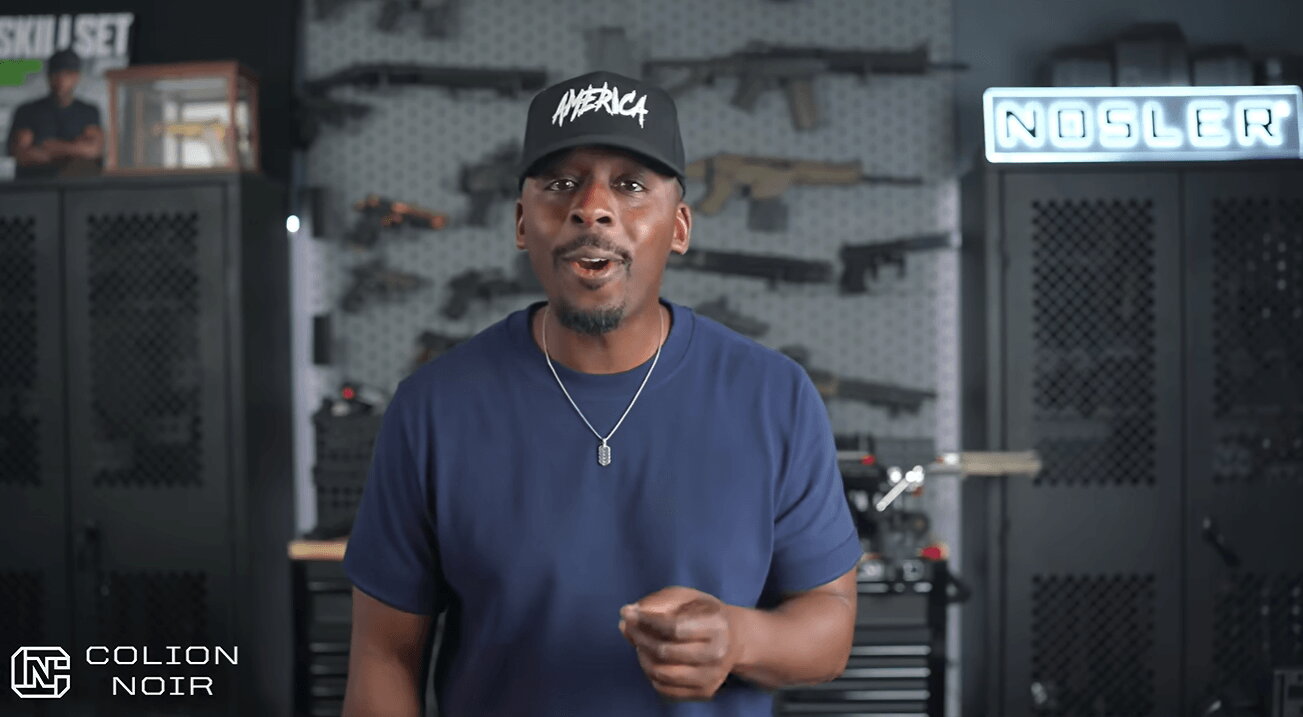
Colion Noir's latest video opens on a sentence that does most of his work for him. In a friend-of-the-court brief filed October 28 in the Supreme Court's AR-15 cases, Virginia Attorney General Jay Jones and three colleagues wrote: "AR-15s are machineguns, except that they — at least to start — have semiautomatic fire rather than automatic fire." Noir calls that an argument in nonsense and asks his audience whether its author is dumb or something worse.
As a verdict on the sentence, nonsense is close enough. The exception swallows the noun. As an answer to the brief, the video stops a few pages early, and the pages it skips are the ones gun owners should worry about. We would also drop the dumb-or-worse question. The lawyers who signed this know what the Court has held, because they cite it. Their argument was chosen on purpose, and it should be judged as one.
Virginia's AR-15 machinegun brief and the Cargill shortcut
Noir's knockout is Garland v. Cargill, the 2024 bump stock case, in which Justice Thomas wrote: "Semiautomatic firearms, which require shooters to reengage the trigger for every shot, are not machineguns." He calls that the whole ball game. It is a good sentence, and it is the wrong ball game. Cargill interpreted a statute, 26 U.S.C. § 5845(b), and decided nothing about the Second Amendment.
Virginia is not disputing the statute. Its brief concedes that a bump-stocked rifle "does not meet the technical definition of a 'machinegun' under the National Firearms Act." Its claim is constitutional, and its section heading states it more carefully than its summary does: AR-15s are "exceedingly similar to unprotected machineguns."
Nor is this one state's eccentricity. The Seventh Circuit wrote in Bevis v. City of Naperville, the 2023 decision behind the Cook County ruling now under review, that "the AR-15 is almost the same gun as the M16 machinegun." The full Fourth Circuit leaned on the same comparison in Bianchi v. Brown. Cook County's own merits brief says the AR-15 "is readily convertible into a machinegun." A theory that has won in two federal appeals courts will not lose to a punchline.
The AR-15 conversion theory is Virginia's real argument
Noir does catch the tell. He flags "at least to start" as an admission that the argument depends on someone committing a federal felony. That hedge is the brief's engine. "The simplest way to approach this question," it says, is to recognize that consumers have options "to convert AR-15s to unprotected machineguns or their functional equivalent." It then surveys bump stocks, auto sears, forced-reset triggers and binary triggers, and concludes that AR-15s are "not meaningfully less dangerous than machineguns" because an owner "would have to take a few easy steps to make the switch."
The authorities holding this up are thinner than they look, and the objection we just raised against Noir applies to Virginia as well. The conversion analogy rests on Bondi v. VanDerStok, which construed the Gun Control Act's definition of a firearm. If a statutory case cannot settle the Constitution when it helps gun owners, it cannot settle it when it helps Virginia. The brief also quotes Justice Alito's Cargill concurrence, that Congress "would not have seen any material difference" between a machinegun and a rifle equipped with a bump stock. That line concerns a rifle with a bump stock installed, and Alito's next sentence is "But the statutory text is clear, and we must follow it."
Why the machinegun conversion logic reaches Glock pistols
"Your Glock is a machine gun, too," Noir says, as a joke. It is the most serious line in the video.
“A right that ends wherever a felony could begin is not much of a right.”
Coleman Reyes, The ReticleConversion devices are a pistol story at least as much as a rifle story. ATF's trafficking assessment counted 11,088 conversion devices recovered from 2019 through 2023, a category that includes "Glock switches," and Cook County's brief cites the same data's 784 percent rise. Minnesota and New Jersey have sued Glock, alleging its pistols are unusually easy to convert. California's AB 1127, which took effect in July, restricts sales of pistols the state deems readily convertible. Gun-rights groups and the Justice Department are challenging it, and a federal judge has declined to block it on an emergency basis. Virginia's own 2024 law against auto sears was reported locally as banning a device that turns a handgun into a machine gun. Bevis itself said its M16 comparison applies "with equal force to the high-capacity handguns" restricted by the laws before that court.
Virginia's brief never addresses pistol conversion. It calls the handgun the quintessential self-defense weapon and, in a later section, offers the obvious distinction, citing a study that put handguns at 90 percent of defensive firearm uses and rifles at four. That distinction gives the game away. If the handgun survives conversion because of how people actually use it, conversion is doing no work, and the case is back on the common-use question Virginia calls a "simplistic counting exercise." Justice Kavanaugh has already seen the connection, writing last year that "AR-15s are semi-automatic, but so too are most handguns." Noir's warning that the pistol in your nightstand is next in line is no stretch, given that one state has already acted on the theory.
What Heller and Staples say about the semiautomatic AR-15
The Court's own language points the other way. Heller did not say machineguns lose protection for their features. It described the limit as covering "those weapons not typically possessed by law-abiding citizens for lawful purposes." Virginia's summary substitutes a different test, that machineguns fall outside the amendment "because they are dangerous and inapt for self-defense." Its appeal to arms "wholly foreign to the framers" runs into Caetano v. Massachusetts, where the Court told a state high court that reasoning from what was common at the founding "is inconsistent with Heller."
Then there is Staples v. United States, which involved an AR-15. Staples, like Cargill, construes a statute and cannot settle this. What it supplies is a fact about how long this has been understood. "The AR-15 is the civilian version of the military's M-16 rifle, and is, unless modified, a semiautomatic weapon," the Court wrote in 1994, in a passage that also notes M-16 parts can be used to convert it. The Court knew about conversion 32 years ago and still put the line at "unless modified."
So does the law. Federal statute already treats a conversion part as a machinegun and makes possessing one a felony, and Virginia added its own ban. Those laws aim at the person who crosses the line. The brief aims at everyone who has not. Conversion devices are a real and growing problem, and the states are right to prosecute them. But a right that ends wherever a felony could begin is not much of a right.
For context
- Viramontes v. Cook County and Grant v. Higgins ask whether the Second and Fourteenth Amendments protect AR-15 platform and similar semiautomatic rifles; the Court set argument for December 2, 2026.
- Virginia's 2026 sales ban, Senate Bill 749, is blocked while challenges to it wait for the Supreme Court's ruling, which is why the state filed in a case about Illinois and Connecticut.
- Federal law defines a machinegun at 26 U.S.C. § 5845(b), and 18 U.S.C. § 922(o) has generally barred civilians from possessing new ones since 1986.
- Kavanaugh's figure of AR-15s being legal in 41 of 50 states dates to June 2025; Virginia's brief now counts 11 states and the District of Columbia with restrictions, representing over 34 percent of the population.
Themes in the source
Room for disagreement
The strongest case against our read starts with the common-use test itself, which is circular. Machineguns are rare because Congress froze the civilian supply in 1986, and the AR-15 might be rare too had the 1994 federal ban been renewed, so a test built on popularity makes constitutional protection depend on legislative timing and consumer fashion. Heller named "M-16 rifles and the like," and those last three words have to mean something. A rifle sharing the M16's design, cartridge, velocity and range, separated from it by a fire-control difference that a cheap and hard-to-detect part can erase, is the most natural candidate there is. Army doctrine favors semiautomatic fire anyway, so full-auto capability is a poor marker of what makes a rifle a military weapon. Punishing conversion after the fact is cold comfort when recoveries of conversion devices rose 784 percent from 2019 to 2023 and the federal government has backed off forced-reset triggers. Justice Alito himself wrote that a rifle with a bump stock can have the same lethal effect as a machinegun. There is no slope to the Glock, because Heller protects handguns by name as the quintessential self-defense weapon, while rifles account for a small share of defensive gun uses and a large share of the worst public massacres. Elected legislatures that have weighed those facts should be allowed to draw this line.
The bottom line
Virginia's "machineguns, except" argument should lose on December 2, and it should lose on the theory underneath it: a rifle does not forfeit constitutional protection because of what a lawbreaker could do to it, and any rule that says otherwise reaches the pistols Heller protects. Cargill will not do that job. The argument has to.
Sourced from
Virginia's Attorney General Just Called An AR-15 A Machine Gun… Seriously?
Watch the original