Why it matters: A federal archive of more than 1.4 billion gun-sale records is now in front of Congress. Whether it counts as lawful record-keeping or a banned registry will decide what ATF keeps, and for how long.
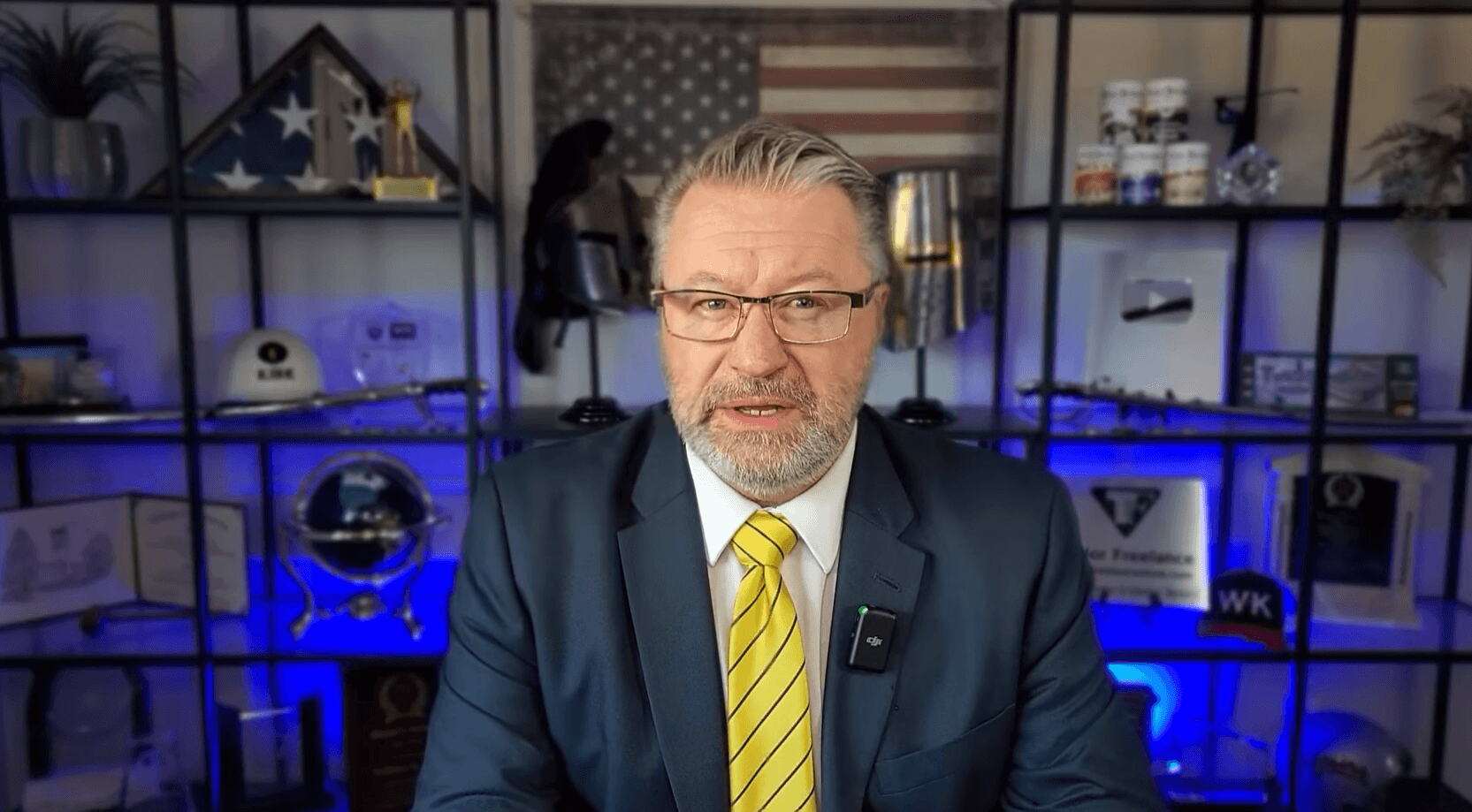
Washington Gun Law president William Kirk has published a video, "The Scariest Thing ATF Could Ever Do," about this week's House Oversight hearing on the Bureau of Alcohol, Tobacco, Firearms and Explosives' archive of out-of-business firearms records. Kirk argues that the archive, which ATF reports holds more than 1.4 billion records, amounts to a federal gun registry that the Firearm Owners Protection Act of 1986 forbids. He pitches the video as an explainer for viewers who are "ambivalent or naive" about the issue. He says his worst case is "all in the hypothetical, but it is based upon some very real and provable facts."
House Oversight hearing on ATF out-of-business records
The hearing, "Oversight of the Bureau of Alcohol, Tobacco, Firearms and Explosives' Out-of-Business Records Retention Practices," was held November 18 before the Subcommittee on Federal Law Enforcement, chaired by Rep. Clay Higgins (R-La.). The video dates it to November 17. When a licensed dealer closes, federal rules require it to send its transaction records, including Form 4473s, to ATF within 30 days. ATF's National Tracing Center in Martinsburg, West Virginia, has scanned those records into digital images since 2005.
In his opening statement, Higgins said ATF holds more than 1.4 billion such records and took in about 6.8 million new ones a month in fiscal 2025. He said the imaging system captures buyers' names as searchable data. ATF has switched name searching off to comply with federal law, he said, but "it could just as easily be turned on." He also acknowledged that out-of-business records figured in nearly half of the crime-gun traces ATF handled in 2022 and 2023. And he cited a GAO finding that the system does not currently amount to a registry.
The FOPA registry ban and Gun Owners of America testimony
Kirk's legal case rests on 18 U.S.C. § 926(a), the FOPA provision that bars any rule requiring dealer records to be "recorded at or transferred to a facility owned, managed, or controlled by the United States." The same provision bars any "system of registration of firearms, firearms owners, or firearms transactions or dispositions." The video plays Rep. Andrew Clyde (R-Ga.) reading the statute and arguing that it forbids two things: centralizing the records and building a registration system. In another clip, Clyde says gun registration "inevitably leads to gun confiscation" and calls on ATF to remove what he calls its "illegal gun registry."
Kirk also plays hearing testimony from Aidan Johnston, director of federal affairs at Gun Owners of America. Johnston told the subcommittee that "ATF has ignored Congress" and that the Martinsburg center holds "more than 1.4 billion records that identify which Americans own which guns." GOA filed a 111-page report, "ATF's Illegal Gun Owner Registry," as its written testimony. Kirk says the records are searchable and concludes that ATF has "blatantly and willfully violated federal law."
“The dispute is less about what the records contain than about what the law lets ATF do with them.”
Coleman Reyes, The ReticleOther witnesses read the system differently. Walfred Nelson, a retired ATF deputy assistant director who supervised the tracing center from 1998 to 2005, said in written testimony that the imaged records "are not searchable by an individual's name." He said they can be searched only by the submitting dealer and by serial number, and that ATF's processing "has not created a firearms registry." Christopher Chiafullo of FFLGuard, which represents licensed dealers, said the authority to digitize and keep the records is "a threshold legal question that cannot be answered merely by describing the system's limitations on searching." The dispute is less about what the records contain than about what the law lets ATF do with them.
Gun confiscation history and the ATF records retention rule
The second half of the video turns to history. Kirk argues that "the only reason you would ever accumulate a gun registry is to" confiscate firearms. He runs through examples, from Cyrus the Great disarming the Lydians to British disarmament in Scotland, the Ottoman Empire, the Soviet Union, Nazi Germany, the Khmer Rouge and Venezuela. He ends with Canada's current confiscation program, which he says began with registration.
Kirk is not uniformly critical of the bureau. He says "this version of ATF is a vastly different version" from the one gun owners are used to, and that if ATF ever corrects course, "it would be under this leadership." But he points to ATF's pending records retention proposal, published May 6, which would end indefinite retention in favor of a 20- or 30-year limit. Kirk estimates that dealer and ATF retention together would still keep records for 30 to 40 years. Higgins said at the hearing that the two periods could stack to as long as 60 years.
The proposal has drawn fire from both directions. Nelson supports it and recommends a 30-year period at the tracing center. GOA has called it a step in the right direction but inadequate. Everytown for Gun Safety opposed it in its comment, arguing that it would allow millions of trace records to be destroyed. The comment period closed August 4, and no final rule has been published. Kirk says the channel will link the hearing materials and the statute in the video description and will keep watching what happens to the records.
For context
- The Firearm Owners Protection Act of 1986, at 18 U.S.C. § 926(a), bars ATF rules that centralize dealer records or establish a registry of guns, owners or transactions.
- Dealers that go out of business must send their records to ATF within 30 days, and the National Tracing Center has stored them as digital images since 2005.
- Dealers could dispose of records after 20 years from 1985 until a 2022 ATF rule required permanent retention; the May 2026 proposal would restore a 20- or 30-year limit.
- The one federal gun registry Congress has authorized is the National Firearms Registration and Transfer Record, which covers NFA items such as machine guns and suppressors.