Why it matters: Printed Inconel and Haynes 282 suppressors are taking a growing share of the hard-use market at a higher price than welded stainless designs. Hop's video puts one through sustained fire on a short barrel and compares its wear with three stainless cans.
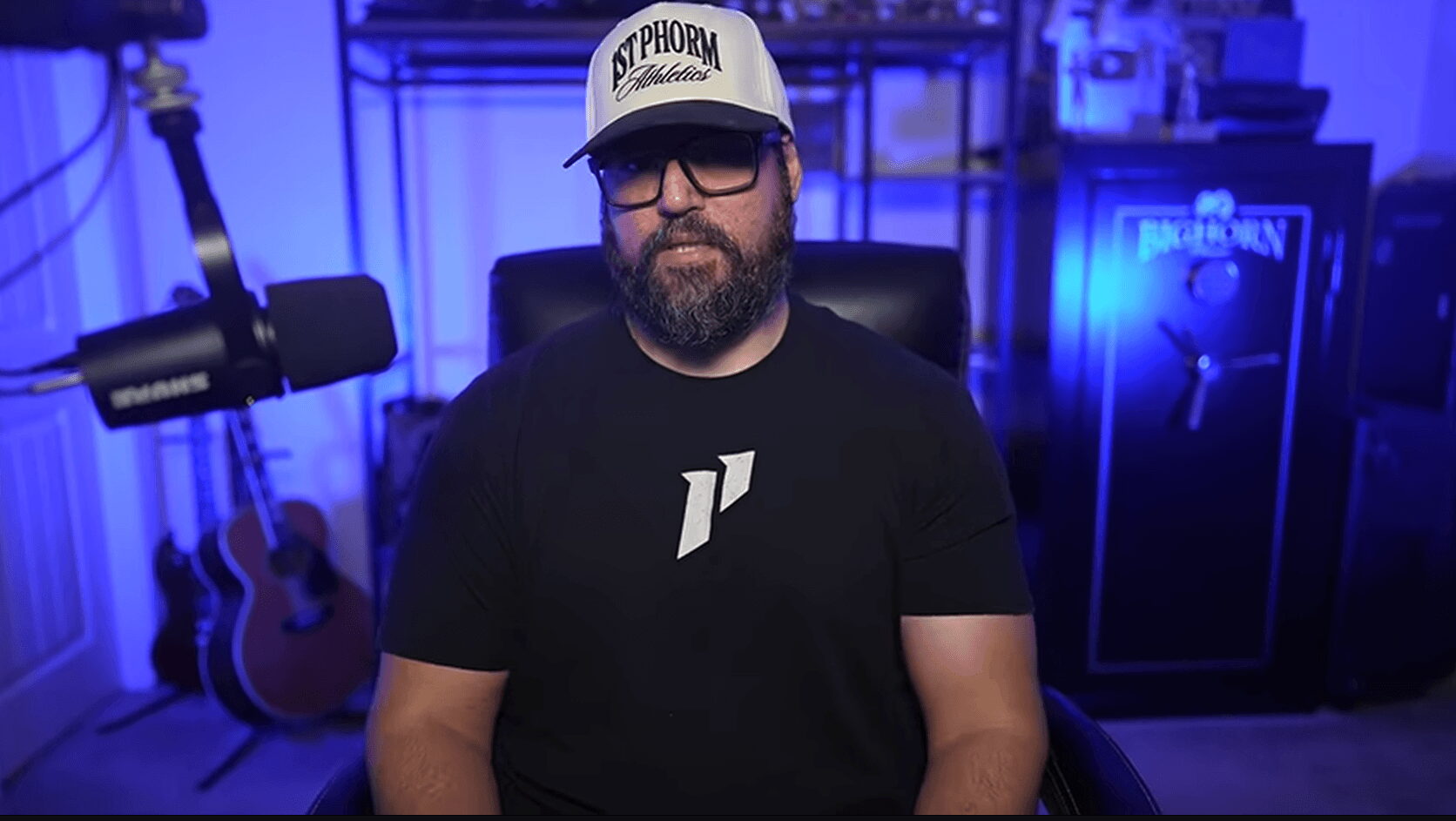
The YouTube creator Hop has published a video asking whether suppressors made from nickel-based superalloys are worth their price premium over traditional stainless steel. The test subject is a Wolfpack Armory Romulus 556, a 3D-printed Inconel 718 suppressor that Hop describes as having gone through "really reckless destructive testing." The video is sponsored by Venture Surplus.
Inconel 718, Haynes 282 and 17-4 stainless suppressor materials
Hop sets out the materials in play for hard-use rifle suppressors, leaving aside titanium, which he associates with lighter hunting and specialist cans. He names 17-4 PH stainless steel as the most common material and the default, citing the Otter Creek Labs Polonium K and Wolfpack's own Disruptor K as all-stainless examples. YHM's Resonator K is mostly stainless but uses a Cobalt 6 (Stellite) blast baffle.
Above that sit suppressors made entirely of Inconel 718 or Haynes 282, both nickel-based superalloys. Hop compares Haynes 282, a proprietary blend from Haynes, to Carpenter 158 in AR bolts. In theory, he says, superalloy suppressors should handle higher volumes of fire in the short term and degrade more slowly over their life than stainless ones.
He attributes much of what is known about the two alloys to NASA testing, and summarizes it this way: Inconel handles short, sharp heat shocks better, while Haynes 282 sustains long periods of high heat. NASA's technical reports server does list a conference paper comparing the tensile properties of additively manufactured Inconel 718, Haynes 282 and Hastelloy X across temperatures, and Haynes recommends 282 over 718 above roughly 650°C. Hop doubts most owners could tell the two superalloys apart in use. Whether shooters would notice a gap between superalloy and stainless is the question the video sets out to answer.
On the downsides, Hop names cost as the main one. He has seen the raw material quoted at five to 10 times the price of stainless, and says manufacturing adds to the gap: the stainless cans he shows are simple welded baffle stacks, while nearly every Inconel and Haynes suppressor he has seen is printed by direct metal laser sintering (DMLS). He notes that DMLS stainless suppressors such as the HUXWRX Flow 556k are also expensive. Superalloy cans often weigh more, which he attributes to design rather than material: their printed flow paths fill the interior with metal, where a welded baffle stack is mostly empty space.
Romulus 556 on an 8-inch barrel, FRT and a melted compensator
Retail listings describe the Romulus 556 as a DMLS-printed Inconel 718 suppressor rated for full-auto fire, with 1.375x24 HUB threads in its blast chamber. Unlike the Disruptor K, Hop says, it carries no barrel-length restriction. It spent much of its time on an 8-inch 5.56 barrel, including a good deal of fire through a forced-reset trigger (FRT). It then went onto a PSA Guardsman with a 10.3-inch barrel, which was later dropped onto a loaned FRT lower.
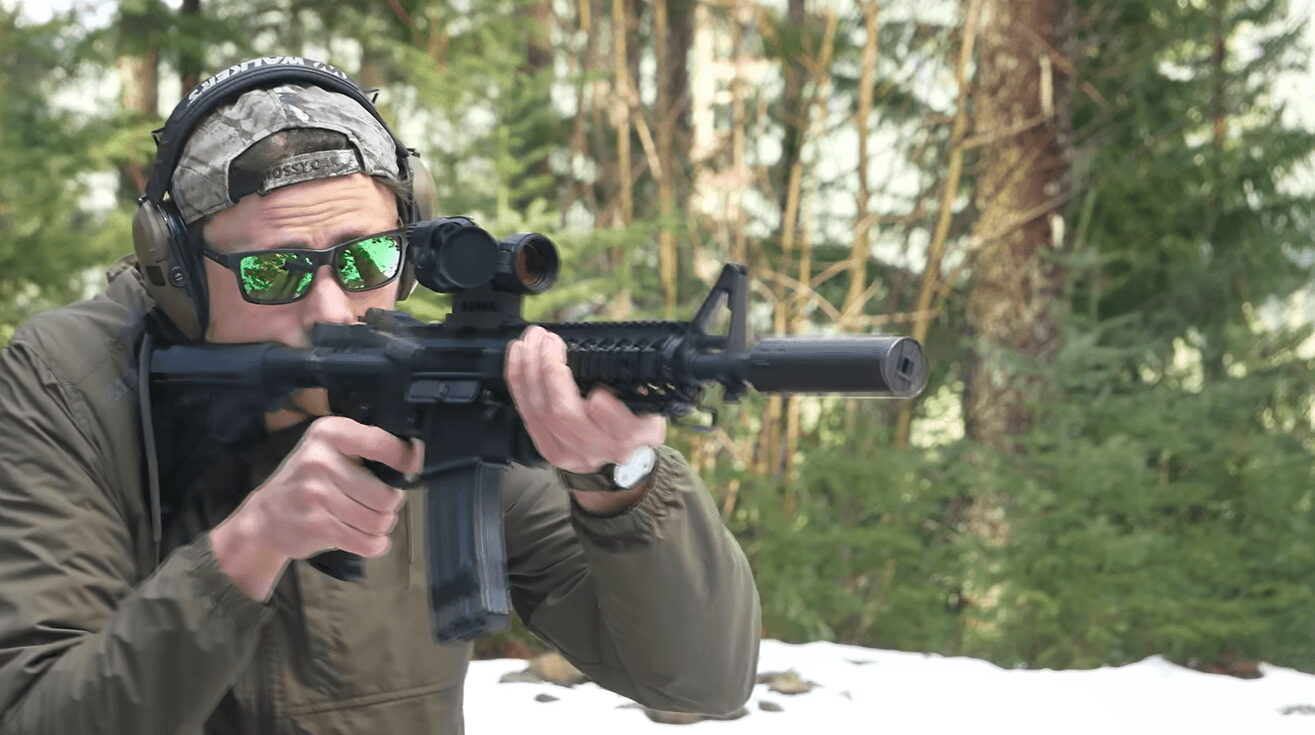
On that setup, Hop says, the crew ran somewhere between seven and 10 full magazines at full cyclic rate, and accounts differ on the exact number. By the last magazines the suppressor glowed cherry red, carried a constant visible flame out of the front and threw sparks. Through all of this it was mounted on the hardware Wolfpack ships with it: a Night Howler compensator and a low-profile recessed Plan B hub adapter.
“The stainless compensator mushroomed and the hub mount fused to the threads, but the printed Inconel blast chamber came out with hardly any visible wear.”
Avery Lindqvist, The ReticleAfter it cooled, the suppressor would unthread from the Plan B mount by hand, and Hop says it never locked up or walked off during the string. But it would only slide about halfway off the muzzle device. He concludes that the stainless compensator began to melt and that later muzzle blasts splayed its tines outward, pushing material out of the front of the can, which may explain the sparks. The hub adapter appeared to have welded itself to the suppressor's threads.
Removing the fused Plan B hub mount
Hop's crew tried a pipe wrench, solvent and suppressor-cleaner soaks, and Dremel-cut wrench flats on the low-profile adapter, which he says lacks substantial ones. None of it worked. A local machinist and gunsmith first welded the hub mount to the muzzle device and tried to break it free with an impact wrench. The weld failed before the threads did. The second attempt used a lathe: a tungsten carbide hole saw removed the muzzle device and the core of the mount, and a cutting tool thinned the remaining adapter down to the suppressor's internal threads until the last of it came out in one coil. The compensator had mushroomed into what the crew called a trumpet shape.
With the threads cleaned up and a 1/2x28 direct-thread HUB mount installed, the suppressor went back on a rifle and ran several magazines the same evening. Hop says the exterior is marked from tools and solvents, but the blast chamber and the rear of the baffle stack show hardly any accelerated wear.
Blast baffle wear: Disruptor K, Polonium K, Resonator K
Hop compares that result with other high-round-count cans. His all-stainless Disruptor K, which he says ran on a 7.5-inch barrel it was not rated for, has a blast baffle worn into "a ragged shallow hole." The Otter Creek Labs Polonium K, rated for that barrel length, shows a little wear on its reversed conical blast baffle. The YHM Resonator K, with its Cobalt 6 blast baffle and conservative barrel-length minimums, shows only trivial wear after many hosts. Otter Creek's Infinity 556 K, which has seen less abuse than the Romulus, shows light pitting.
Hop calls himself "a strong believer in super alloys," whether Inconel or Haynes, while noting that a stainless hub and muzzle device can become the weak link regardless. He points to Ridgeback Defense, which offers suppressors in both alloys, as evidence that manufacturers see real differences between them. His other conclusions: the flat stamped wrenches shipped with most suppressors are inadequate, and hub mounts without wrench flats carry some risk, though flats would not have helped here. His ideal suppressor would be Inconel, direct-thread and fitted with substantial wrench flats. He hints that Wolfpack may be working on something like it, without giving details.
For context
- Inconel 718 and Haynes 282 are nickel-based superalloys developed for aerospace and turbine use, and Haynes rates 282 for sustained service above roughly 650°C.
- Most superalloy suppressors are printed by DMLS, partly because the alloys are difficult to machine conventionally.
- The HUB standard uses a 1.375x24 thread so one suppressor can accept direct-thread, muzzle-device and quick-detach mounts from different makers.
- A blast baffle takes the first and hottest gas from each shot, so its erosion is the usual measure of how hard a suppressor has been run.