Why it matters: Benelli's first gas-operated M2 landed in a crowded tactical shotgun bracket five weeks ago. One of the largest firearms channels on YouTube has now published a mixed assessment of two samples, and its specific findings — hardware that came loose, and a price band that overlaps the M4 — are the kind that shape early buying decisions on an unproven operating system.
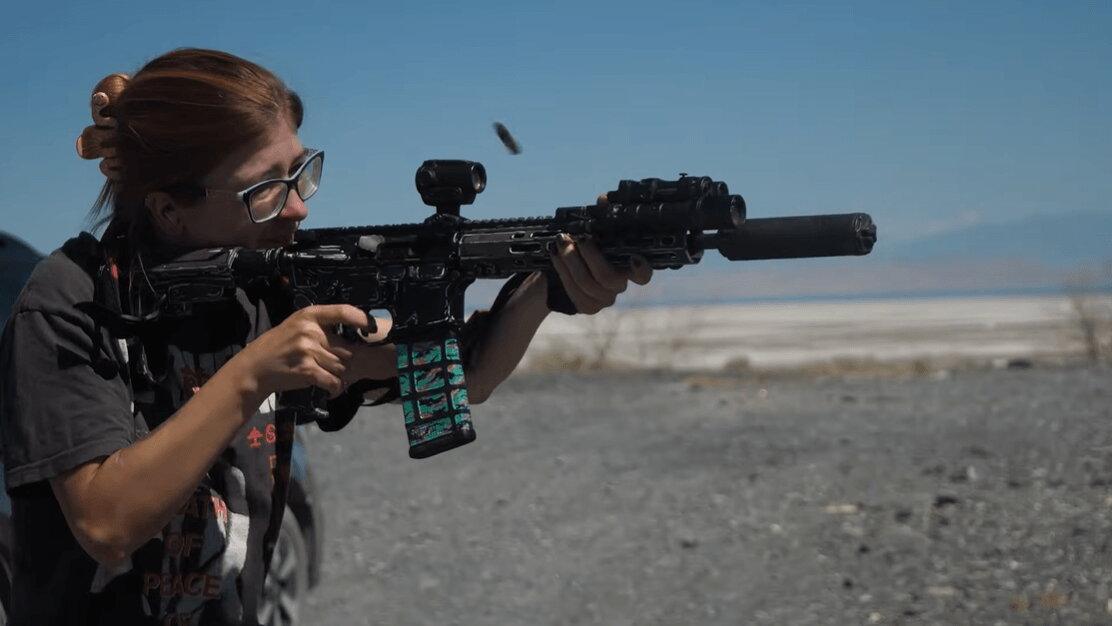
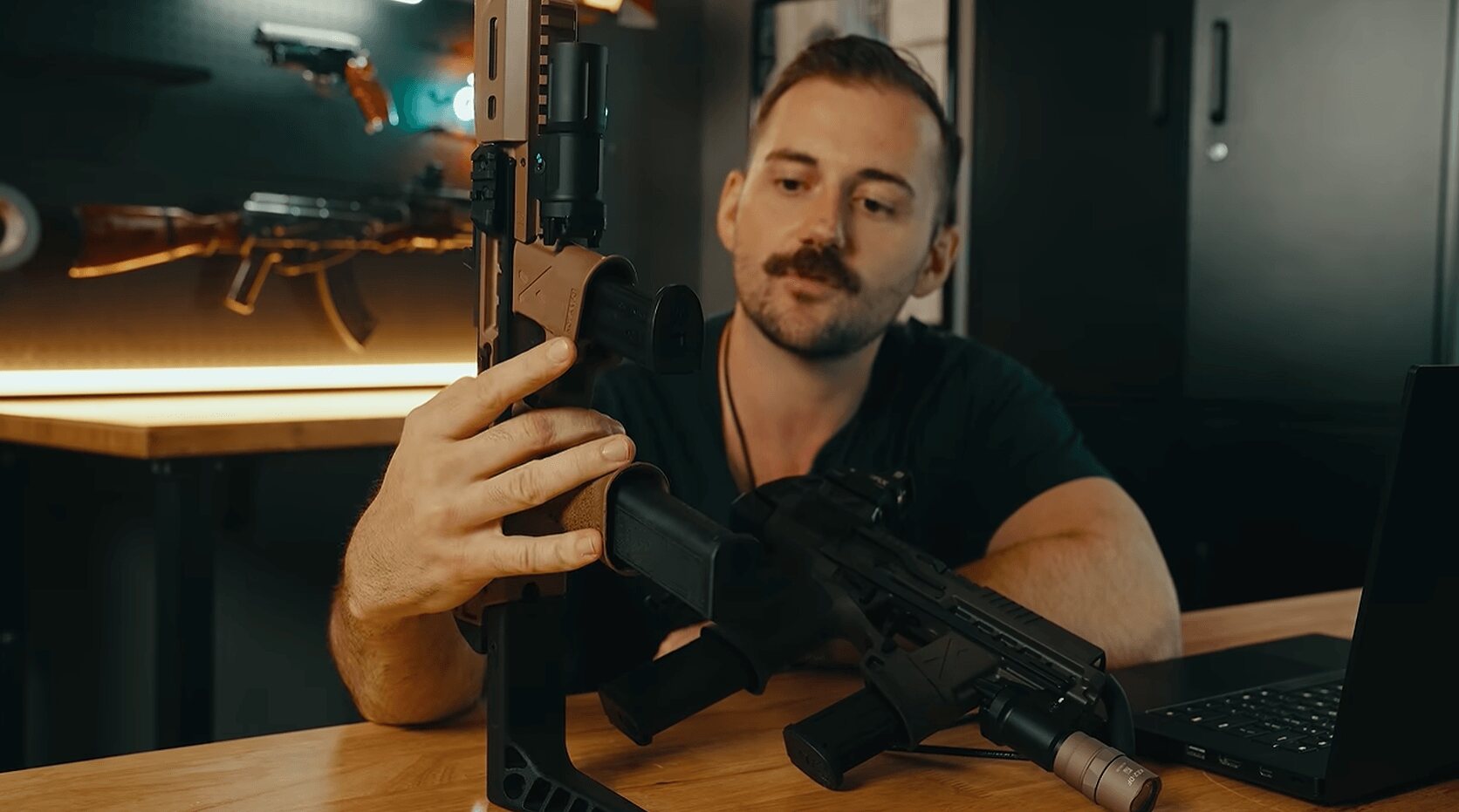
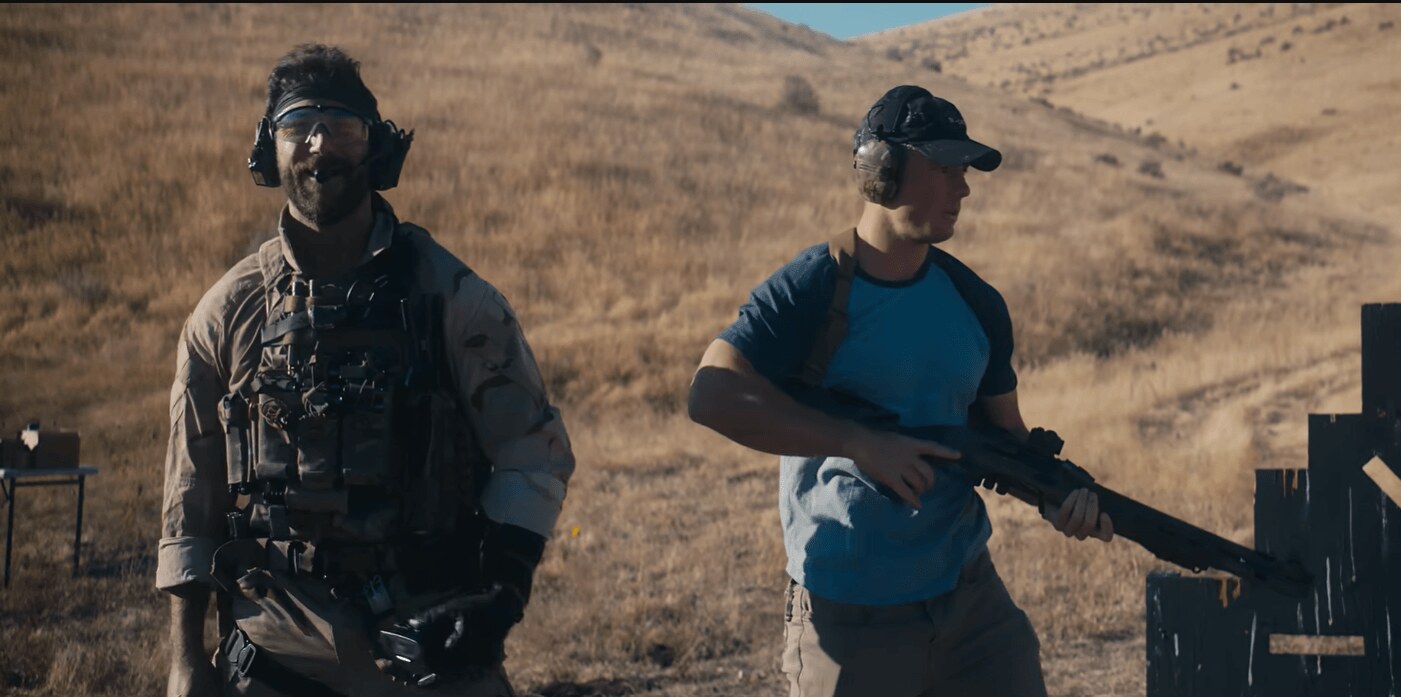
Garand Thumb has published a review of the Benelli M2-G1, the first gas-operated shotgun to carry the M2 name, testing two samples supplied by Benelli against a Benelli M4 and a Beretta 1301 Tactical Mod 2. The channel reports roughly 1,500 rounds fired across the pair, and its stated conclusion is that the shotgun is well built but hard to recommend at current prices.
The video carries a disclosure near its midpoint: Benelli supplied two shotguns for testing with no exchange of money, ammunition came from a sponsor, and the channel states it has worked with Benelli before on other projects.
What the RPO gas system changes
The original M2 is inertia-driven. The M2-G1 uses what Benelli calls R.P.O., or Rear Piston Operated — dual short-stroke pistons mounted toward the rear, collecting gas near the chamber, with the recoil spring isolated in the stock. Benelli's published material says capturing gas at the source keeps fouling out of the rest of the operating system and lets the gun cycle everything from light game loads to high-brass rounds.
In the video, the reviewer describes the layout as close to the M4's ARGO system but simplified, and says the M2-G1 lacks two features he attributes to the M4: an auto-regulating valve that bleeds off excess gas, and a self-scraping piston. Benelli's own R.P.O. material describes the pistons as self-regulating. The video cites no engineering document for the distinction; the reviewer says he raised his concerns with Benelli directly on a call, that the company was receptive, and that it passed the feedback to its engineering team.
He also takes issue with the name. Beyond the receiver, he argues, the M2-G1 shares little with the M2 — different operating system, different forward furniture — and says it should have been a separate model. He reports Benelli's explanation as wanting to keep the naming convention tied to the M2 receiver, with G1 marking the first gas-operated version.
Hardware problems reported across two samples
The review reports that the charging handle came out of the shotgun on both M2-G1 samples. The crew substituted a Benelli M4 charging handle, which the reviewer says fit and stayed put for the rest of the testing. He says the crew reviewed the footage and could not isolate the moment either handle came free. The ammunition in use is given as 1,325 fps military buckshot and 1,600 fps segmented slug, and he offers a manufacturing tolerance issue or the absence of gas regulation as possible causes — both stated as speculation rather than findings.
The video also reports the stock loosening under heavy loads, producing side-to-side play at the grip that required repeated retightening. The reviewer says it did not progress to a failure across the rounds fired, and states plainly that the sample size is two guns and that he is a single data point.
Recoil and handling against the M4 and the 1301
“Two samples, roughly 1,500 rounds, and a price band that overlaps the shotgun it was positioned beneath.”
J.D. Whitfield, The ReticleIn paired and paced side-by-side shooting, the reviewer ranks the M4 as the softest-shooting of the three, the 1301 Mod 2 next, and the M2-G1 the sharpest, while noting the M2-G1 cycles visibly faster than the M4, which he says has drawn complaints on cycling speed in the past. Capacity is given as 7+1, or 8+1 ghost-loaded, matching the M4.
On the features side, he credits the five-position stock over the M4's rotating collapsible design, with the caveat that its sloped comb changes head height at each setting. He also lists the oversized bolt release, the M-LOK handguard, the beveled loading port, and notches machined into the magazine tube that stop the barrel clamp sliding — a fix aimed at a complaint the video raises about earlier Beretta 1301 models. His objection to the handguard is styling, stated as personal preference.
Benelli M2-G1 price against the M4 and the 1301
Benelli lists the M2-G1 Tactical from $1,829 for the fixed-stock 5+1 model up to $2,149 for FDE and camouflage 7+1 models with adjustable stocks, with the gray 7+1 five-position model at $2,049. The Benelli M4 Tactical carries a $1,999 MSRP; the Beretta 1301 Tactical Mod 2 is listed at $1,799.
The video works from street figures rather than MSRP — roughly $1,950 for the M2-G1, $2,000 to $2,100 for an M4, and about $1,600 for a 1301 Mod 2 — and argues the gap is too narrow to justify what he characterizes as a less-proven gas system against a shotgun with decades of service behind it. His stated verdict is that the M2-G1 currently sits in "no man's land," with the qualifier that launch pricing usually settles and that his recommendation would change when it does.
The review closes by telling viewers not to let a single review decide the purchase, and to handle the gun themselves.
For context
- Benelli launched the M2-G1 Tactical on August 17, 2026; it is the first gas-operated shotgun the company has put the M2 name on.
- The original M2 is inertia-driven, using recoil energy and a spring between the bolt head and bolt body rather than tapped gas, which makes it light but more sensitive to load power.
- The Benelli M4 entered US military service as the M1014 and is the benchmark the video measures against throughout.
- Benelli Armi and Beretta are both part of Beretta Holding, which makes the 1301 Tactical Mod 2 an in-house competitor rather than an outside one.