Why it matters: Conversion chassis have quietly improved enough that a $330 accessory is now part of the same conversation as a dedicated pistol caliber carbine, which matters to anyone weighing a home-defense or travel setup built around a gun they already own.
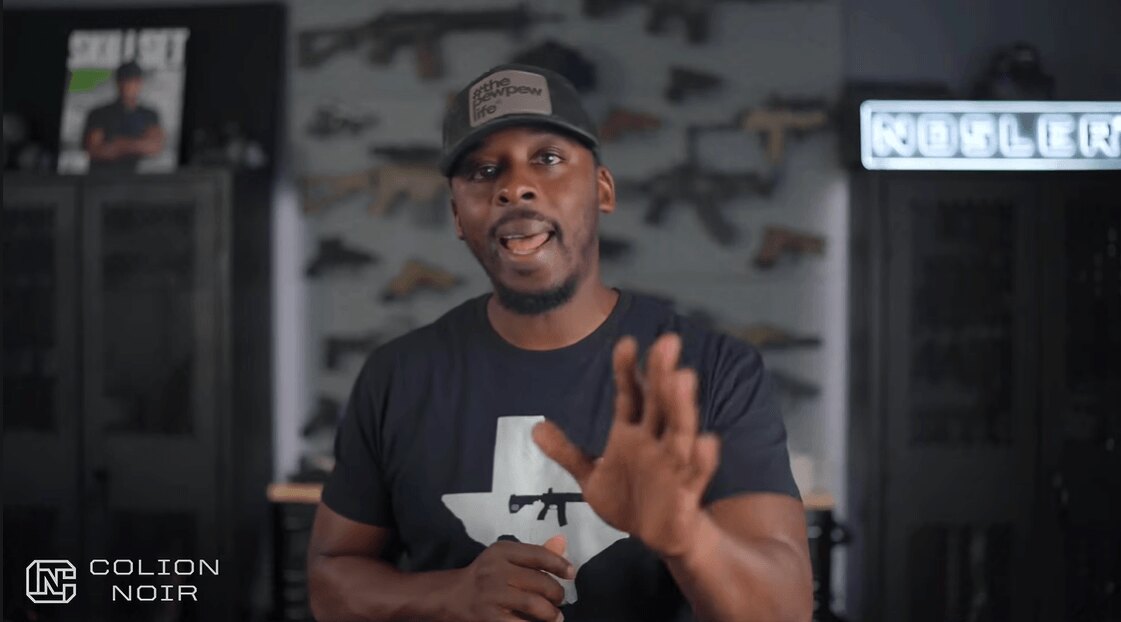
A review posted to Colion Noir's YouTube channel puts CAA's MCK Evo pistol chassis through a range demonstration and lands on a blunt question: does a $329.99 conversion kit now do more than a purpose-built pistol caliber carbine, or PCC? Noir spends most of the video working through the chassis's fit, capacity, and storage before answering.
What the MCK Evo chassis actually is
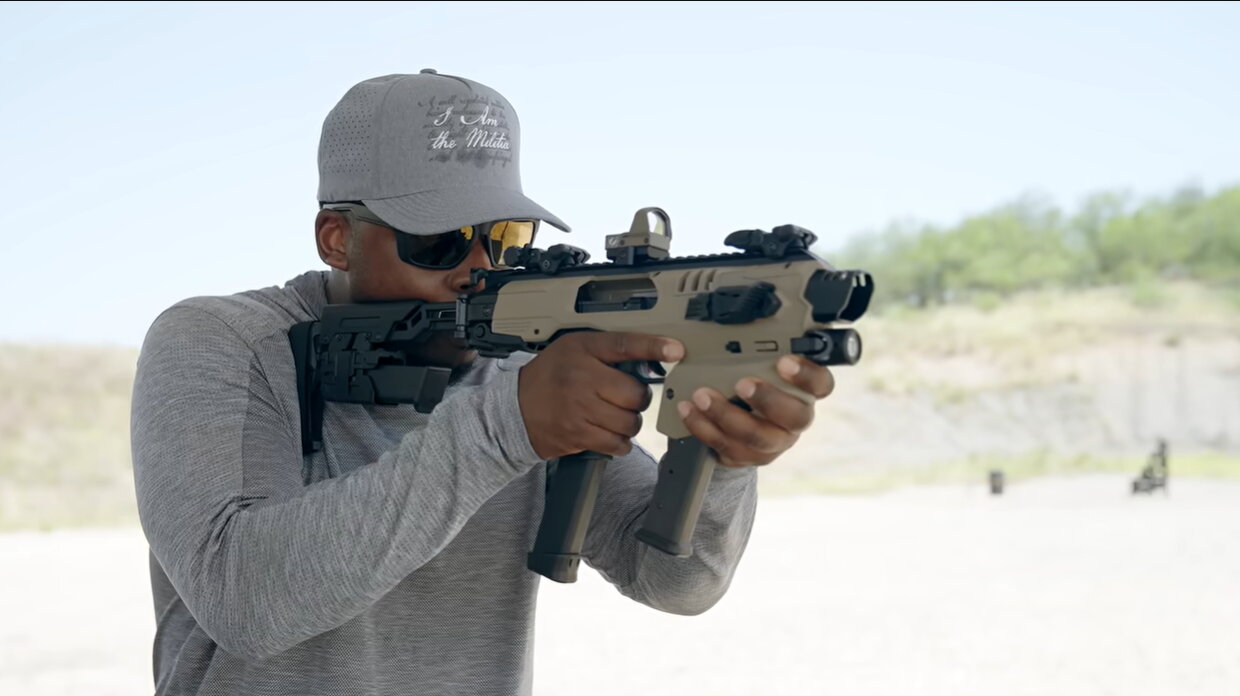
CAA (Command Arms Accessories) sells the MCK Evo as the newest generation of its Micro Conversion Kit line, a chassis a handgun locks into to add a shoulder stock, forward support points, an optics rail, and, on this model, an integrated light and cheek riser. CAA's product listing advertises compatibility with more than 100 handgun models, including Glock, Sig Sauer, Smith & Wesson, FN, Canik, HK and CZ pistols, at $329.99 with free shipping. Noir installs a Glock into the chassis on camera without tools; that no-tool, drop-in claim matches CAA's own marketing for the kit.
The 93-round number driving the video
Noir's case centers on capacity. He loads a 30-round Glock magazine into the pistol itself, a second into the chassis's built-in magazine carrier, and points to a third storage slot behind the brace, arriving at what he counts as 93 rounds staged on the gun with nothing carried on a belt. He compares that to an MP5 submachine gun running two coupled magazines, which he puts at 60 to 62 rounds, and says a fully loaded MCK Evo with three magazines weighs about what an MP5 weighs with one. Those figures are Noir's own count and comparison from the video; The Reticle has not independently weighed or verified them.
Ergonomics claims over a dedicated PCC
“A chassis that turns a carried pistol into a shoulder-fired carbine in seconds raises a question dedicated PCC makers have never had to answer.”
J.D. Whitfield, The ReticleThe rest of Noir's argument is about handling rather than capacity alone. He says the chassis replicates a rifle's four points of contact — shoulder, cheek weld, firing hand, support hand — on a pistol he already carries daily and is more familiar with than any dedicated PCC. He points to a cheek riser intended to reduce neck strain, molded cutouts for his support hand, an ambidextrous AR-style charging handle, and a full-length rail he uses to mount a red-dot optic (the included flip-up sights are polymer). He also demonstrates the pistol locking into and releasing from the chassis in seconds, which he frames as an advantage for anyone who wants to carry a pistol normally and reassemble a carbine at a destination.
Where the video says a PCC still wins
Noir doesn't call it a clean win for the chassis. He concedes a purpose-built PCC feels "cohesive" in a way a conversion kit doesn't — no matter how tight the lockup, a chassis is still visibly a pistol dropped into a housing around it. He calls that intangible the one column he can't argue away, even as he says the capacity and ergonomics numbers pulled him further toward the chassis than he expected going in.
For context
- CAA's MCK series has converted handguns into shoulder-fired chassis carbines for roughly a decade; the Evo is the newest generation, following earlier MCK models.
- A pistol caliber carbine is a dedicated long gun built around a handgun cartridge, such as the CZ Scorpion Evo 3 or Kel-Tec Sub-2000 — the category this video argues against buying outright.
- MCK-style chassis are typically sold and classified as stabilizing braces rather than shoulder stocks, a distinction that keeps the underlying handgun's legal classification as a pistol rather than a regulated short-barreled rifle.
- The ATF's 2023 rule reclassifying braced pistols was vacated by a federal appeals court in 2024, and the Justice Department dropped its appeal in 2025; braced pistols are back to their pre-2023 classification, though the ATF has said it retains authority to evaluate individual configurations shouldered as rifles.