Why it matters: Classic Firearms has published a five-part checklist for new concealed carriers covering law, pistol choice, gear, training and accessories. It is aimed at people who have a permit, or are getting one, and are unsure what to do next.
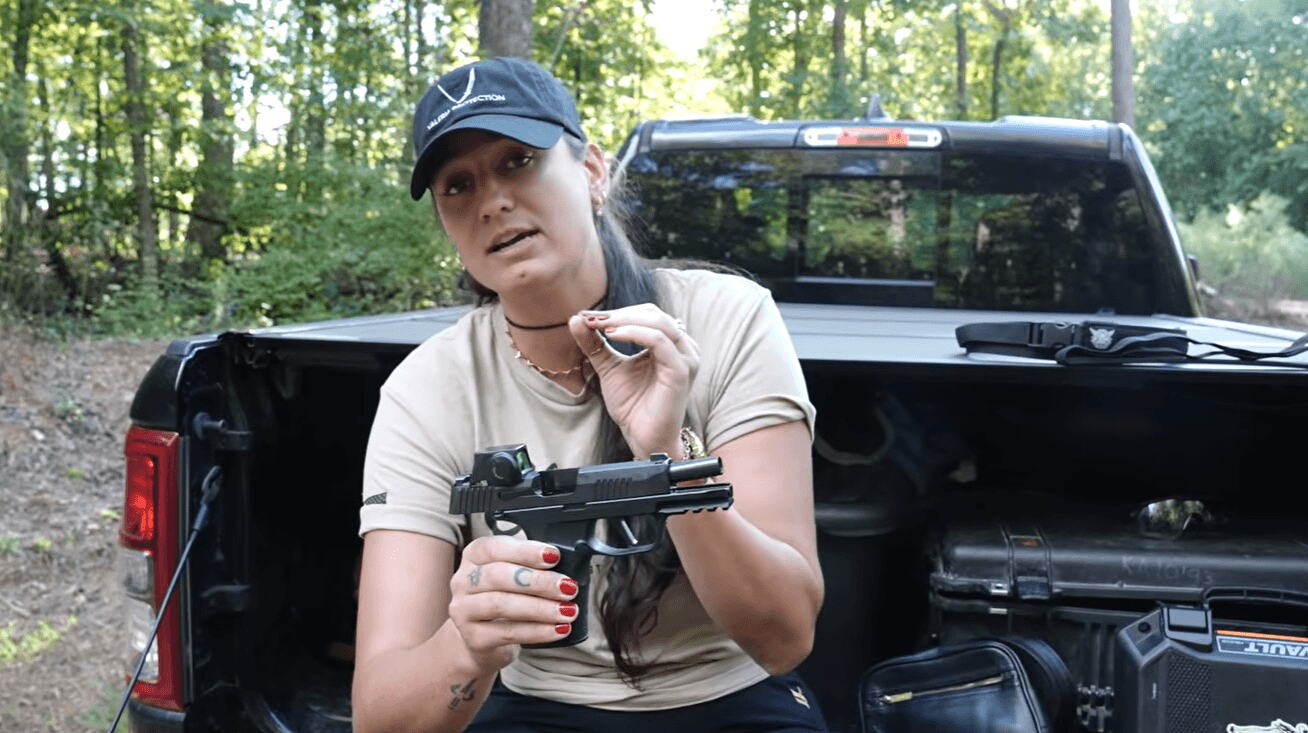
Classic Firearms' latest YouTube video, "What Do You Need To Start Conceal Carrying?", is aimed at viewers who are considering a concealed carry license, are partway through the process, or already hold a card and are unsure what comes next. The presenter, Eliza, films at Take Aim Training in Pageland, South Carolina, and breaks the subject into five categories she says are "all of equal value": laws, pistol choice, gear, training, and ammunition and accessories. A colleague off camera, Brandon, adds comments throughout.
Eliza starts with the law and says she will not attempt a full legal briefing, because learning the rules is "your responsibility" for anyone who carries. She tells viewers to research the laws in their own state and county and anywhere they plan to travel, and she recommends the USCCA's reciprocity app for comparing states. She also notes that concealed carry classes differ from state to state, with different required hours and course content.
Choosing a carry pistol: Sig P365X Macro and Bodyguard 2.0
On pistol choice, Eliza says she spent about ten years trying different pistols before settling on the Sig Sauer P365X Macro, which she says she chose for its capacity and grip size. She says she usually carries it in a Vertx fanny pack and switches to a Smith & Wesson Bodyguard 2.0 in .380 ACP when an outfit does not suit the bag.
She uses the two guns to illustrate a trade-off. Buyers, she says, need to rank their priorities (concealability, capacity or how the gun shoots) because one often comes at the cost of another. Her Bodyguard, for example, is "so easily concealable, but it is also 380." Her main recommendation is to find an indoor range with a rental wall and try several pistols before buying, including ones a buyer had not considered. She says she once bought a gun without shooting it first and does not recommend doing so. Brandon adds that owners should stay open to other models, since the first one bought "may not be the best one."
Whatever the choice, Eliza says, a carrier needs to know the gun "backwards, forwards, inside out," including where the wall in the trigger is and how to reload quickly. She notes that this takes time and money, because ammunition is expensive.
Concealed carry holsters, belts and bags
On gear, Eliza advises against universal holsters and against any holster without Kydex covering the trigger guard, so that nothing can reach the trigger unintentionally. She demonstrates with a PHLster Enigma, which she calls one of her favorite ways to carry. Her other tests of a holster are that the gun should stay put when the holster is turned upside down and that there should be an audible click when the gun seats. She names several holster makers she uses or recommends, including Tier 1 Concealed, and Brandon adds the IncogX, the Safariland and Haley Strategic design. "A lot of times you get what you pay for," she says.
For belts, she recommends a purpose-built everyday carry belt, saying it is made to hold up when the gun is drawn from the holster. Brandon shows a thick leather carry belt that he says he can wear to church. She also mentions Vertx bags and backpacks and a purse-style option for women who want carry gear that matches an outfit. The pair close the section with a warning not to get lost in the volume of gear on the market: "Keep it simple, stupid."
Concealed carry training, dry fire and shot timers
“Across all five categories, the video's advice points the same way: try before buying, learn the gun before adding to it, and train under pressure.”
Marcus Hale, The ReticleEliza calls training "the most important part of your concealed carry journey, outside of obviously knowing the laws and being responsible." She cautions against getting a license, putting a pistol in a handbag or a holster bought at Walmart, and assuming that will be enough under stress. She recommends a shot timer, regular drills and "reputable instructors," a point she repeats. She acknowledges that classes can be expensive and suggests that viewers who learn from online videos take them to the range and copy them as closely as they can, while treating what they see online "with a grain of salt." She also tells viewers to practice clearing malfunctions quickly under pressure.
For practice at home, she shows two laser training pistols, which she identifies as the SIRT and the Mantis, and recommends them because they are not firearms. Anyone dry-firing a real carry gun, she says, should have a system and keep ammunition in a separate room, and anyone using dummy rounds should take care not to mix them with live ammunition. She says she shoots competitively to put herself under as much pressure as she can, which she calls the place "where you really see the wheels fall off sometimes," and recommends finding weaknesses and drilling them. Brandon's addition: "find a way to put yourself under pressure."
Red dots, weapon lights and defensive ammo
The last category is ammunition and accessories. Eliza tells viewers to get comfortable with the pistol itself before adding optics, lights, grips or triggers. She runs a Sig Romeo-X sight on her P365X Macro and says she has learned it well. She is now learning a SureFire XC3 light and says she is not carrying it until she is confident with it. On ammunition, she says defensive hollow points feel different from full metal jacket range rounds and that pistols do not always run the same loads, so owners should find out what works in theirs and get comfortable shooting it.
She closes by recapping the five categories and urging viewers to train. She also advises against building a carry gun for appearance or social media: "Worry about your training first." The video ends by inviting viewers to share in the comments what they are nervous or excited about and what they have learned along the way.
For context
- The USCCA offers a free online concealed carry reciprocity map, and in April 2026 it launched a mobile app that includes state reciprocity laws and travel alerts.
- The Sig Sauer P365X Macro is a 9mm that ships with 17-round magazines; the Smith & Wesson Bodyguard 2.0 in .380 ACP comes with 10- and 12-round magazines.
- SureFire introduced the XC3, a 550-lumen compact pistol light that runs on a single 123A battery, at SHOT Show 2025.
- The SIRT is a laser training pistol that cannot fire ammunition; Mantis also makes the Mantis X, a sensor that mounts to a real gun's rail and scores trigger control.