Why it matters: Geissele Automatics is the only company to show its rifle publicly for SOCOM's high-pressure 5.56 carbine program. Its published design choices are most of what outsiders know about how any bidder is handling 82,000 psi in an 11.5-inch gun.
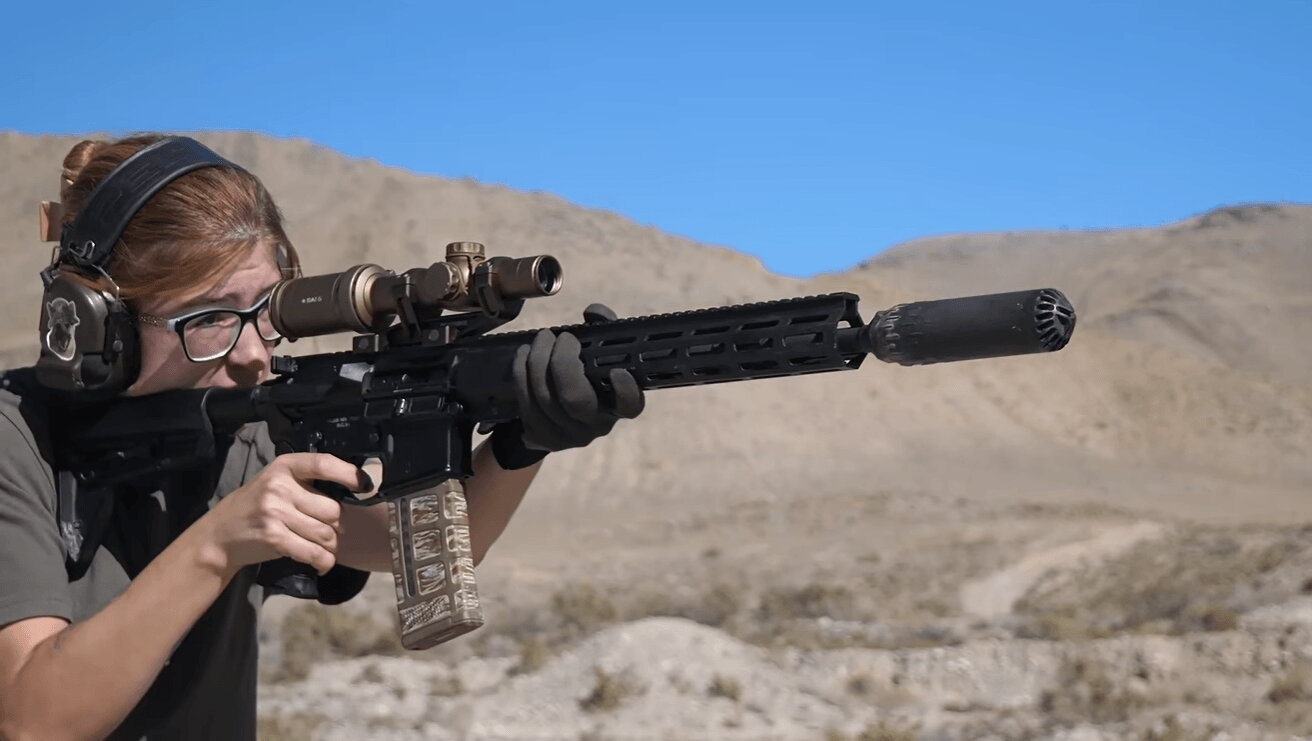
Boondock Ballistician's latest video, "How Geissele Tackled High Pressure," walks through Geissele Automatics' entry in U.S. Special Operations Command's Hypervelocity Improved Capability Assault Rifle program without the rifle in hand. The host, who goes by Boondock, says Geissele was asked for an interview with an engineer that did not happen, so the video works from what the company and its founder, Bill Geissele, have said in public. The 5.56 B-roll on screen is stand-in footage, not the HICAR itself.
A note recorded after the main segment adds a caveat. A rumor has circulated that Geissele is no longer in the bid, and the host ties it to a Soldier Systems post about vendors signing non-disclosure agreements, on the reasoning that a company still talking in public may not be under one. The video asks viewers to keep that in mind and offers no confirmation. The Reticle found no public statement from SOCOM or Geissele on the company's status in the program.
SOCOM's HICAR program and the 82,000 psi 5.56 requirement
HICAR asks for an 11- to 12-inch carbine or M4-compatible upper that can fire M855A1+, an experimental 5.56mm load the solicitation sets at 82,000 psi. Defense News puts that at roughly 20,000 psi above legacy 5.56 ammunition. The stated aim is to stretch the M4's effective range from about 300 meters to about 600. The threshold barrel life is 8,000 rounds, with 20,000 as the objective, and the rifle must still fire standard M855A1 and Mk 262 without a change in performance.
Pitch meetings ran September 15 and 16 at Fort Moore's Parks Range. The video describes each invited vendor firing about 600 rounds and giving a 30-minute presentation. Boondock calls 600 rounds too few to judge wear but enough to show how a rifle cycles, how accurate it is and whether the bolt shows obvious damage. The host says vendors at the event would have shot government ammunition on Federal's Peak Alloy cases, which Federal has shared with only a handful of companies, leaving many developers to test high pressure with NAS3 cases instead.
Other bidders have stayed quiet since the pitch days, the video notes, which leaves Geissele's rifle as the one entry the public can examine.
Geissele HICAR barrel: GNB200 steel and gain twist
Geissele says the barrel's GNB200 steel was developed with Carpenter Technology and the U.S. Army. Boondock points to Carpenter's published elemental breakdown, which lists manganese and vanadium, and reads the mix as aiming for hardness at the surface and toughness through the section, resisting abrasive wear without becoming brittle. Defense News reported in September that Bill Geissele said the company was "shooting our first iteration of the barrel now" and had not fired enough rounds to find its limit.
The barrel uses Geissele's gain-twist rifling, which the video says finishes at 1-in-7, and the company claims 1 MOA accuracy. Boondock expects the steel to do most of the work on barrel life, with gain twist adding a smaller gain. The host would like to see Proof Research's PXT exponential-twist barrels in high-pressure guns, but understands Proof's 5.56 PXT barrels to be under an exclusive arrangement with Sons of Liberty Gun Works.
Gas runs through Geissele's Phased Array tri-port system, which bleeds gas from three port locations. Boondock expects it to spread gas more evenly and to recoil more softly than the single-port high-pressure rifles the host has fired. The video also describes high-pressure ammunition in general as mild to shoot, attributing that to when peak pressure occurs and how gas is vented, and says rifles built for it have run standard ammunition with normal accuracy.
BB-62 bolt and why bolt thrust may matter more than barrel wear
“For now, Geissele's rifle is the one HICAR entry the public can examine, and its named parts are most of what outsiders know about how a bidder is handling 82,000 psi.”
J.D. Whitfield, The ReticleBoondock argues that bolt lugs, not barrels, take the most abuse from high pressure and will fail first. The host says the military is working to standardize how it tests bolt thrust and expects bolt-thrust limits to appear in future specifications for high-pressure rifles and ammunition. Barrel life matters less to this program, the video argues, because special operations units do not keep rifles long enough to reach high round counts.
Geissele's answer on the bolt is a proprietary BB-62 reinforced bolt, separate from its Stress Proof bolt. With no rifle to examine, the host speculates that it combines altered lug geometry with an upgraded heat treatment, citing Lewis Machine & Tool's enhanced bolt carrier group as an example of reshaping lug angles without changing material. The video also cites reports that Peak Alloy cases produce bolt thrust similar to standard brass despite the higher pressure, which would make the reinforced bolt a margin for future case designs or higher loads. NAS3 cases, the host says, are much harder on lugs.
The rest of the rifle weighs about 6.6 pounds and has ambidextrous controls. The video lists a rail with Geissele's zero-shift laser interface, a corrosion-resistant coating, a trigger and Airborne Charging Handle shared with the company's Super Duty rifles, and a reinforced barrel nut area that the host guesses is built to handle gas and heat.
No commercial Geissele HICAR without commercial ammunition
Geissele has said it will not sell a civilian HICAR until hypervelocity ammunition is commercially available. Boondock reads that as meaning true high-pressure loads, not current commercial ammunition on NAS3 cases, and frames the decision around liability: a civilian rifle rated for the pressure does not ensure owners will fire the right ammunition in it, or the right rifle with the ammunition. The host expects military high-pressure ammunition to stay as tightly controlled as proof loads for some time.
The video closes on the point Bill Geissele made himself: the company is still firing to establish a wear limit, and neither the ammunition nor the rifle specifications are settled.
For context
- The Naval Surface Warfare Center issued the HICAR solicitation in May 2026, and SOCOM notified selected vendors on June 29 ahead of the September pitch meetings.
- M855A1+ has no public specification; the Army's Combat Capabilities Development Command has called it a conceptual approach to more range and performance within existing calibers.
- Federal's Peak Alloy is a steel-alloy case built for high chamber pressure, and Federal agreed in 2026 to let the Army use the technology across multiple cartridges.
- Geissele already supplies sniper rifles to SOCOM and has said it spent about three years on high-pressure ammunition projects before the HICAR solicitation.