Why it matters: American gun-policy arguments have leaned on Australia as a model for thirty years. A second Australian buyback gives both sides of that comparison something new to point at.
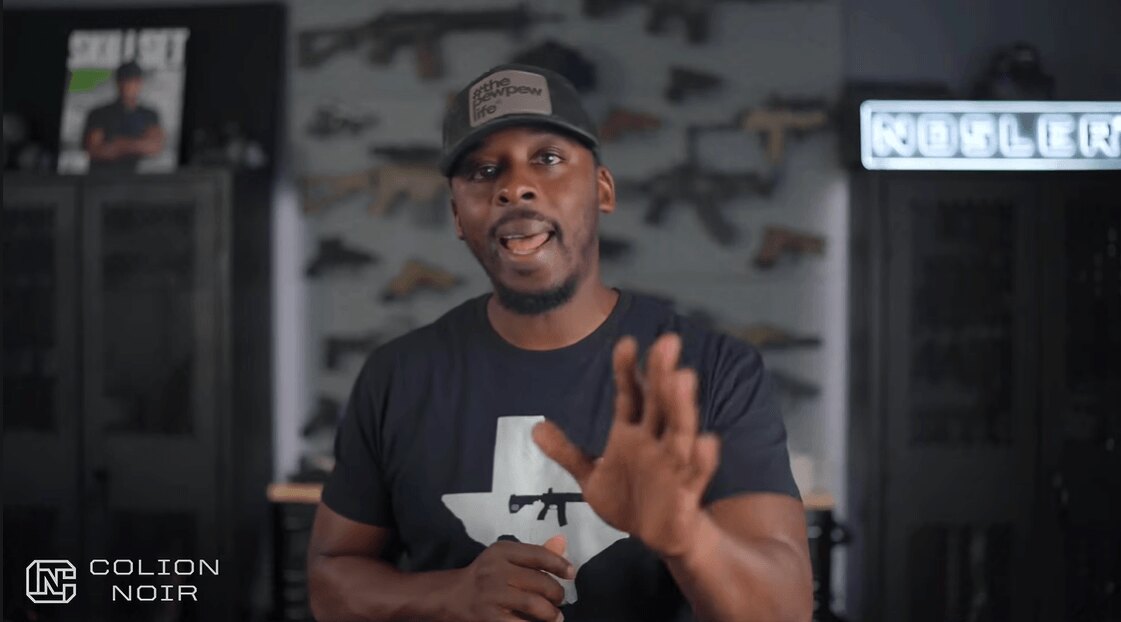
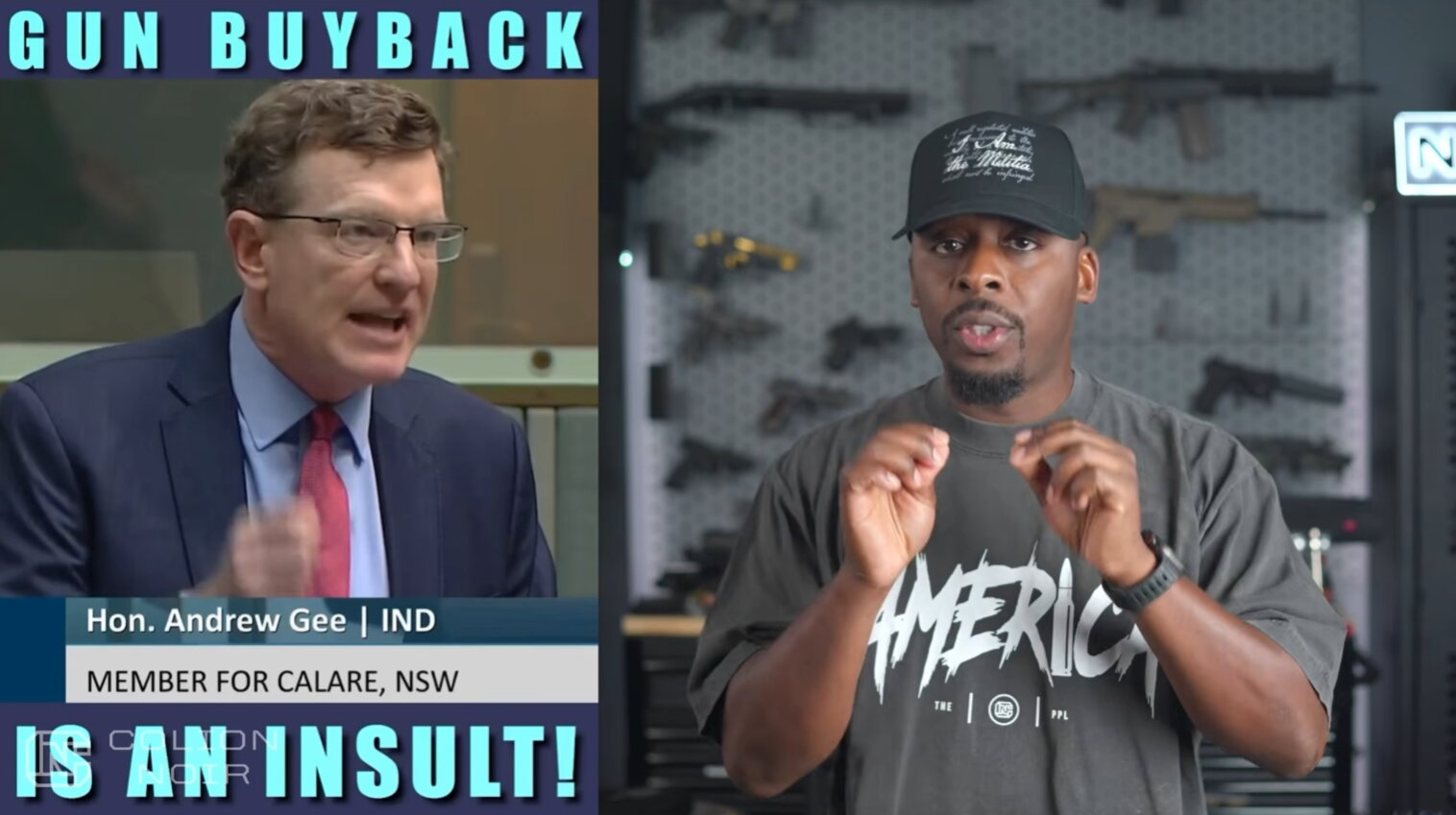
Colion Noir published a video on August 21 built around Australia's newest firearms buyback, arguing that the scheme now starting in New South Wales is the clearest available answer to the claim that American gun owners are imagining a confiscation risk. The video opens with parliamentary floor footage of independent federal MP Andrew Gee, who represents the NSW seat of Calare, calling the program "an absolute insult" and telling the chamber the government should "go after the real criminals" instead.
Noir's argument runs in three steps: that the word "buyback" describes a transaction nobody may decline, that Australia's 1996 confiscation was sold as a permanent fix, and that a second round in 2026 is itself evidence the first one did not deliver what was promised. "Nobody goes back for a second round of the thing that already solved the problem," he says.
What the NSW gun buyback actually does
The National Gun Buyback Scheme was announced jointly in mid-August by NSW Premier Chris Minns and Prime Minister Anthony Albanese, with NSW the first state to begin. The NSW government estimates the new ownership limits and reclassifications affect roughly 274,000 registered firearms — about 24 per cent of the registered total in the state — held by approximately 50,000 licence holders.
Phase one opens on November 2 under a fixed price schedule, in Australian dollars: $450 for an air rifle, $600 for a rimfire rifle, $650 for a single-barrel shotgun, $850 for a semi-automatic handgun or double-barrel shotgun, and $1,000 for a centre-fire rifle or revolver, plus a flat fee for associated ammunition. A second phase beginning in early 2027 creates a compensation pathway for firearms with an indicative market value above $3,000, capped at $10,000 each. Dealers and affected businesses can apply for grants of up to $25,000 and a one-off licence fee relief worth $500 over two years. The Commonwealth and NSW split the cost 50:50, with Canberra covering destruction and administration in full.
The scheme follows the December 14, 2025 terrorist attack on a Hanukkah celebration at Bondi Beach, in which two gunmen killed 15 people and injured about 40. National Cabinet agreed afterward to tighten firearms law nationally, and federal parliament passed the enabling legislation in January.
The Australian lawmakers the video quotes
Gee, who voted against the federal legislation, has said firearm retailers in his electorate are watching trade fall by 75 to 85 per cent and that more than 17,000 licence holders live in Calare. The second voice in the video is NSW Opposition Leader Kellie Sloane, of the Liberal Party, whose remarks were picked up by Breitbart and by Australian outlets. Asked whether the buyback would prevent another attack like Bondi, Sloane said it was "absolute bullsh*t," apologised on the record for the language, and added that "the real enemy is not a farmer, and it is not a law-abiding sporting shooter from Sydney's west."
Australian reporting has documented the industry complaints the video cites. The ABC quoted a gun shop owner saying her most popular firearms sold for more than $1,900 against an $850 schedule price, a Tamworth gunmaker reporting an 80 per cent revenue decline since December, and a sporting clays official calling the rates "contempt, really." The billion-dollar taxpayer figure Noir repeats comes from Gee's floor speech; the official NSW release states the cost-sharing arrangement but publishes no total.
Where the video's claims meet the record
“The dispute is not over whether Australia is buying guns back. It is over what the 2026 program proves about the one that came before it.”
Coleman Reyes, The ReticleTwo points in the video need checking against the reporting. Noir puts the 1996 buyback at 640,000 firearms; the standard figure is more than 650,000, at a cost of about A$230 million funded by a tax levy. He also plays crime statistics from a documentary produced in the years after that program — and flags them himself as contested, saying he will not rest the argument on a percentage.
The larger factual question is who the Bondi attackers were. Noir tells viewers they "weren't licensed sporting shooters from Western Sydney." NSW Police have said one of the two gunmen, Sajid Akram, held a category A/B firearms licence, was a member of a gun club, and was in lawful possession of six registered firearms. The weapons reported at the scene were a .308 Beretta BRX1 straight-pull rifle and two Stoeger M3000 12-gauge shotguns — a straight-pull design being available under a basic licence because it does not self-load. That licensing pathway drew heavy Australian coverage in the weeks after the attack.
Why an Australian scheme lands in an American argument
The video's closing turn is domestic. Noir plays a clip of an American politician holding up Australia as a model and argues that the model has now issued its own verdict by running the program a second time. His stated purpose is to give American gun owners something other than theory to point at when asked why they will not concede ground on background checks or a semi-automatic rifle ban.
The video does not address the research record on the 1996 program, which remains unsettled. RAND's review and a 2010 study by Andrew Leigh and Christine Neill report substantial post-1996 declines in firearm suicide and homicide rates; structural-break analyses find little attributable effect. Both sets of findings have survived peer review, and neither settles what a 2026 program will do.
For context
- The December 14, 2025 Bondi Beach attack killed 15 people at a Hanukkah celebration and prompted National Cabinet to agree to national firearms reform.
- The 1996 National Firearms Agreement, passed after the Port Arthur massacre, bought back more than 650,000 firearms at a cost of about A$230 million.
- NSW Police have said one Bondi gunman held a valid category A/B licence and six registered firearms at the time of the attack.
- Academic findings on the 1996 program's effect on homicide and suicide remain in dispute, with peer-reviewed studies on both sides.