Why it matters: Short-barreled rifles and suppressors are far more common than they were a decade ago, and the federal tax on both is now zero. Hornady is selling ammunition loaded specifically for those guns, and its engineers argue that conventional loads give up performance in them.
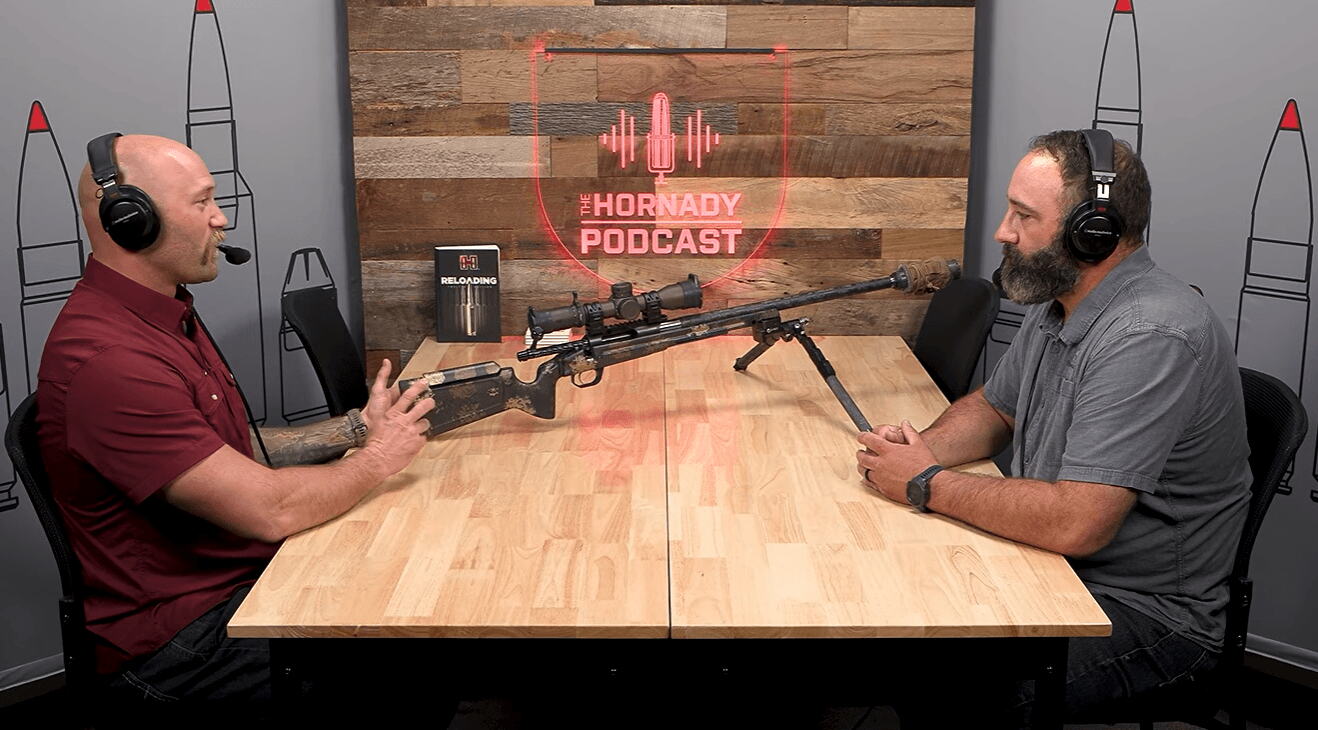
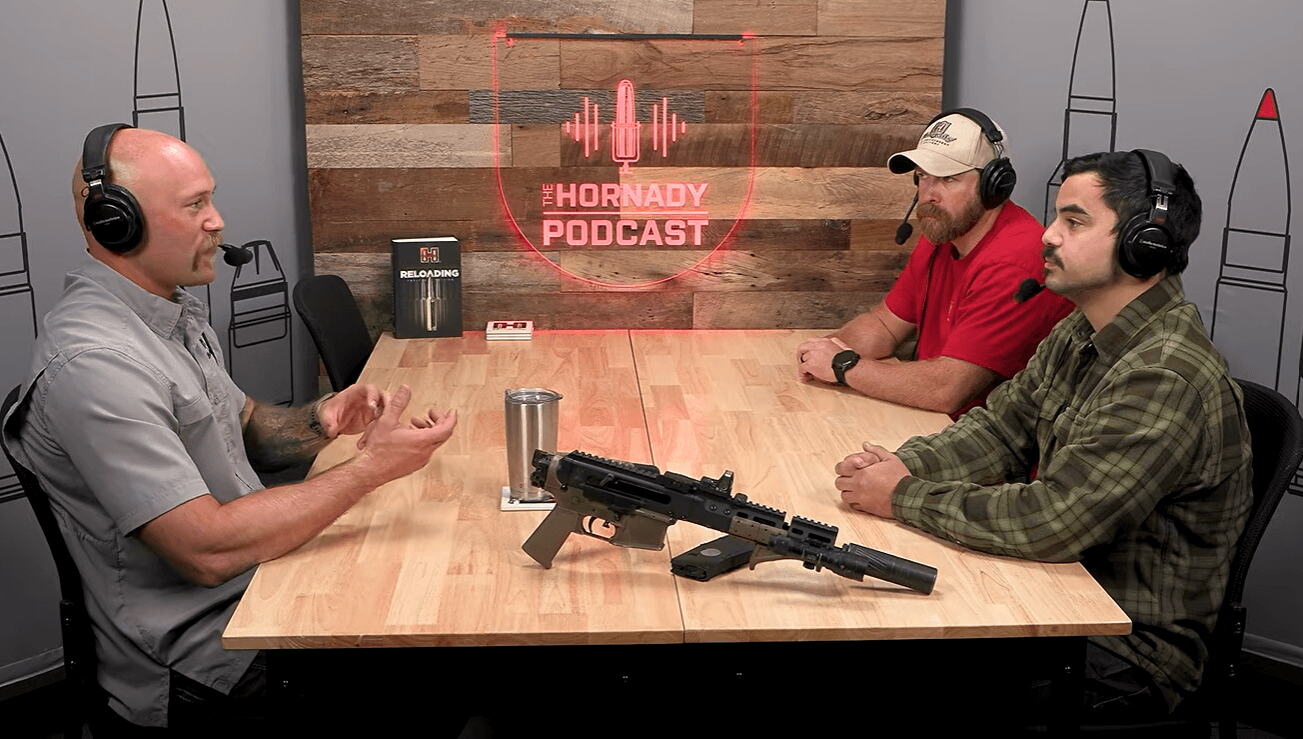
Hornady has introduced SBR Suppressed, a line of supersonic rifle ammunition loaded for short-barreled rifles and suppressed guns, and used episode 258 of The Hornady Podcast to explain the engineering behind it. The first lineup covers 5.56 NATO, 6mm ARC, 300 AAC Blackout, 308 Winchester and 338 ARC. Host Seth Swerczek said the line is part of the products Hornady is announcing for 2027 and that he expects it to grow.
Swerczek was joined by Jayden Quinlan, introduced as a senior ballistic engineer, and project engineer Miles Neville. The episode is a technical explainer rather than a catalog walk-through: it does not give prices or ship dates, and it describes the bullets only as moderately heavy for each cartridge.
Why conventional ammo struggles in short-barreled rifles
Quinlan's case starts with where cartridges came from. A round such as the 308 Winchester, he said, was developed for the rifles of its era, with barrels of roughly 20 to 24 inches, and its propellant is a slower-burning powder meant to finish burning in that length. Fired from a much shorter barrel, the same ammunition is safe and functional. "It's not catastrophic. You can do it all day every day, but there's performance trade-offs that exist," he said.
The engineers listed those trade-offs. Powder that has not finished burning leaves residue in the action, often visible as yellowish flakes once the graphite coating has burned off. The bullet leaves the muzzle at higher pressure, and Quinlan said gas and powder particles striking its base can widen groups. The panel also cited more muzzle flash and faster wear on muzzle devices from abrasive, unburnt propellant.
Gas-operated rifles add a timing problem. Shortening a barrel moves the gas port closer to the chamber, where pressure is far higher; Neville estimated that the port on a rifle-length system sees about a quarter of the pressure a short system's port does. With a slow powder, he said, the bolt carrier moves faster, which can tear case heads, throw brass into the back of the ejection port, or bounce a fired case back into the chamber. Quinlan said early unlocking can also make a primer back out of its pocket, which customers often read as overpressure ammunition. In ammunition returned for testing, he said, he could not recall a case where excess pressure turned out to be the cause.
A suppressor compounds the effect. The engineers said a can holds pressure in the system after the bullet exits, lengthening the window in which gas works the action. How much depends on the design, from flow-through models that the rifle barely notices to high-back-pressure cans.
How Hornady says SBR Suppressed ammo differs
Swerczek said Hornady's ballistics team surveyed short-barrel loads on the market and found that many use the same powder as the company's standard load at a reduced charge, sometimes paired with a heavier bullet. He did not name any brands. Quinlan said a lighter charge alone can make fouling worse, because lower pressure means a less complete burn, and estimated that adding a heavier bullet improves the underlying problem by perhaps 10 to 20 percent.
“Hornady's argument is that short-barrel ammunition starts with a different powder, not a lighter charge of the same one.”
J.D. Whitfield, The ReticleHornady's approach, the engineers said, is faster-burning, highly progressive propellants specified with a powder manufacturer, which the episode does not name. Quinlan traced the work to a project more than a decade ago with Dave Emary, Hornady's former chief ballistician, that produced the 75-grain 5.56 SBR load in the company's Black line, and to a later load built for a government agency whose rifles were dropping primers because of timing rather than pressure.
A faster powder takes a smaller charge to reach the same pressure, burns out earlier in the barrel and leaves less pressure behind when the bullet exits. Quinlan said bullet weights were chosen to suit that powder and the job most short barrels do, which he put at a couple of hundred yards and seldom beyond 300 to 400. He gave target barrel lengths of roughly 10 to 12 inches for 5.56, 14.5 inches for 6mm ARC and 14 to 16 inches for 308 Winchester.
Hornady's performance figures come from its own development testing. Quinlan said conventional rifle loads typically lose 20 to 30 feet per second per inch of barrel removed, so cutting four inches costs about 100 feet per second; with SBR Suppressed, he said, the same cut might cost about 80. Comparing the new loads with legacy loads across several rifles, he said groups were generally tighter and occasionally unchanged. The engineers also said the loads produce less muzzle flash and put less heat and fouling into a suppressor per shot.
SBR Suppressed trade-offs in longer barrels
The engineers also described limits. In a 5.56 rifle with a 16-inch barrel and carbine-length gas, Quinlan said, the load will run the gun most of the time but may not produce enough gas in every rifle, and owners should test it. A 6mm ARC rifle with an 18- or 20-inch barrel and a rifle-length-plus-one gas system may not cycle reliably. In a 24-inch bolt-action rifle the ammunition will function, but it will be slower than a conventional load because its powder has finished working well before the muzzle.
Every load in the line is supersonic; Hornady sells subsonic ammunition separately. Asked for favorites, Quinlan and Swerczek both picked the 5.56 load as the one likely to reach the most shooters, and Neville leaned toward 300 Blackout.
For context
- The $200 federal NFA tax on suppressors and short-barreled rifles fell to $0 on January 1, 2026, under the One Big Beautiful Bill Act; ATF registration still applies, and an August 2026 federal ruling against that requirement remains in litigation.
- Hornady already sells a 75-grain 5.56 NATO InterLock HD SBR load in its Black line, marketed for barrels of about 10.5 to 11.5 inches.
- Dave Emary, Hornady's longtime chief ballistician, led development of the 6.5 Creedmoor.
- In a gas-operated rifle, dwell time is the interval between the bullet passing the gas port and leaving the muzzle, the window in which gas can drive the action.