Why it matters: Every armored vehicle has to let its crew see out, and the transparent blocks that do the job are rarely shown taking fire in public. A creator video is now one of the few places viewers can watch a surplus Bradley vision block take hits from common small-arms calibers.
YouTube creator Lujan shot a vision block taken from an M2 Bradley in a video titled "The US Army's Bulletproof Glass is RIDICULOUS," published November 10. Lujan says the block, a serialized part, was bought on eBay, and that no published data on how much fire such blocks can take turned up beforehand. The plan was to work up through calibers until the block failed.
Lujan described the block as showing about 15 ridges and said it was unclear whether it was one thick piece of glass or several panes. The calibers were ranked by bullet diameter rather than energy, which Lujan said was a choice to keep the experiment simple. The stated hypothesis was that the block would give way to 7.62.
Bradley vision block vs .22, 5.56 and 7.62
The first shot was a .22. It marked the face of the block and stopped, and Lujan said it did not appear to get past the first layer.
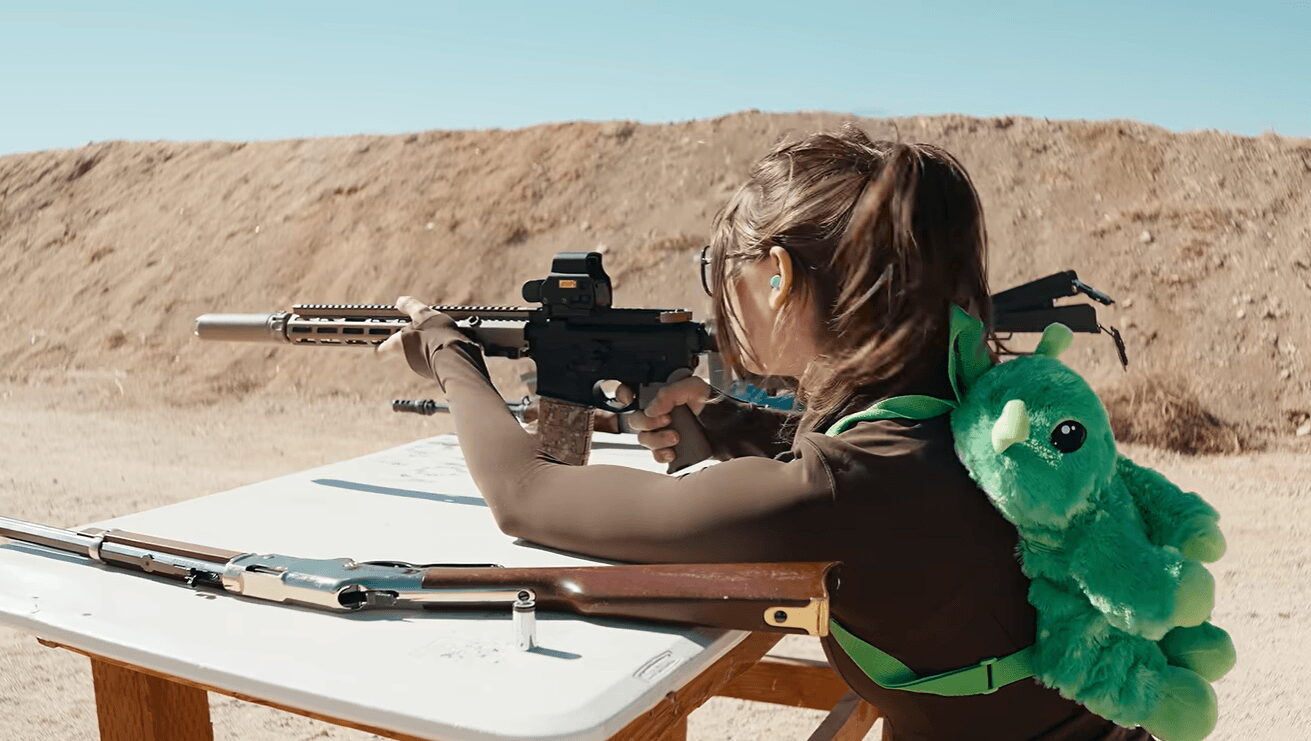
The 5.56 round came next, fired from a rifle with a SureFire RC4 suppressor and an EOTech optic that Lujan said also came from eBay. The crew then spent what they estimated at about 40 rounds missing the block. They worked out that every shot had landed low in the wooden backer, and a crew member named Nick, whose birthday it was, hit the block after aiming high. The 5.56 round cracked the front of the block, and an inspection of the back showed it had not come through.
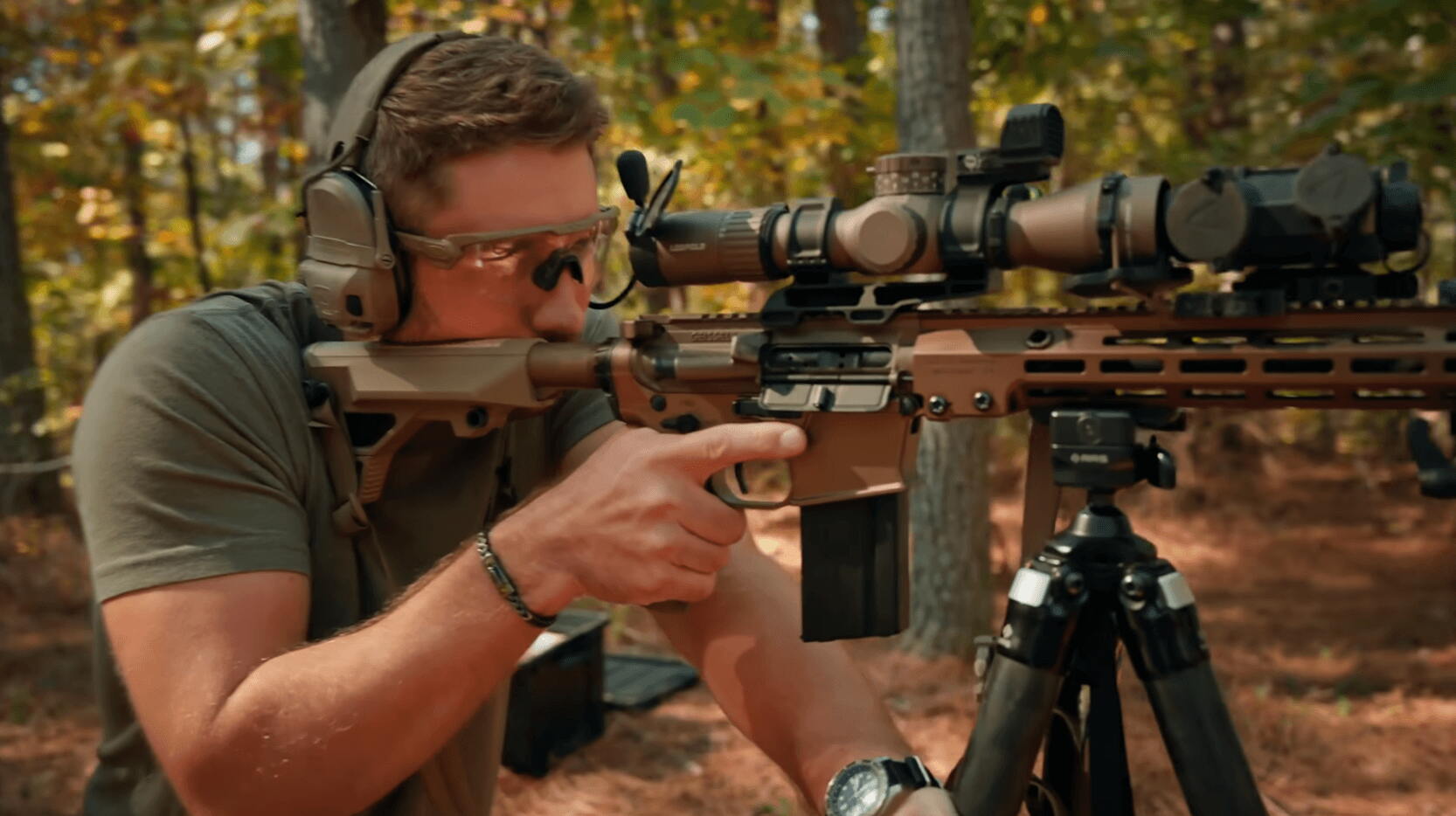
For 7.62, fed from an AK magazine, Lujan fired from a supported position while a crew member named Grace held Lujan steady. The round left a large impact on the face, and Lujan reported that it, too, "didn't make it all the way through." That ruled out the opening hypothesis.
9mm and .50 AE Desert Eagle hollow point results
A friend fired 9mm next and may have clipped the block. Lujan said it was not supposed to hit at all, and that any mark it left did not compromise the block.
“The test began as a climb through calibers to find a breaking point, and it ended as a count of how many 5.56 rounds it takes to wear one block down.”
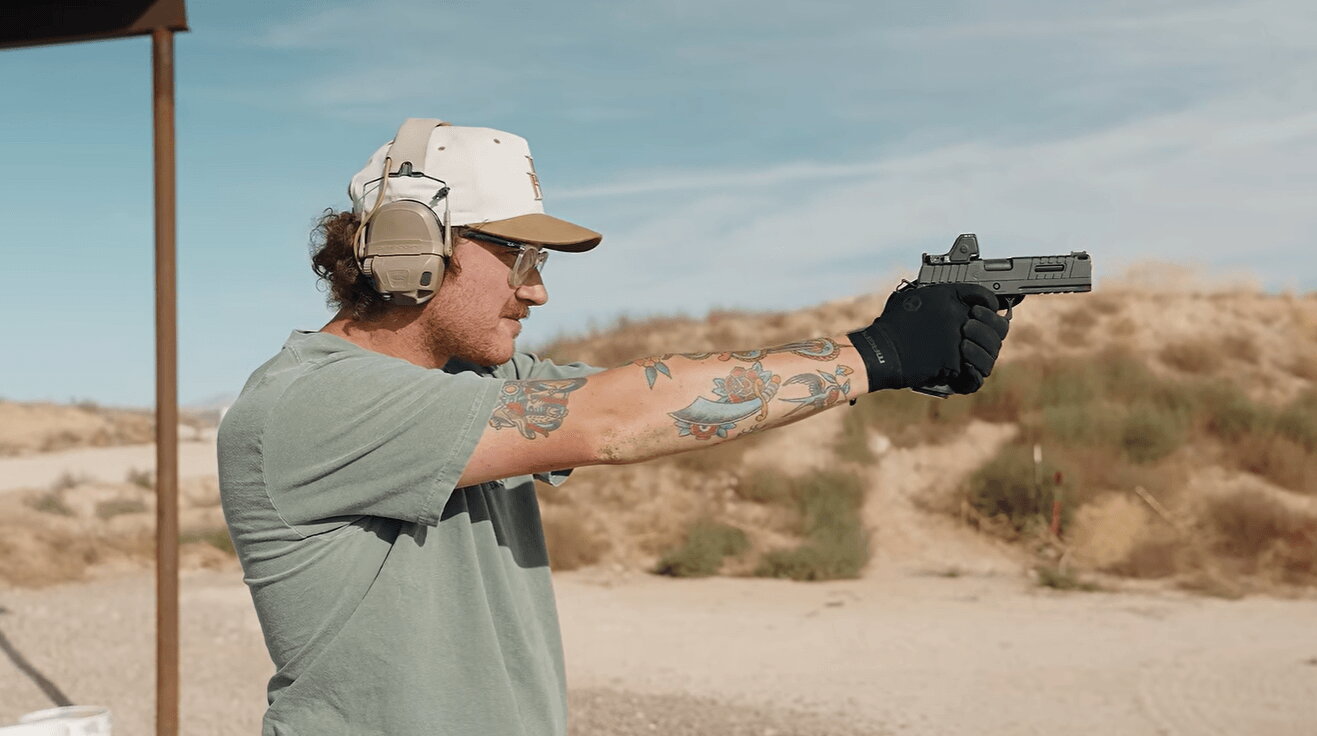
Avery Lindqvist, The ReticleThe last caliber was a .50 AE hollow point from a Desert Eagle, which Lujan hoped would expand and shatter the glass. Afterward, Lujan could not say for certain which crater on the face belonged to the .50 AE, but said that whichever one it was, it had not penetrated. The crew noted that no armor-piercing ammunition was used. Lujan pointed out that the Bradley's own main gun fires sabot rounds, which use a dense penetrator, and said no armor-piercing .50 AE load exists to compare.
Repeated 5.56 hits break the block apart in layers
With single hits from every caliber stopped, the test changed to counting how many 5.56 rounds it would take to get through. Nick guessed six or seven. The first strings did not produce an exit. Later hits sprayed a fibrous powder of crushed glass from the block, and Lujan suggested stopping because the debris was blowing around the crew on a windy day.
The crew then fired more rounds. One string broke a side section away from the block, which Lujan said showed it was built in layers "like an onion." After the last shots, the interior was packed with powdered glass, and Lujan said the exposed back layer was probably polycarbonate. The video does not give a total round count for the sequence or the shooting distance.
The video's title sponsor is Sonoran Desert Institute, an online college that offers firearms technology and uncrewed technology programs, and Lujan also gives a sponsor read for Silencer Shop. Lujan closed by calling the episode a fun one and asking viewers whether they wanted more videos of shooting through everyday objects.
For context
- The M2 Bradley is a U.S. Army infantry fighting vehicle, not a tank; its hull is welded aluminum with spaced laminate armor, and steel plates were added to the sides on the M2A2.
- The Bradley's main gun is the 25mm M242 Bushmaster chain gun, which fires sabot rounds; an M240C machine gun is mounted alongside it.
- The original M2 had six firing ports for its squad, and the side ports were plated over on the A2 and A3 variants.
- U.S. military bullet-resistant vision blocks are specified under MIL-DTL-11352, which covers all-glass, glass-plastic, and all-plastic laminated designs graded by duty level.