Why it matters: McMillan's fiberglass stocks have been on Marine Corps sniper rifles since the 1970s and remain a common choice for precision shooters. A new factory-tour video shows how much of each one is still built by hand.
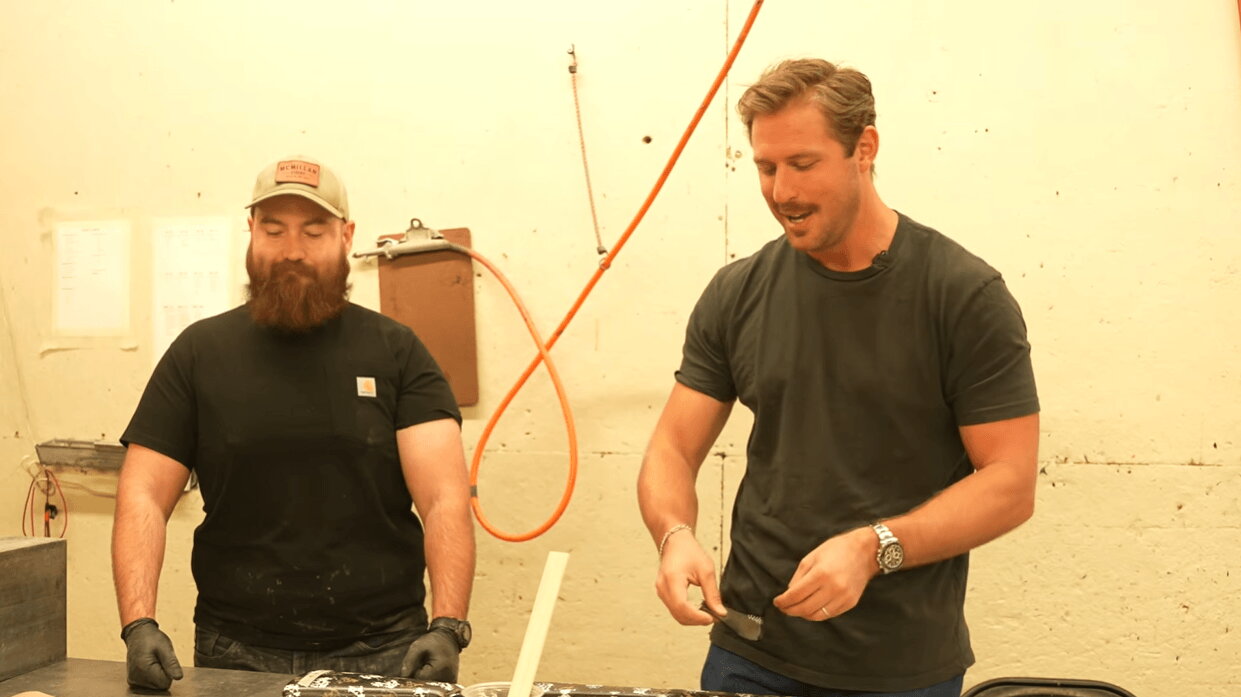
The YouTube channel 110 SASS Actual published "How A Sniper Rifle Stock Is Made" on October 4, a roughly 17-minute episode of a recurring segment the host calls "How It's Made in the 2A." He spends the episode at McMillan's stock factory in Phoenix, Arizona, following a single order from cut cloth to a finished, painted stock. The customer chose McMillan's M40A1 pattern, the stock the company built for Marine Corps sniper rifles in the 1970s. The episode opens with a sponsor read for Aim Surplus.
The host says he had assumed the stocks were injection molded in batches of a hundred, and that the visit changed his mind. By his account, dozens of people handle each stock and hours of work go into one. McMillan offers more than a thousand configurations, he says, so each order is built to its own specification.
Carbon fiber and fiberglass layup in the McMillan mold room
The build starts in the mold department, where a McMillan employee identified as Dave walks through the cloth. For carbon fiber stocks, a "presentation layer" cut to each model's pattern goes in first. It gives the molded-in finish that shows off the weave, and Dave says it adds structure as well. Backing material is then laid into high-stress areas in varying amounts, which he says is what keeps a hunting, tactical or competition stock from breaking in the field.
In the mix room, epoxies and resins are blended by hand. According to the video, each stock calls for a proprietary recipe that differs between carbon fiber and fiberglass and can vary by color; the day's batches were green, black and red. The exterior color is applied by hand inside the mold before any cloth goes in, which the host describes as finger painting. That step takes from several minutes to about an hour per stock, and he puts the stock at roughly 5 percent finished once it is done.
Resin-coated strips are then laid into an aluminum mold, and a putty-like compound dyed to match the stock is packed into the highest-stress areas. Last comes a bladder tube. Once the mold is closed, the bladder is pressurized to push every layer against the mold walls so the layers laminate together, and the part cures overnight. The host says a small mistake at this stage can mean a stock that cracks after a few rounds.
Rifle stock fill materials and CNC inletting
“A pressurized bladder forces each layer against the aluminum mold, and an overnight cure turns loose cloth into the shell of a stock.”
J.D. Whitfield, The ReticleOut of the mold, the carbon shell weighs about 13 ounces, the host says, and roughly another 15 ounces of material goes in before it is finished. At the fill station, workers pack the hollow shell with one of four materials, chosen for weight, felt recoil or balance. The densest is a fiberglass-epoxy mix used for heavy stocks and long-action magnums; the host relays that it is rated to .50 caliber and that no caliber has broken it yet. A lighter medium fill keeps much of that durability with less weight. A compound McMillan calls Edge goes around bedding areas and serves as infill in the ultralight carbon hunting stocks. An injection-molded foam usually goes in the rear of the stock.
The filled stock then goes to CNC machines, which cut the inlet, action pockets and pillars from a program written for each stock so a customer's barreled action drops in. The host says this is the only machine-run step he saw; the rest, down to touch-ups with Dremel tools, is done by hand. After machining, workers spend 10 to 30 minutes per stock adding material and reinforcing high-stress spots. Holding two machined stocks side by side, the host says the fiberglass one weighs about twice as much as the carbon fiber one.
Hardware, sea sponge paint and final finishing
Hardware is installed by hand: sling studs, flush cups, Picatinny and Arca rails, and the butt pad, which is glued on, taped, checked for alignment and then ground to shape on a belt sander. Stocks that get paint are cleaned and masked first. One option shown is a camouflage pattern applied with a natural sea sponge; stenciled custom patterns are also offered. After the paint dries overnight, final finishing blends the seams with small batches of color mixed by hand to match each stock, and every seam is ground with a Dremel. A heated box speeds the last cure before the stock is packed.
The episode ends with the finished M40A1 stock. The host calls it "the pinnacle of American craftsmanship" and thanks McMillan for letting the crew film on the floor. The video does not give a price, a lead time or a total build time for the stock shown.
For context
- Gale McMillan began building fiberglass stocks for benchrest competitors in the mid-1970s; the family sold McMillan Fiberglass Stocks in 2021, and the company is still based in Phoenix.
- In the 1970s, Marine Corps armorers at Quantico rebuilt M40 sniper rifles into M40A1s, replacing the original wood stocks with McMillan fiberglass stocks.
- Fiberglass and carbon fiber stocks are common on precision rifles because, unlike wood, they hold their shape through changes in heat and humidity.
- 110 SASS Actual is a firearms channel with more than a million YouTube subscribers; this video is one of its factory-tour episodes.