Why it matters: The P320's resale slump is now an aftermarket sales argument: a $125 forced reset trigger aimed at pistols owners already have and have stopped carrying. That turns a liability story into a hardware-economy one.
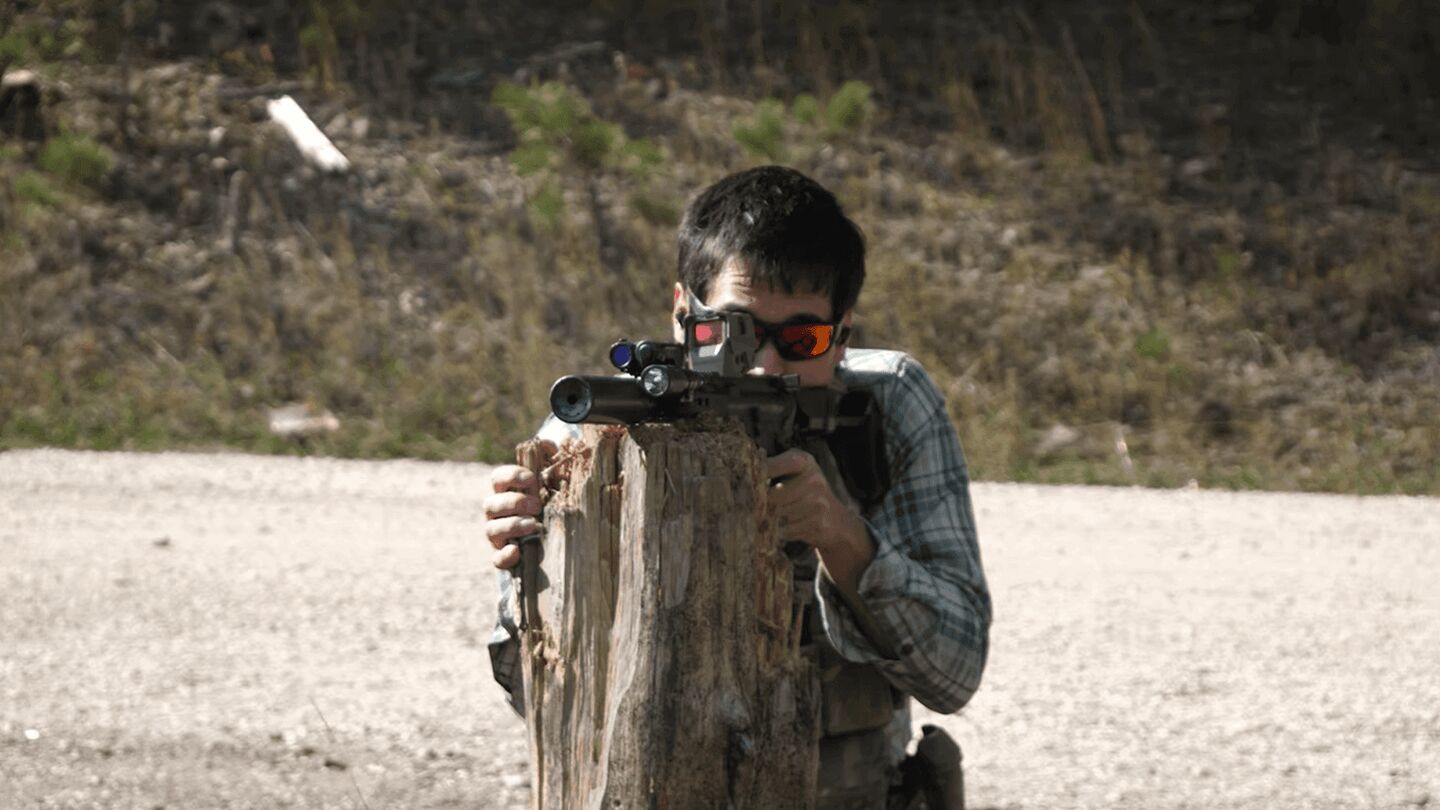
Administrative Results has published a review of the Reaper, a forced reset trigger built by Texas Triggers for the SIG Sauer P320, installed in a Flux Defense Raider chassis. The host says the company supplied the sample and that other channels received the same package.
The video's organizing claim is economic rather than mechanical. The reviewer says used P320s have fallen into the $300 range, for a pistol he puts at $500 to $600 under normal conditions, and that he has seen local shops discourage customers from bringing them in. Against that backdrop he argues the strongest case for the Reaper is not as a fresh purchase but as a use for a P320 or a bare fire control unit already sitting unused.
What the Reaper FRT is and how it ran
A forced reset trigger uses the pistol's own cycling to drive the trigger forward against the shooter's finger after each shot, raising the rate of fire while retaining one shot per trigger pull. Texas Triggers lists the Reaper at $125 and sells it as a drop-in part for the P320 Full Size, Carry, Compact, M17 and M18, as well as the Flux Raider, with a break-in period specified before the trigger runs as intended.
The reviewer says he asked Texas Triggers how many rounds had gone through the sample before it shipped and was told roughly 400, and that he filmed with 124-grain ammunition, inside the 115- to 124-grain range he says the company recommends. He describes a learning curve on the trigger itself: it wants a specific amount of pressure, a full squeeze produces burst-like strings rather than a controlled cadence, and he was unable to reliably isolate single shots. He says the setup was picky with shorter magazines, ran without trouble on full-size ones, and that the slide porting kept recoil manageable with a red dot mounted.
The accuracy comparison shown on camera
The video includes a five-round comparison at a stated 20 to 25 yards. With the Flux Raider in its standard semi-automatic configuration, the reviewer counts all five rounds in the A zone. With the Reaper installed, he identifies a flyer and points to two hits he describes as landing in bystander areas of the target. Neither string is repeated on camera.
The chassis, the selector, and what Flux has coming
The Flux Raider accepts a P320 fire control unit and, in the configuration shown, offers two positions: safe and fire. The reviewer's principal complaint is the absence of a third position, a safe-semi-FRT selector of the kind he says exists on some Glock forced reset setups. He argues the chassis geometry would have to change to accommodate one, citing the room available for the selector's throw and the placement of the magazine release bar, and says he has heard of three-position FRT pistols in development without naming a product or a date.
“The argument the video makes is economic rather than mechanical: the trigger costs $125, and the host pistol has rarely been cheaper.”
J.D. Whitfield, The ReticleFlux Defense currently lists Raider chassis for the P320, M17 and M18 family and for the P365, and has said Glock and Ruger RXM versions are coming; no release date has been announced. The reviewer references those plans in the video and says a Glock-compatible Raider would broaden the chassis line's reach.
Legal footing and the P320's contested year
Forced reset triggers are legal under federal law following the Justice Department's May 2025 settlement with Rare Breed Triggers and the National Association for Gun Rights, which ended the government's classification fight and returned seized devices. The settlement included a term under which Rare Breed agreed not to produce or market forced reset triggers for handguns that load through the grip. That restriction binds Rare Breed rather than the industry, and P320-pattern triggers from other manufacturers have reached the market since. Roughly 15 states and the District of Columbia prohibit the devices under trigger-activator or rate-of-fire statutes.
The pistol underneath the conversation has had a contested year. Houston police, the New Jersey State Police and the Washington State Criminal Justice Training Commission have restricted or dropped the P320, and New Jersey sued SIG Sauer in October 2025 seeking a recall and a sales ban. In August 2026 the Army closed its Modular Handgun System review covering more than 400,000 M17 and M18 pistols and reported no evidence of a mechanically caused accidental discharge, and a Georgia case was dismissed on September 1, 2026 after the plaintiff officer acknowledged the trigger was pulled. SIG Sauer has issued no recall and maintains the pistol will not fire without a trigger pull.
The reviewer's own conclusion narrows the use case. He says the Flux Raider in semi-automatic form makes a credible personal defense weapon, and that in forced reset mode the combination is a range gun, with no realistic defensive application in a setting where a shooter answers for every round fired. He adds that its competition is other 9mm forced reset hosts, several of which he says he would rather shoot, and that the practical obstacle for most owners is how many P320 magazines they already have.
For context
- A forced reset trigger uses the firearm's cycling to reset the trigger against the shooter's finger, increasing the rate of fire while keeping one shot per pull.
- The Justice Department settled its forced reset trigger litigation with Rare Breed Triggers in May 2025, leaving the devices legal federally while roughly 15 states and the District of Columbia ban them under trigger-activator statutes.
- The P320 has drawn years of uncommanded-discharge litigation and a New Jersey state lawsuit filed in October 2025; SIG Sauer has issued no recall and says the pistol cannot fire without a trigger pull.
- Flux Defense builds chassis systems that house a pistol's fire control unit in a braced or stocked carbine-style housing; the Raider line currently centers on the P320 and P365.