Why it matters: A Memphis man beaten in his own bedroom killed one of two intruders with a gun the intruders brought. What the surviving man is charged with, and what he is not, turns on a split in American felony murder law that self-defense coverage rarely explains.
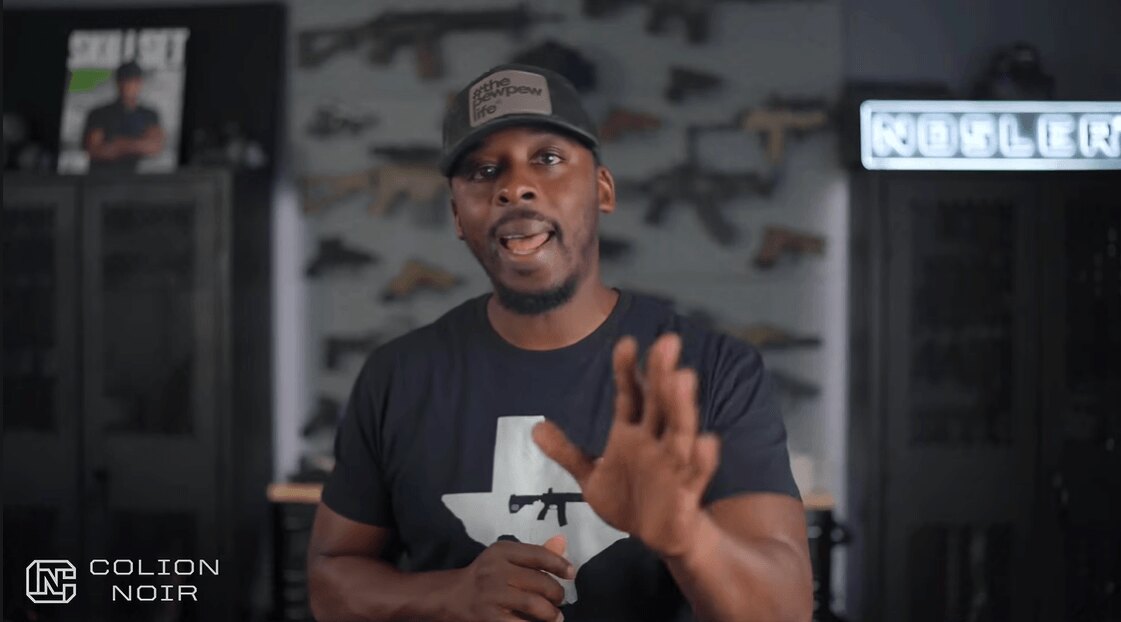
Colion Noir has built a video around a Memphis home invasion in which the man who was attacked killed one of his two attackers with a handgun the attackers brought into the apartment. The video argues that the surviving intruder, already facing four felony counts, could also be held responsible for his accomplice's death. Tennessee's appellate courts have read felony murder more narrowly than that.
According to the arrest affidavit as reported by Memphis outlets, Devonta Johnson and Zarian Sanders went to an apartment on Madewell in the Frayser neighborhood at about 4:40 a.m. on Tuesday, September 9, to see the mother of Johnson's child. The front door had been barricaded with a couch. The two men kicked it open, entered a bedroom, and began beating a man inside. Johnson drew a handgun during the assault. The man he was beating fought him for the weapon, the struggle carried out of the apartment, and outside the man shot Johnson, who died.
The affidavit account continues past the shooting. Sanders struck the man with a rifle, took the handgun, and left. Sanders, 23, was booked on especially aggravated burglary, aggravated assault, convicted felon in possession of a handgun, and employing a firearm during the commission of a dangerous felony, with bond set at $150,000. He is not charged in Johnson's death.
What the video adds to the local news clip
The video is assembled around a local television report and stops repeatedly at what the broadcast left out. Noir reads the affidavit detail that the door had been barricaded, and treats it as evidence the man inside expected trouble and had no better answer available than furniture. He also notes the broadcast did not say whose gun was fired. By the affidavit's account the man who fired it did not own it and took it off the person beating him.
Noir describes the outcome as a near thing rather than a template, saying the man won because he was desperate and the other man was sloppy, and that most people who reach for a gun from that position lose. The second half of the argument is about the law: Noir counts two firearms at the scene, neither belonging to the only person present who was legally able to own one, and notes that Sanders was already prohibited from possessing a firearm.
The Tennessee felony murder question
The video's sharpest legal claim is that Sanders could still be charged over Johnson's death, on the theory that when a violent felony is committed with a partner and the partner dies as a result, the law can attach that death to the survivor. The video names Tennessee as a state where that is possible, and says whether Memphis prosecutors will go that far is unknown.
“The disagreement is not about what happened in the apartment, where the video and the affidavit tell the same story, but about a charge that does not exist yet.”
Coleman Reyes, The ReticleWhether a surviving co-felon answers for an accomplice killed by the victim divides the states. Jurisdictions following the proximate cause theory allow the charge: any death resulting from the felony counts, whoever fired. Jurisdictions following the agency theory do not, on the reasoning that the killing was not committed by the felons or by anyone acting for them. Tennessee's first-degree murder statute, T.C.A. 39-13-202, defines felony murder as a killing committed in the perpetration of an enumerated felony, and burglary is on the list.
The narrower reading is the one Tennessee's courts have applied. In State v. Severs, decided in 1988, the Tennessee Court of Criminal Appeals held that a killing committed to thwart an unlawful act does not constitute felony murder. That does not settle what Memphis prosecutors will do. Booking charges come from the arresting officer's affidavit, and a grand jury can add counts, drop them, or return something different. But the charge the video treats as available runs against the reading Tennessee's appellate courts have used.
Why the breezeway matters to the self-defense case
Noir also flags where the shooting happened. The fatal shot was fired outside the apartment after the fight moved through the door, and he predicts someone will try to make that matter, arguing it was one continuous struggle over one gun that began in the bedroom. The statutory question is real. Tennessee's self-defense law, T.C.A. 39-11-611, presumes a reasonable belief of imminent death or serious bodily injury when deadly force is used inside a residence against someone who has unlawfully and forcibly entered it. The presumption is written around force used within the dwelling, which is why the location of the final shot is the sort of detail lawyers argue over. No charges have been filed against the man who fired.
Between the two halves of the argument the video pauses for a merchandise segment, promoting a hat and shirts carrying the words America and the Second Amendment on one line, tied back to the barricaded door. It closes with a request that viewers share the video, on the stated grounds that platforms and politicians suppress firearms content.
For context
- Especially aggravated burglary is a Class B felony in Tennessee, covering a burglary in which the victim suffers serious bodily injury; aggravated burglary is a Class C felony.
- Felony murder in Tennessee is charged under T.C.A. 39-13-202 as a killing committed in the perpetration of an enumerated felony, burglary included.
- States split between the agency and proximate cause theories of felony murder, and that split decides whether a surviving co-felon answers for an accomplice killed by the victim.
- Charges listed at booking come from the arresting officer's affidavit and can be changed, dropped, or added to when a grand jury returns an indictment.