Why it matters: Ammunition is normally expected to slow down as temperatures drop, and cold-weather velocity loss shapes how shooters pick loads for winter. A surplus round built in 1990 appears to do the opposite, in a test whose subject is banned from import and unsafe to repeat.
A chronograph test published this week put British L7A1 high-pressure 9mm through a cold-conditioning cycle and reported the round leaving the barrel faster chilled than it did at ambient temperature, reversing the direction most shooters expect.
The ammunition is a contract load Hirtenberger AG produced for the British Ministry of Defence between 1990 and 1992, intended for submachine guns operating in what period documents describe as adverse conditions. ATF publicized a warning about it in November 1996 after the manufacturer notified the agency that the ammunition had reached the world surplus market, and importation was blocked. The agency's warning stated the ammunition was loaded to pressures far in excess of that intended for use in handguns and should not be fired.
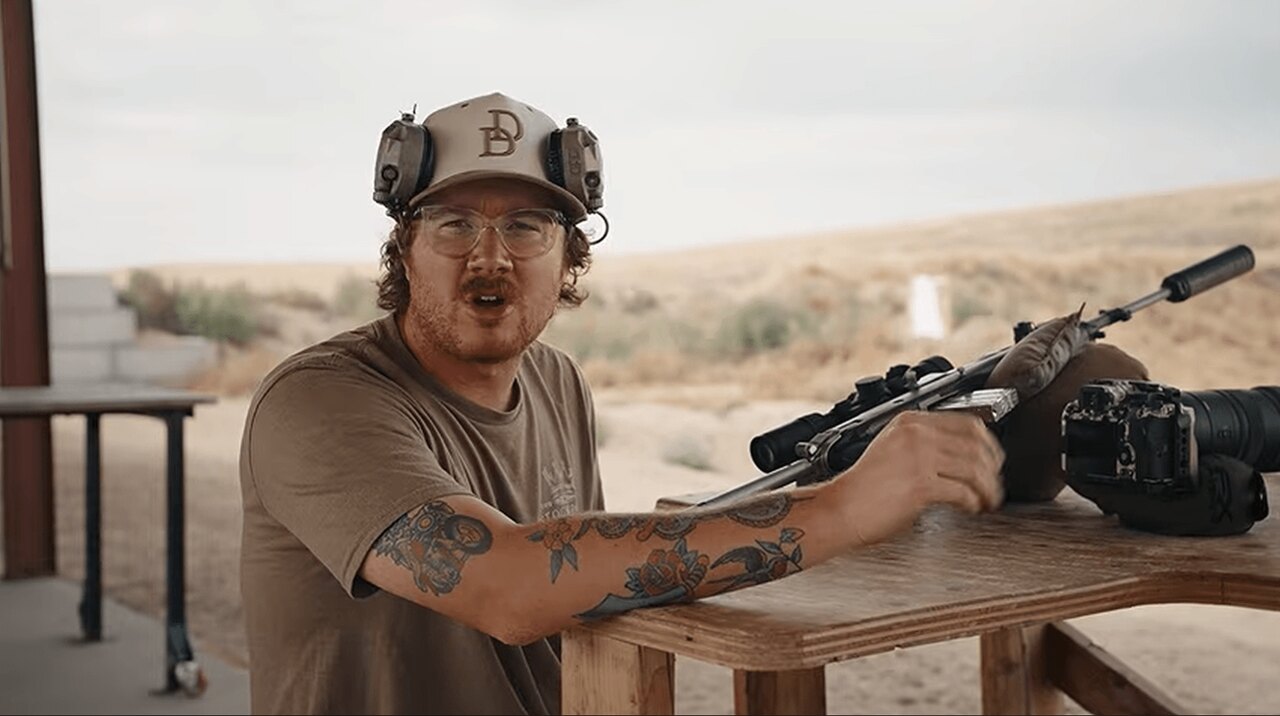
The test was run by Boondock Ballistician, who credited an unnamed viewer with supplying the ammunition and opened the video by telling the audience the rounds are not safe to shoot.
What the chronograph showed
The rounds were conditioned at roughly 25 degrees Fahrenheit for about four and a half hours. The video says dry ice was the intended medium, which would have reached about minus 110 degrees, but the supplier was closed.
Fired from an H&R 635 carbine, the L7A1 averaged about 1,550 feet per second at ambient temperature and about 1,570 feet per second after conditioning. From a Ruger RXM pistol, the same comparison ran about 1,310 feet per second ambient against nearly 1,370 feet per second cold. A control string of 147-grain ammunition fired from the 635 went the other way, moving from about 1,110 feet per second at ambient to roughly 1,090 to 1,099 feet per second cold.
Boondock attributes the behavior to propellant chemistry rather than anything specific to the cartridge, and says the propellant pulled from the cases is a flake type that he could not identify. The explanation he offers is that cold can fracture the microstructure of certain propellants, increasing burning surface area and speeding the burn. He describes this as his preferred explanation among several, not a measured conclusion.
Why ATF flagged the round in 1996
Hirtenberger advised ATF that the ammunition was contract-produced for submachine gun use only and was not to be fired in pistols. The manufacturer's notice, as circulated by the agency, said up to 12 million rounds had recently been sold on the world surplus market.
Britain moved to the L12A1 load, which collector references describe as substantially similar in performance with a reduced charge that keeps it under the 50,000 psi NATO ceiling the L7A1 exceeded.
Where the published numbers disagree
“A round that speeds up as it cools inverts the assumption most shooters carry into winter, but five rounds at 25 degrees is a hint, not a finding.”
Avery Lindqvist, The ReticleThe figures attached to the 1996 warning list the L7A1 as a 124-grain full metal jacket at 1,358 feet per second and 44,950 psi. Boondock says he found no definitive published pressure figure, and that after firing the rounds he places them at or slightly past 55,000 psi, in the range commercial proof loads occupy. That estimate is an inference from firing behavior; no pressure-measuring equipment appears in the test, and the video does not claim any.
The video's account of production volume also differs from the agency's, putting the run at a couple million rounds against the manufacturer's surplus-market figure of up to 12 million. Boondock further says copycat loads are in circulation under the same headstamp, that buyers have no way to know what those contain, and that parts of the cartridge's history are disputed in collector forum threads he does not attempt to adjudicate.
What the test did not settle
Sample sizes were small and the video says so. Five rounds through the RXM produced a stovepipe, which Boondock notes is consistent with the agency's original concern about pistol use, while the carbine ran without a stoppage over a comparably short string that he says proves little. He declined to test the ammunition at cyclic rate, citing the risk to his own firearms, and skipped a gelatin block on the grounds that a full metal jacket would show nothing of interest.
Projectiles pulled for measurement weighed consistently and sat over 7.38 to 7.4 grains of propellant. Boondock declined to name propellant types anywhere in the video, saying he would not publish information that amounts to proof-load instructions.
The cold result rests on a single conditioning temperature well short of the standards used in military cold testing, which commonly runs from minus 25 to minus 45 degrees Fahrenheit, with minus 65 used in early development work.
For context
- L7A1 cases carry an HP headstamp over the year of manufacture over the L7A1 designation, the marking collectors use to separate genuine examples from copies.
- NATO service pressure for 9mm tops out near 50,000 psi, while commercial proof loads used to stress-test a gun's strength run roughly 52,000 to 55,000 psi and are fired once or twice by design.
- Modern 124-grain +P loads reach about 1,250 feet per second at roughly 37,000 psi, which is why velocity on its own is a poor proxy for chamber pressure.
- Proof ammunition is a manufacturing test tool rather than a duty or range load, and repeated firing of proof pressures is outside what any firearm is validated for.