Why it matters: Mini-14 accuracy gets argued about constantly and measured rarely. This video puts numbers on one rifle across four loads and two shooters, and separates a suppressor-induced cycling problem from an accuracy problem.
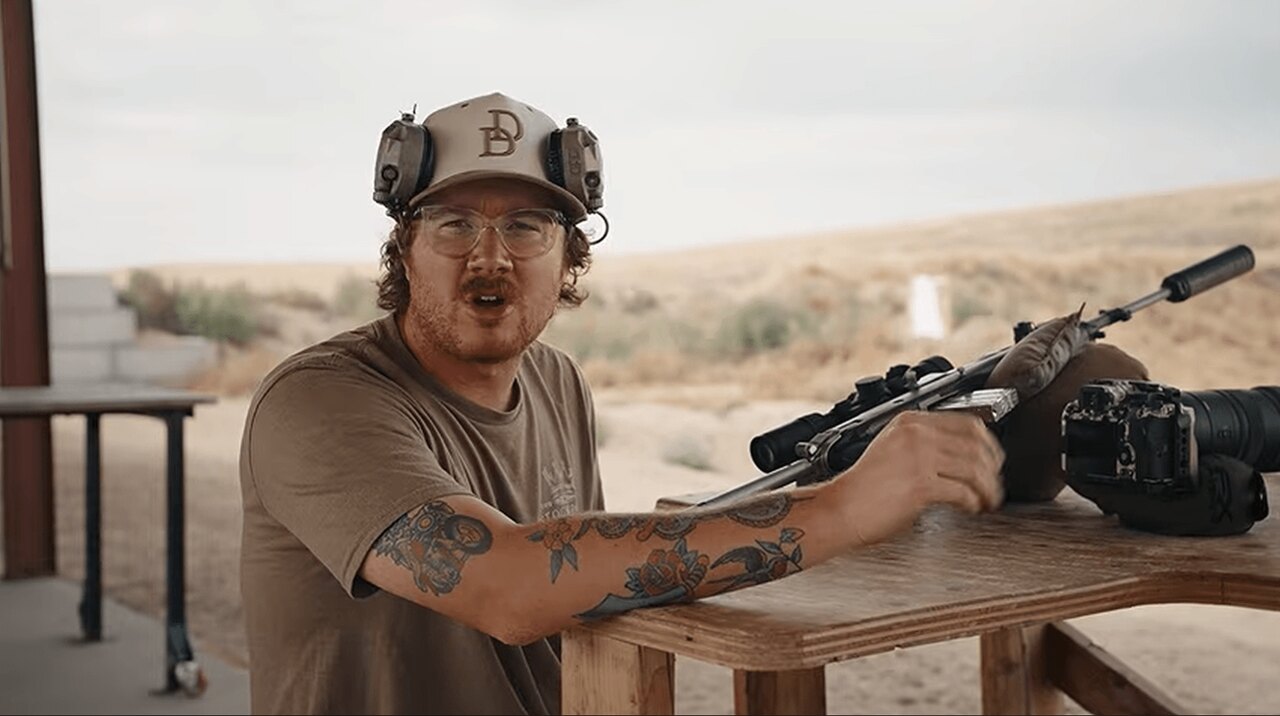
Micah Mayfield has published a video documenting a heavily modified Ruger Mini-14, and the largest measurable portion of it is a group-shooting session: what one modernized Mini-14 prints at 100 yards with four different loads, and how far out it holds together on steel.
The rifle in the video wears an Otter Creek Labs Polonium 30 suppressor, an aftermarket adjustable gas block, a Samson Armory upper handguard, a Samson folding wire stock, a GG&G side-mount scope base carrying a Steiner H6Xi 2-12, an SMS Trinity laser, a Ghost Mountain Group extended magazine release and a Diligent Defense Co grip. Mayfield discloses OpticsPlanet, Diligent Defense Co and HSL Ammo as sponsors on camera, and says the suppressor was supplied by Otter Creek Labs.
What the Mini-14 accuracy test measured
The 100-yard work started with 55-grain remanufactured ammunition. The video shows a five-shot group Mayfield calls roughly 8 MOA, with vertical stringing, which he attributes to range ammunition never intended for grouping rather than to the rifle. He then moved to match loads.
With an 85-grain match load, the video reports a group of about 3.5 MOA. With a 77-grain match load, Mayfield shoots three groups and describes them as landing around 3 to 3.25 MOA. One of those groups produced a four-round cluster he measures at roughly 1.5 to 1.75 MOA before a fifth shot opened it to about 3 MOA. His stated conclusion is that the rifle is "about a 3, 3 and a half MOA gun" with match ammunition, which he places at the upper end of the accuracy range he says Ruger advertises.
A second shooter, identified in the video as a PRS competitor, fired the rifle at a later session after the scope mount was re-torqued. The video describes a consistent low flyer with the 77-grain load and the remaining rounds falling into roughly three inches, and the same pattern with a 69-grain Barnes match round.
Hits at 500 yards, dispersion at 600
A separate distance sequence used 55-grain ammunition on steel at 150, 300, 400, 500 and 600 yards. The video records impacts at every distance through 500. At 600 the host describes shots landing left, right, high and low off an identical hold in what he characterizes as nearly dead wind, and concludes the rifle is outside its repeatable accuracy at that range. The video ties that spread back to the 100-yard number: three and a half MOA works out to roughly 21 inches of dispersion at 600 yards.
Suppressor gassing and the adjustable gas block
“A four-round cluster under two MOA and a fifth shot that triples the group is the measurement problem in miniature: the rifle can do it, just not on demand.”
Avery Lindqvist, The ReticleMayfield says the rifle stopped working correctly as soon as the suppressor went on. The video describes brass ejecting hard enough that the bolt would lock to the rear with live rounds still in the magazine, requiring the shooter to drop the bolt and chamber manually. Installing an adjustable gas block resolved it, and he says the suppressed rifle then cycled more smoothly than it had unsuppressed and stock. He does not name the gas block manufacturer on camera, saying the link will appear in the video description, and notes that the company's fitment catalog is organized by year range, barrel type and lug pattern.
A second reliability note appears later: a worn magazine allowed the bolt to drop from lock-back when handled, which the video presents as a magazine problem rather than a designed feature.
The scope mount and what the numbers point at
Mayfield spends part of the video on the GG&G mounting system, which replaces the Mini-14's factory side plate and stacks a Picatinny rail onto that plate before rings and optic go on top. He says the rifle needed re-zeroing on every one of three or four range trips despite being torqued to specification and thread-locked, and initially suspected the mount was the source of the dispersion. After re-torquing, the groups stayed near 3 MOA, which the video treats as evidence the number belongs to the rifle rather than the mount.
The video closes with Mayfield saying he is not finished with the build, soliciting parts suggestions in the comments, and mentioning a transferable Ruger AC556K he intends to feature in a later video.
For context
- Ruger introduced the Mini-14 in 1973, and the design has been revised repeatedly since, including a 2003 to 2005 redesign with a modified gas system and new sights, and a heavier tapered barrel added around 2007 to 2008, both aimed at tightening groups.
- MOA, or minute of angle, is a unit of angular spread equal to roughly one inch per 100 yards, so a 3 MOA rifle prints about three inches at 100 yards and about 18 inches at 600.
- The Otter Creek Labs Polonium 30 is a .30-caliber suppressor with 1.375x24 HUB rear threads, rated across calibers from 5.56 through .300 Norma Magnum.
- The Ghost Mountain Group extended magazine release is an aftermarket 17-4 stainless part that lets a shooter drop the magazine with the trigger finger instead of releasing the firing grip.