Why it matters: A seventy-year-old French police pistol stayed competitive through three stages of a practical match and then lost the match to magazine capacity rather than to anything about how it shoots, which is the distinction equipment divisions are built to draw.
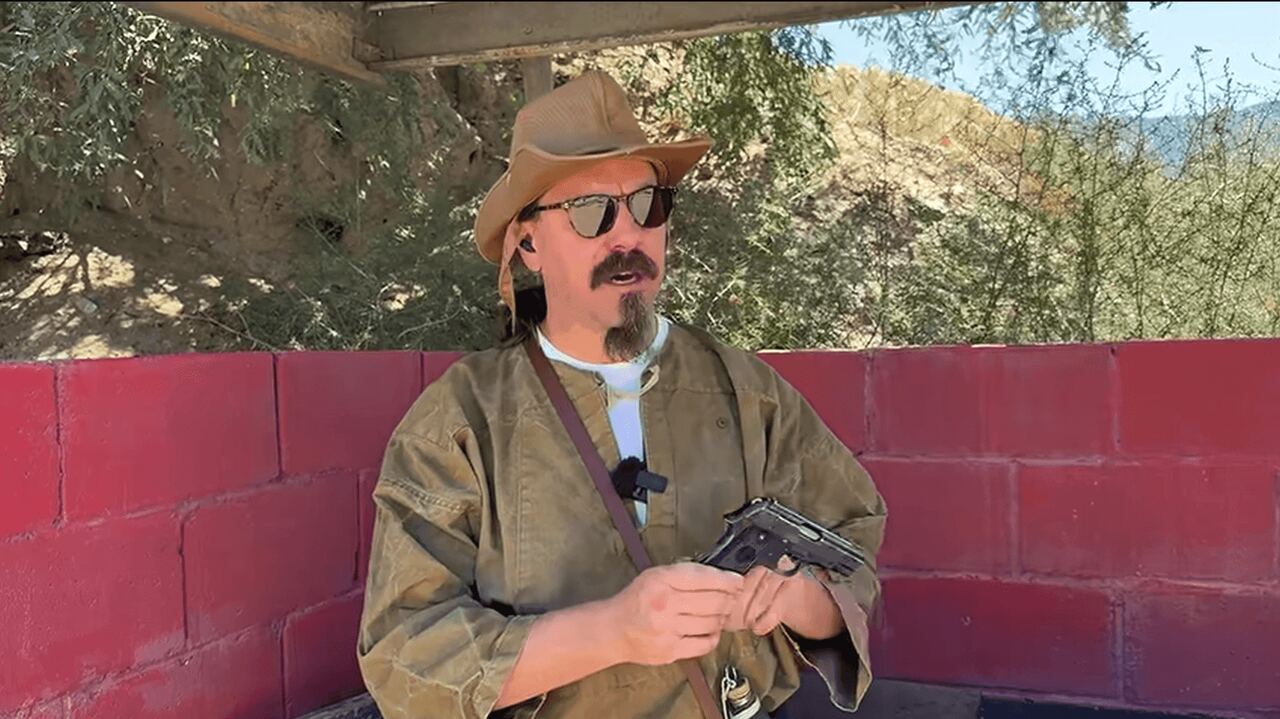
Forgotten Weapons published "Moroccan Unique Rr51 at the Hot Summer BUG Match" on September 11, a match run in which host Ian McCollum shoots a four-stage backup gun match in the southern Arizona desert with a .32 ACP pistol built on a Moroccan police contract. The gun is a Unique Rr51, a simple blowback design from Manufacture d'Armes des Pyrénées Françaises at Hendaye, and it feeds from a nine-round magazine. McCollum drops a single hit across the first three stages. The fourth asks for more hits than the magazine holds.
What the Unique Rr51 is and where it came from
The Rr51 sits at the end of a line that runs straight through the German occupation of France. MAPF, formed in 1923 and selling under the Unique brand, was building the Model 17 when Germany took over the Hendaye plant in 1940. Under German control the factory reworked the pistol to Wehrmacht requirements, replacing the internal hammer with an external ring hammer, adding a magazine disconnect and fitting an arched backstrap. That version was designated the 7.65mm Pistole Unique Kriegsmodell, and roughly 18,000 were built before Allied forces reached Hendaye in 1944.
MAPF did not revert to the prewar gun once the occupation ended. The company kept the occupation pattern and put it back into production in 1951 as the Modèle Rr51, carrying over the exposed hammer and the reshaped grip frame. French police adopted it in quantity, taking about 102,000 pistols into service over the following years. The pistol McCollum carries through the match is therefore a postwar French service arm whose defining features were specified by an occupying army and retained by the French manufacturer afterward.
The Moroccan police contract and the frame marking
Part of MAPF's postwar output went abroad. Batches of Rr51 pistols were supplied to the Kingdom of Morocco to arm its national police and royal military police, and those guns carry a device stamped on the right side of the frame tang behind the grip. McCollum describes it on camera as a stylized palm tree crest, which is the shorthand a good many collectors use as well, though dealer catalogues more often record the mark as a crescent over a pole. He also points out grips marked RF, for République Française. Guns from these contracts are not rare on the American market, which is part of why he picked this one for the match.
Four stages in over 100-degree heat
McCollum shoots the match in loosely French Foreign Legion themed kit, which he flags as an imperfect assemblage, noting the holster is not French at all. The theme follows from the pistol being North African and the day running past 100 degrees, and he makes a point on camera of saying the rig moves more air than it looks like it does.
“Nothing about the pistol failed across four stages. The last course of fire simply asked for more rounds than 1951 was willing to supply.”
Marcus Hale, The ReticleThe first three stages go well. On the opening stage he reports neutralizing all the targets, with the time called at five seconds. On the second he knocks down two plates and takes two of three on the remaining steel, finishing at nine seconds and down one hit. The third he calls clean. His stated expectation going in was that nine rounds of .32 ACP is ordinarily a workable amount of ammunition for this match, and through three stages nothing contradicts it.
Where the nine-round magazine ran out
The final stage requires 12 plates. The Rr51 holds nine. McCollum chambers a round first and then seats a full magazine, a technique he calls a Barney load, which brings him to 10 rounds with no reload available inside the stage. He goes 10 for 10 on hits. One of the plates he hits does not fall. The stage ends with the pistol empty and plates still standing, and by the account Forgotten Weapons published alongside the video, that stage carried enough points to outweigh his results on the other three.
His own summary puts the result on the equipment rules rather than on the gun's behavior. He describes the Rr51 as old and basic, a step up from a Ruby but not by a wide margin, and concludes that aligning the sights and pressing the trigger properly still produces hits with it. Nothing in the video shows the pistol malfunctioning, shooting loose or failing to feed across four stages in desert heat, and he says the run went considerably better than he expected.
The match structure makes equipment a scored variable. The monthly backup gun match McCollum shoots runs divisions by size and type, including Revolver, Hideout, Backup and Big 5, with the Big 5 division for pistols too large to count as backup guns and its magazines restricted to five rounds. Stage design sets the round count a competitor has to meet, and a course of fire written around 12 plates sets that number above what a 1951 French police pistol carries. That is a property of the stage and the division structure rather than a finding about the pistol.
For context
- Manufacture d'Armes des Pyrénées Françaises was formed in 1923 and built pistols at Hendaye under the Unique brand and a large number of other trade names and model designations.
- The Kriegsmodell changes made under German occupation, namely the external hammer, magazine disconnect and arched backstrap, became the basis for the postwar Rr51 rather than being reversed.
- French police took roughly 102,000 Rr51 pistols into service following the 1951 reintroduction, making it a standard French sidearm for years.
- Forgotten Weapons is hosted by Ian McCollum, who shoots the monthly southern Arizona backup gun match regularly with historical pistols and publishes the runs as a recurring series.