Why it matters: Forced reset triggers are federally legal again and selling into the hands of shooters who have never fired one, and the resulting range-safety clips have become their own genre. This video treats that as a technique problem with a technique answer.
The opening premise of Juicey Media's FRT control tutorial is a clip genre most gun-YouTube viewers have already seen: a shooter touches off a forced reset trigger for the first time, the muzzle walks, and the rounds go somewhere well past the target. "We have all seen the videos of people sending rounds into the next zip code up over the berm," the host says at the top. The video's answer is not a different part or a different rifle. It is where the feet go.
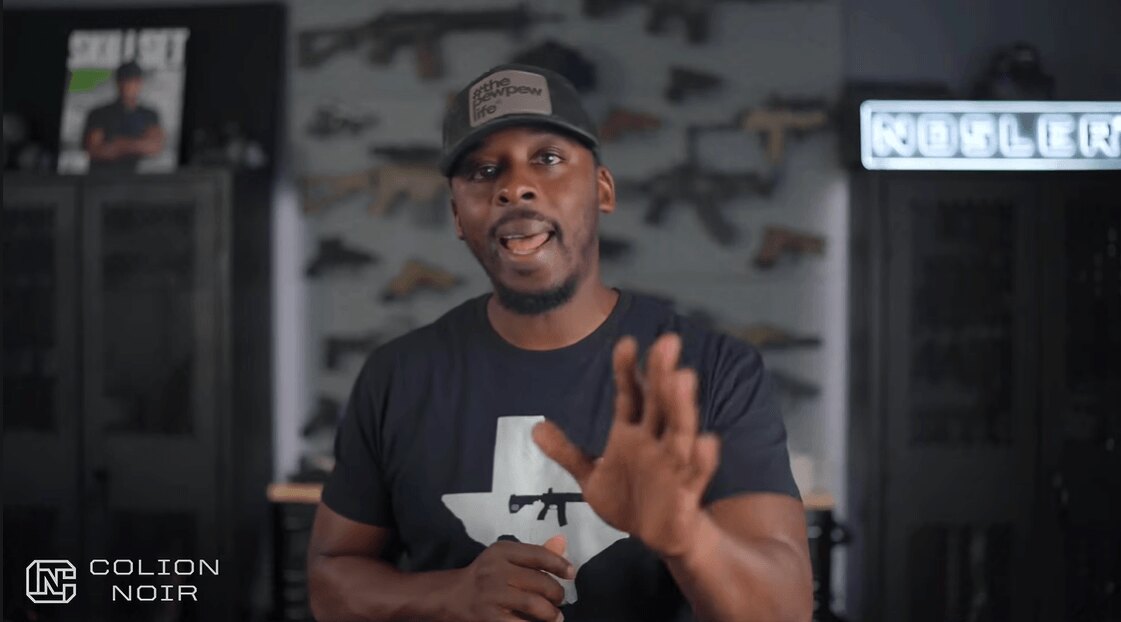
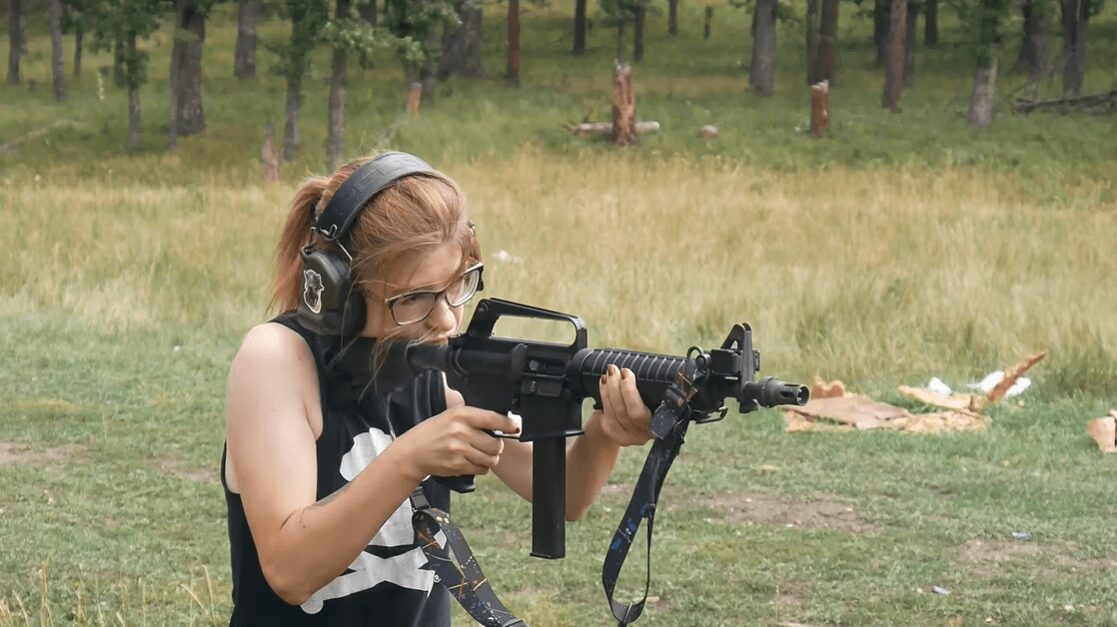
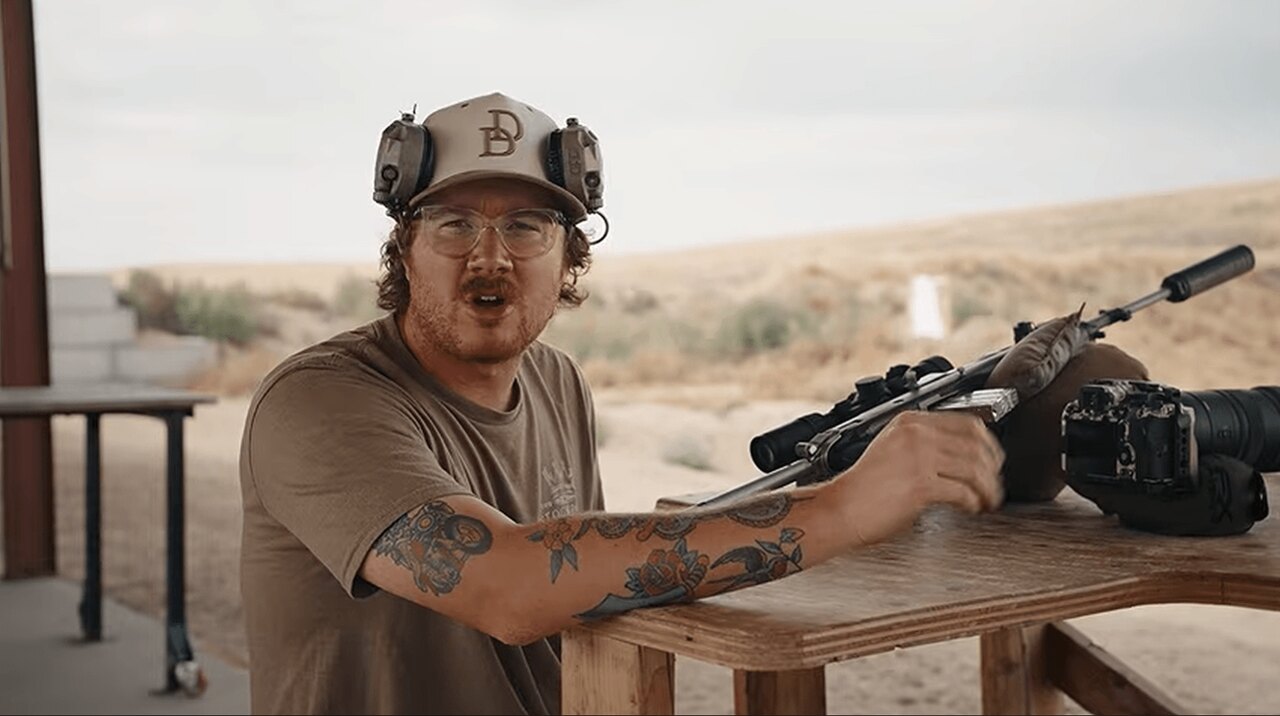
The format is a lesson rather than a review. The host runs a left-handed shooter identified as Colin through three FRT-equipped guns — a 9mm MP5, a 5.56 rifle the video identifies as a Boise Black Rifle model with roughly an 11.5-inch barrel, and an HK .308 — shooting a baseline group with each before any coaching, then rebuilding the stance and shooting again. A third participant, Rob, shoots a demonstration group later in the video. Ammunition is supplied by Stonewall Ammo, and the host names AS Designs, Stonewall and Bower Precision as sponsors, stating on camera that his view of AS Designs triggers is "biased because we're affiliated."
The FRT stance: step in like you are throwing a punch
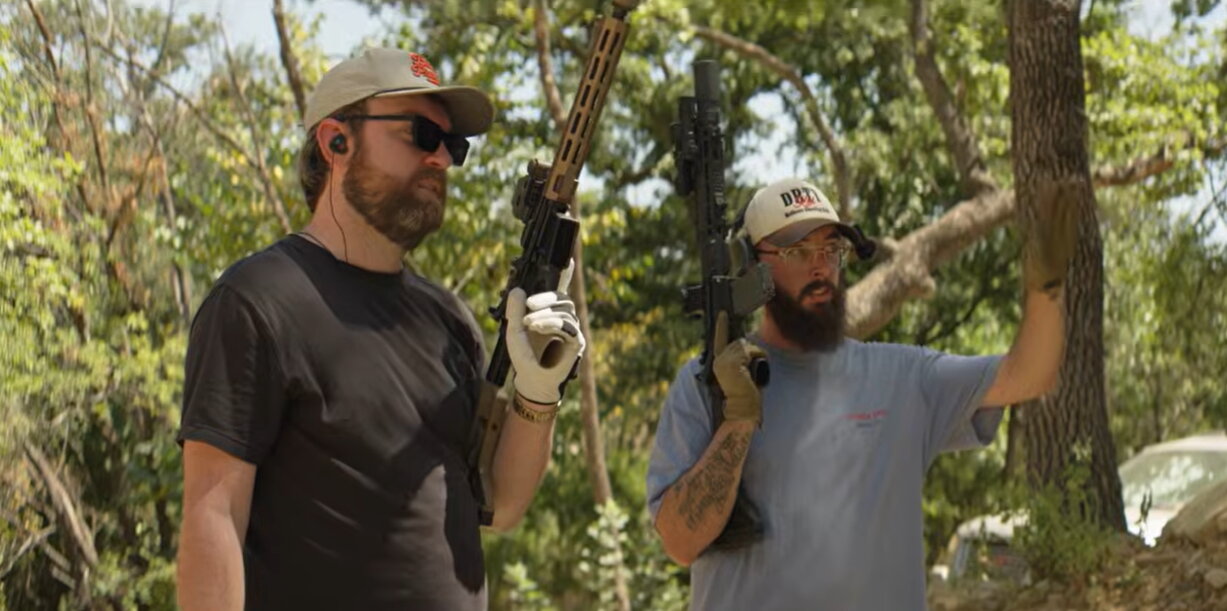
The core instruction is a staggered, weight-forward stance the host frames as throwing or shoving. The shooter steps the lead foot forward, bends that knee, and drives weight onto it while staying upright rather than folding at the waist. The support hand goes as far out on the handguard as the shooter can reach, thumb over the top, which the video says controls muzzle rise. The feet are offset laterally as well as front-to-back so the shooter has a base in both directions. The host tells Colin to engage his core, describing a loose core as the reason a shooter gets driven backward, and to add one more forward push immediately before firing.
Two smaller adjustments come with it: the stock is extended a click, with the host noting he sets length of pull by feel rather than by any formal method, and the shooter is told not to chase the gun once the group starts — "wherever you start shooting, just try to hold it right there." When Colin's rear foot lifts, the host reads it as a sign that not enough weight is on the front leg, and corrects it by having him shorten his step to leave room to lean.
What the video tells FRT shooters not to do
The failure mode the video keeps returning to is squaring up to the target and leaning forward from the upper body. "A lot of guys are like, they first shoot the FRT, like even I did it, they get square up to the target and like try to lean forward," the host says. "Doesn't work at all. It throws you straight back." The video also describes shooters who shoulder the gun and squat into it, and ends up in the same place.
“The video's answer is not a different part or a different rifle. It is where the feet go.”
Marcus Hale, The ReticleThe host recounts filming in Idaho with a competition shooter he describes as a strong pistol shooter who used an upright, movement-oriented competition stance and could not hold a .308 FRT, a case he uses to argue that a stance optimized for moving and shooting is a different tool than one built to absorb a fast-cycling rifle. The video's own standard is loose about form and firm about outcome: if the shooter is controlling the rifle rather than the other way around, the host says, the details are the shooter's business.
A tuned rifle comes before the stance
The video is explicit that stance is step two. "If this wasn't tuned, it would be probably two to three times as hard to control," the host says of the gun in his hands, pointing viewers to earlier videos on setting a rifle up and stating that a fast, untuned rifle is difficult for anyone to manage. He also states his own credentials plainly: "For the record, I have absolutely zero qualifications for teaching people how to shoot guns other than I do it a lot."
Safety framing bookends the piece. The host notes on camera that a stock is required to shoot this way, and closes by pointing at the target line — "we're all on paper, we're not going over the berm, we're not shooting unsafe." The video ends with a teaser for a .458 SOCOM build with an FRT that the host says he intends to suppress.
Why FRT technique content is arriving now
The instructional turn follows a change in the legal picture. The Justice Department settled its litigation with Rare Breed Triggers in May 2025, dismissing its appeal and agreeing not to treat forced reset triggers as machine guns under federal law, which returned FRTs to the commercial market and put them in front of buyers who had never handled one. State law did not move with it: roughly a dozen and a half jurisdictions still prohibit FRTs under multiburst-device or rate-of-fire statutes written for bump stocks and trigger cranks.
For context
- A forced reset trigger uses the firearm's recoil to push the trigger forward against the shooter's finger, resetting it faster than a standard trigger while still requiring a separate pull for each shot.
- The Justice Department's May 2025 settlement with Rare Breed Triggers ended the federal machine-gun classification fight and returned seized triggers to owners who filed by September 30, 2025.
- FRTs remain banned in roughly 15 states and the District of Columbia under statutes aimed at rate-of-fire enhancers, so federal legality does not settle the question locally.
- "Tuning" in this context refers to matching a rifle's recoil system and gas settings to the trigger; the video treats it as a prerequisite and covers it in separate uploads.