Why it matters: Appendix carry has spent a decade winning the argument on speed and concealment while its safety case rested almost entirely on reholstering discipline. This video moves the failure point to the draw, and does it around a case where the round had already gone off.
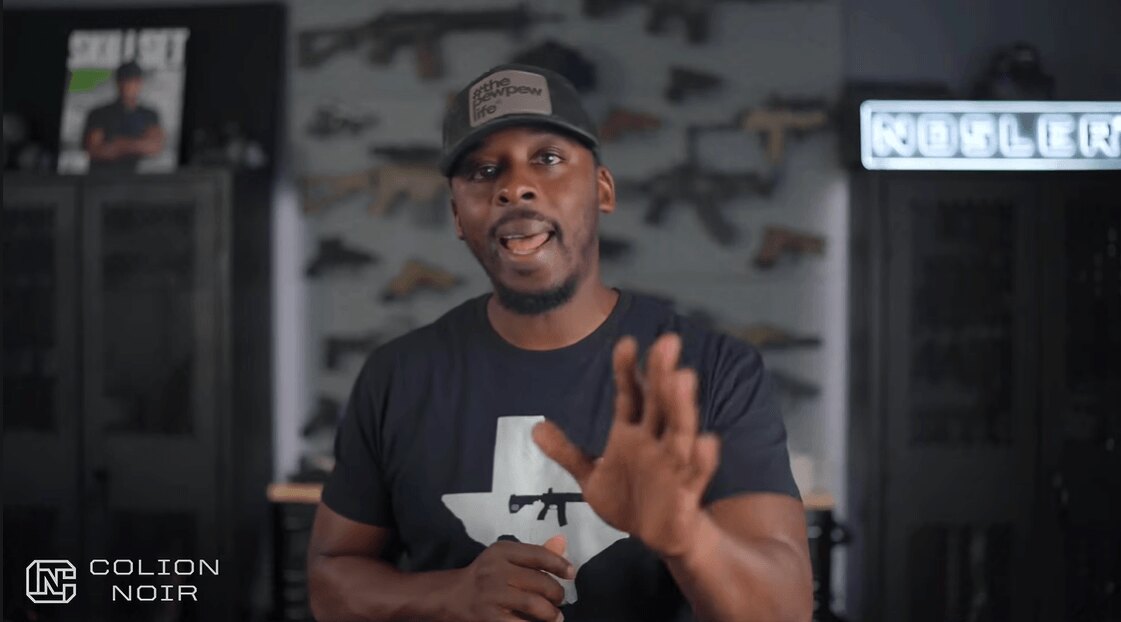
Colion Noir has published "This Is The Appendix Carry Video Every Gun Owner Needs To Watch," a video built around clips of another creator describing a self-inflicted gunshot wound during a training class. Noir opens by stating his own position without hedging: he carries appendix "99% of the time," and on paper he considers the position "kind of stupid," because it aims a loaded muzzle at his groin and his femoral artery. He says he does it anyway, every day.
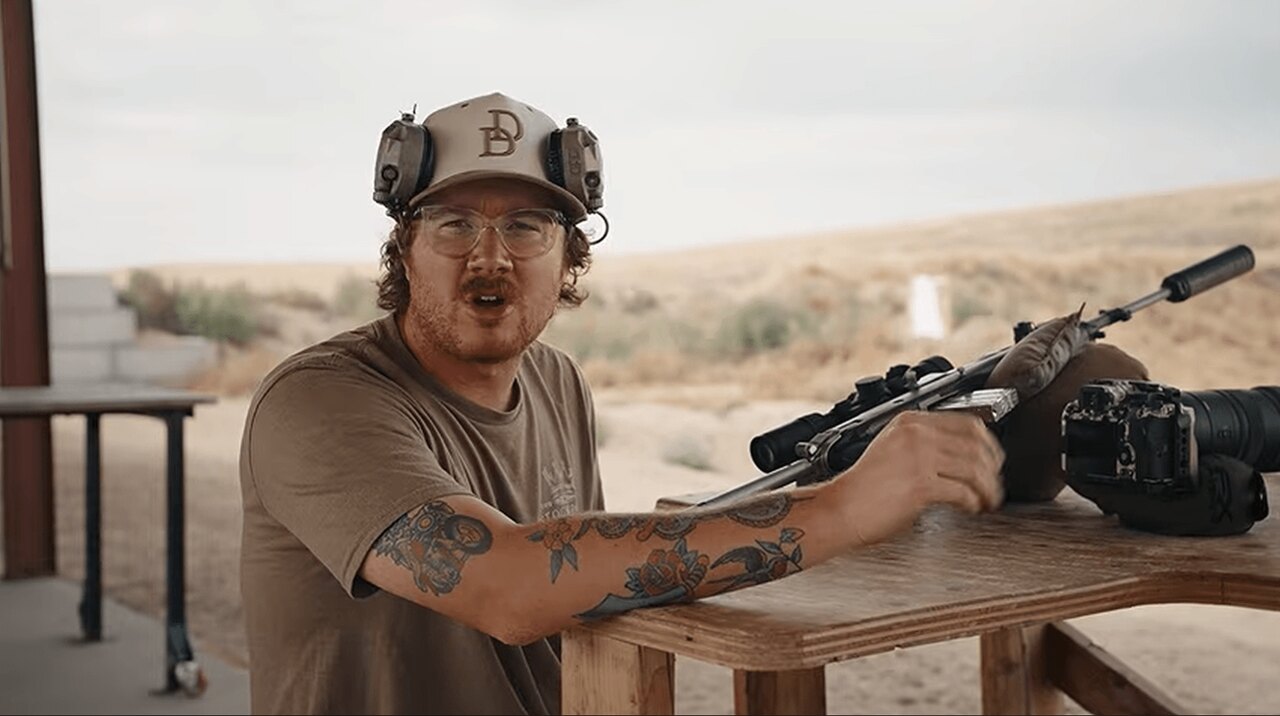
In the excerpts Noir plays, the creator says he had "an accidental discharge of a firearm" "last week during a professional training operation," despite "at least 15 years of professional experience with firearms." He says he had carried appendix with a round chambered so he could engage a threat without racking the slide. On a timed course of fire, as he drew, the pistol fired inside the holster. The round passed through the holster and through his penis and left testicle. He says three degrees of difference in aim would have put the bullet in his femoral artery, and calls it "a miracle that I'm alive."
The creator does not blame the equipment. "I'm not going to sit here and say that I didn't accidentally fingered the trigger because I don't know," he says, putting the interval between the timer's beep and the shot at under half a second. Noir's narration adds that the man taught others the four rules of gun safety, served in the military including time as an armorer, and had carried the same pistol in the same holster for five years. The creator is not named in Noir's narration.
The drawstroke mechanism Noir puts at the center
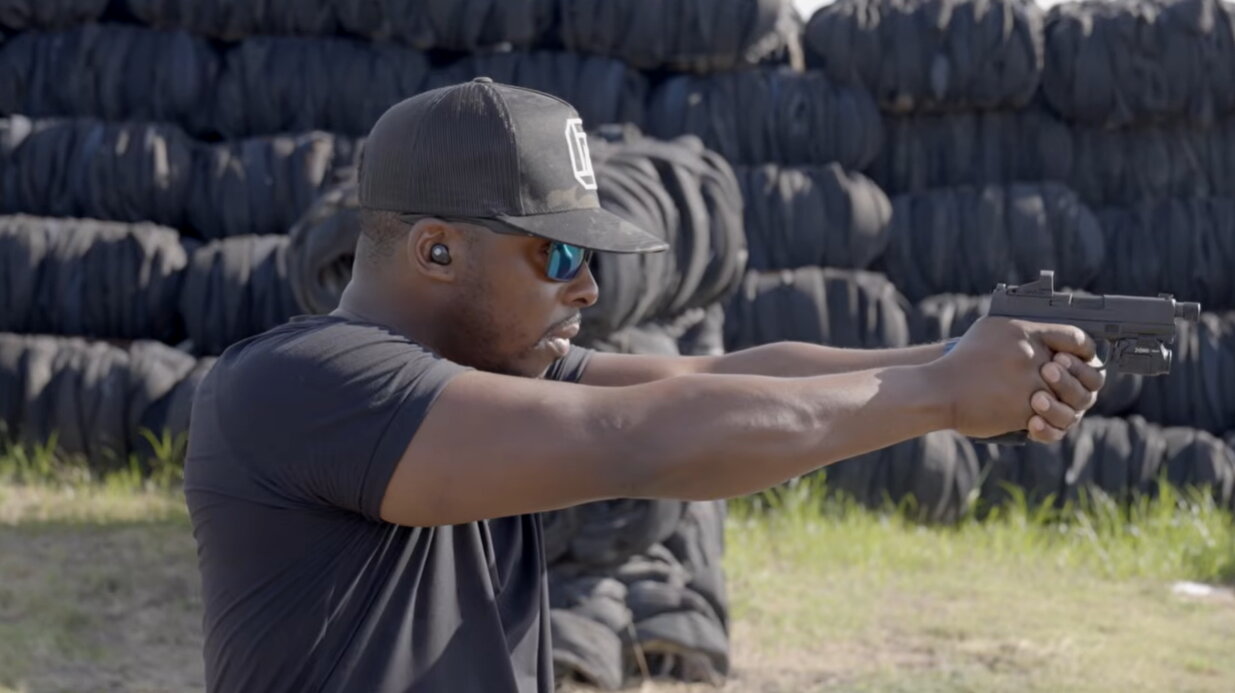
Noir's central claim is that the failure most likely happened on the way out of the holster, not on the way in. He describes a sequence he says most appendix carriers are running without noticing: as the hand breaks its grip and pulls up at speed, the index finger drags along the outside of the holster with downward pressure on it, because that pressure is part of how the hand stabilizes while the gun is pulled clear of the waistband. The moment the trigger guard clears the top of the holster, he says, there is nothing under the finger anymore.
"That pressure has to go somewhere," he says on camera. "It goes onto the trigger. You never decided to do it. You never felt yourself do it. That's the round going off."
His stated countermeasure is to hyperextend the index finger clear of the gun entirely through the draw — he demonstrates it not touching the frame at all — and to bring the finger to the trigger only once the muzzle is coming up and he is presenting the pistol, rather than at the moment it clears the holster. He concedes the cost directly: "And yeah, that is slower. I'm not gonna argue with that."
The same logic governs how he says he practices. He works his draw from concealment at 70 to 80 percent, not at full speed, and reserves maximum-effort repetitions for dry practice — gun unloaded, ammunition out of the magazine, and the magazine out of the room. His framing is that a mistake at full speed in a living room produces a click, and the same mistake at the range produces the injury in the clips.
The reholstering ritual and Noir's carry-safety rankings
“Noir's diagnosis moves the danger from the reholster, where the community has focused it, to the draw.”
Marcus Hale, The ReticleNoir calls the reholster the part people get sloppy about and says he treats the pistol "like an unstable nuclear bomb" during it. The sequence he shows: lift the shirt and look — not glance — inside the holster, because a drawstring, a shirt tail or a piece of belt inside the holster is a trigger press waiting to happen; muzzle in first; then push the holster forward and away from the body with the support hand so a discharge travels into open air and the ground rather than into himself; then seat the gun slowly. "Nobody has ever won a gunfight by holstering super fast."
He also offers an explicit ranking. Safest, he says, is an empty chamber in a holster at the 3 o'clock position, followed by a chambered round on the hip. The worst, in his telling, is appendix carry with a chambered round and no holster at all. Directly above that he places appendix carry in a holster with a round chambered — the configuration he says he uses himself. He declines to call his own setup safe: "I'm calling it tolerable and only because of the ritual that I engage in."
The trade Noir says he keeps making anyway
Noir lists the upsides he says are real — he always knows what the gun is doing, he can conceal a larger pistol, and the draw is faster, "not kind of faster, faster" — then sets them against the downside. His stated ledger is roughly a quarter second on the draw and a better-hanging shirt on one side, and a hollow point through the femoral artery in a parking lot on the other. He calls that a lopsided trade, and says he is describing a trade he made himself that morning.
The video closes on the injured creator rather than the technique. Noir declines to mock him, noting that the man appeared on camera with a catheter bag and a cane rather than deleting the incident from his record, and that he did not claim the gun fired on its own. Noir also frames the whole exercise as self-governance, observing that no agency or legislature mandated any of the procedures he just described. He asks viewers to post their own reholstering rituals in the comments.
The video carries a mid-roll sponsor read for AKT1 Blackout wireless in-ear hearing protection sold through Noir's own store, and closes with a merchandise mention.
For context
- Appendix carry, or AIWB, positions the holster forward of the hip near the front of the waistband, which puts the muzzle over the groin, femoral artery and upper thigh while the gun is holstered and during the first part of the draw.
- Instructor and industry guidance on AIWB has historically concentrated on the reholster, where clothing, drawstrings or a finger entering the trigger guard are the commonly cited causes of a self-inflicted discharge.
- Colion Noir is the alias of Collins Idehen Jr., a Houston-born attorney who began publishing firearms commentary in 2011 and was recruited by the NRA in 2013 to appear in NRA News videos; his YouTube channel passed 3.2 million subscribers in 2025.
- Noir's own site carries older commentary skeptical of the position, including a post titled "Me No Likey Appendix Carry"; in this video he says he started at 3 o'clock, switched, initially disliked it, and now carries appendix almost exclusively.