Why it matters: Clint Smith sold Thunder Ranch in 2023, and full-length footage of him running a class has been scarce since. This video is an unbroken look at the urban rifle curriculum in its Wyoming chapter, taught on a rifle that only reached the market this year.
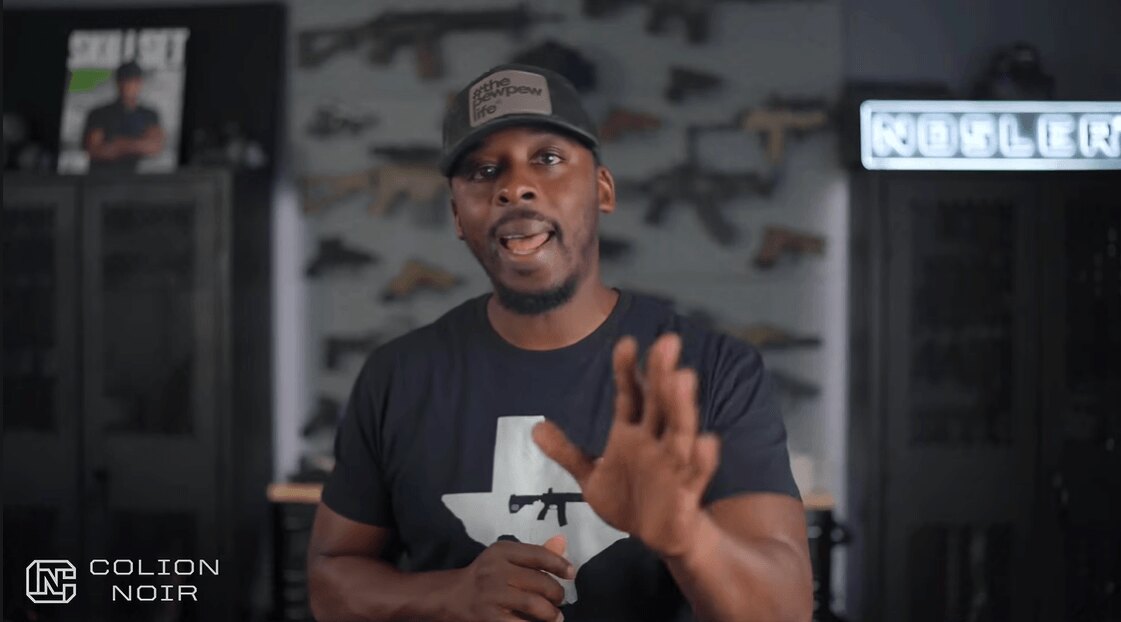
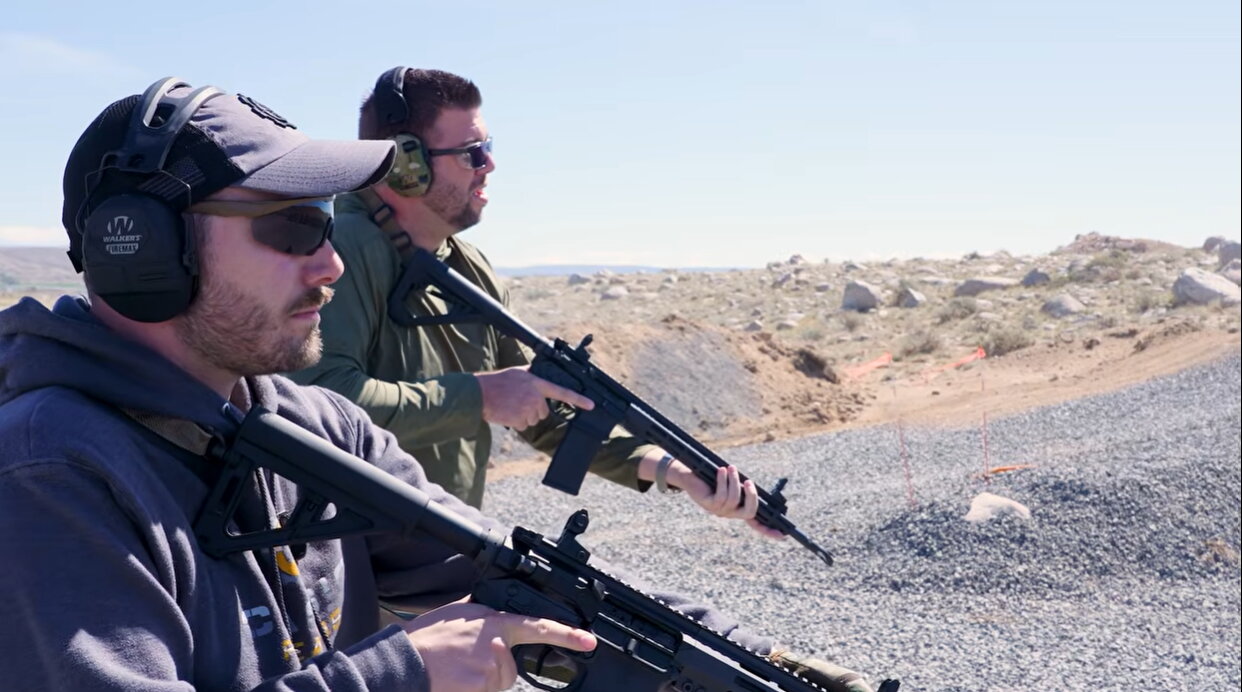
Classic Firearms has published "Clint Smith Teaches Urban Rifle Training With The AR-15," a long-form video shot at a private class in Wyoming. Host Ryan opens by crediting US Palm — and the company's Adam Ranola — with arranging the session, the second Clint Smith class the channel has filmed. Students ran US Palm Storm CAT4 rifles, the AR-pattern carbine the company introduced at SHOT Show 2026.
The class is not a gear review. It is a working day on a range, and almost all of it is spent on one idea.
Sight offset is the spine of the AR-15 class
Smith opens on zero and sight offset — the vertical gap between the axis of the bore and the line of the sights. He tells the class he believes most rifle fights happen inside what would normally be considered pistol range, because a shooter has to identify the target, confirm it is a threat and ask for compliance first. "All of us have talked to more people than we're going to shoot," he says. At those distances, he argues, the offset overrides the zero: "where you're aiming is not where you're going to hit."
He gives the class two reasons that matters. On partial targets and hostage-style problems, the shooter has to hold somewhere other than the intended impact point. And the same geometry, he says, is what keeps a shooter from firing into the door frames, ledges, car mirrors and car doors directly in front of the muzzle when leaning out from cover — "the sight is clear, the muzzle is not."
Smith recommends a 100-yard zero for civilian shooters, contrasting it with the 50-yard zero he says most American law enforcement carries because it approximates the width of a street. Students then shoot the clock positions on a target — 12, 3, 6 and 9 — working out the hold for each. The 12 o'clock shot puts the sight above the target entirely. "You're going to literally hold on air to get that shot."
Prone position, natural point of aim and the tactical cake
The class moves from standing to prone and works natural point of aim: settle behind the rifle, close the eyes, breathe three or four cycles, reopen, and if the sights have drifted off the mark, move the body rather than muscle the gun back. Feet apart, heels flat. "Imagine from your armpits down should be asleep."
Getting back up is its own sequence, which Smith calls a three-layered "tactical cake": head off the gun and look around, one partner to kneeling while the other covers, then to standing — with a verbal call at every layer. He frames movement, shooting and communication as a triad, and returns repeatedly to communication as the piece students drop. "The verbalization will solve about 90% of your problems."
“The class treats the rifle as a known quantity and the shooter as the variable.”
Marcus Hale, The ReticleA stair-step barricade, a design Smith traces to a half-sheet of plywood he cut in 1983 for rooftop work, forces students into positions where the rifle has to be rolled and the support hand repositioned behind the forearm rather than wrapped over the handguard. Smith is explicit about the prop's limits, and says so twice on camera: he does not advocate pushing a muzzle into an opening a shooter cannot see behind. The wall exists as a rest and as cover. Firing too close to plywood, he warns, sends secondary fragmentation back at the shooter, and he describes a student whose hat was shredded after a shot at a wall in Oregon.
What the video shows about the US Palm Storm CAT4
The rifle is in frame throughout without becoming the subject. Smith says the CAT4's ambidextrous controls remove the reason to roll the gun to reach a single-sided safety, and reduce the charging handle to what he calls an administrative tool rather than a fighting one, since the bolt release works from either side. Asked by the host whether the rifle's monolithic handguard and free-floated barrel help when the gun is rested on a barricade, Smith says a one-piece structure should be more rigid and therefore more consistent, but that harmonics from a rest are not a factor at the distances the class is shooting. A thousand yards, he says, is a different conversation.
His one stated reservation is the forward assist. Smith notes that the original Stoner design did not have one, demonstrates the CAT4's own arrangement, and shows the class the older method — thumb in the dish, push forward. "If your hand, hand, finger, thumb won't get it in, it probably doesn't want to go in at all." In his closing remarks he says the guns ran, and that he does not consider a rifle zeroed until he has shot three separate groups with it.
The day ends with a call-out drill: Smith names a direction and a target number together — "right three" — and the shooter has to step off the line, process the command and engage, then stay oriented rather than immediately going to safe. He tells the class he is not timing them. "You got to shoot at a speed you can hit." Classic Firearms says additional footage from the trip is coming.
For context
- Clint Smith co-founded Thunder Ranch and has taught its urban rifle course since 1983; he and Heidi Smith sold the Oregon facility and the brand in November 2023 and relocated to Cody, Wyoming.
- US Palm introduced the Storm CAT4 at SHOT Show 2026, the company's move into complete AR-pattern rifles after years of AK-focused accessories and magazines.
- The CAT4 is chambered in 5.56 NATO with a 16-inch chrome-moly barrel, mid-length gas system, 7075-T6 receivers and ambidextrous safety, magazine release and bolt catch.
- Sight offset is the distance between the bore and the sight line; at close range a rifle zeroed at distance strikes below the aiming point by roughly that amount.