Why it matters: Group-size comparisons at this price point usually run one rifle at a time against no fixed protocol. This one puts six rifles through the same ammunition, the same optics and the same round count, which makes the numbers comparable to each other rather than to a manufacturer's claim.
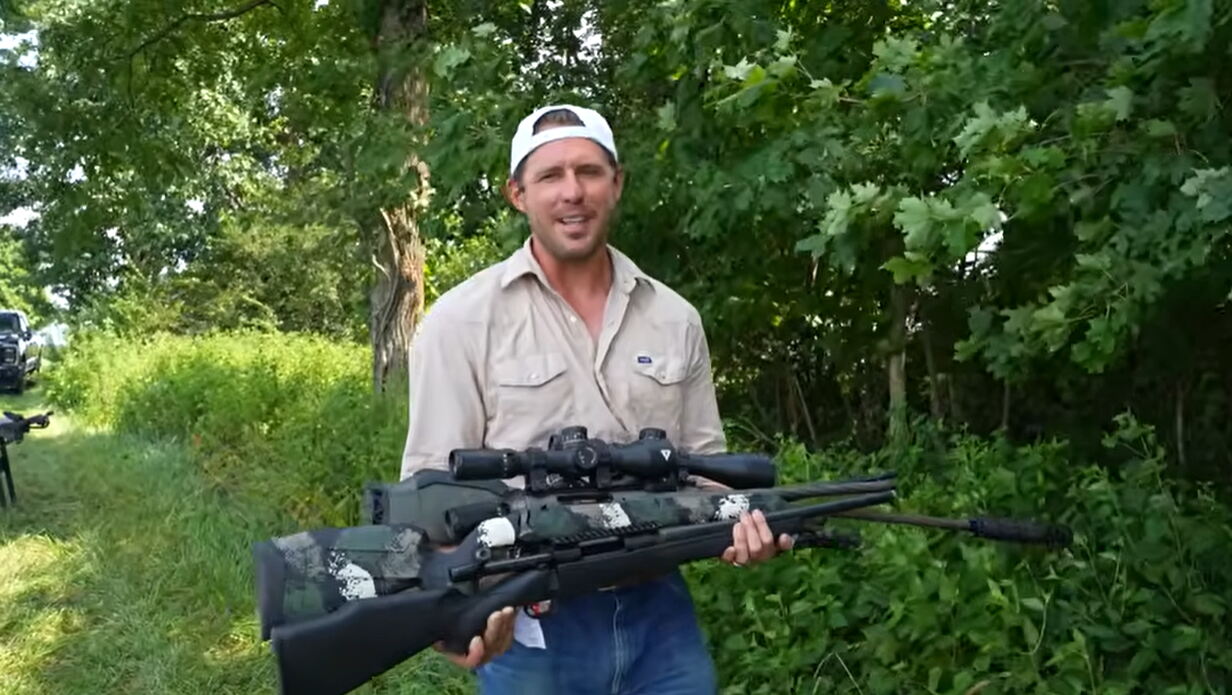
The YouTube channel 110 SASS Actual has published "What's BEST Under $600? - Accuracy & Reliability Testing The Cheapest Rifles," a six-rifle comparison of budget bolt actions fired against a single test protocol. The lineup is the Ruger American Generation II, the Savage Axis II, the Howa 1500, the Mossberg Patriot, the Winchester XPR and the Weatherby Vanguard. The host says each rifle had to fall between $400 and $650, carry a threaded barrel, and be chambered in .308 Winchester — a cartridge he says he chose over 6.5 Creedmoor because every manufacturer in the segment offers it. He states in the video that he bought all six rifles with his own money and requested no samples from the manufacturers. The video carries a sponsor read for the retailer Aim Surplus.
Test protocol: three ammunition types, five-shot groups, 3,000 rounds
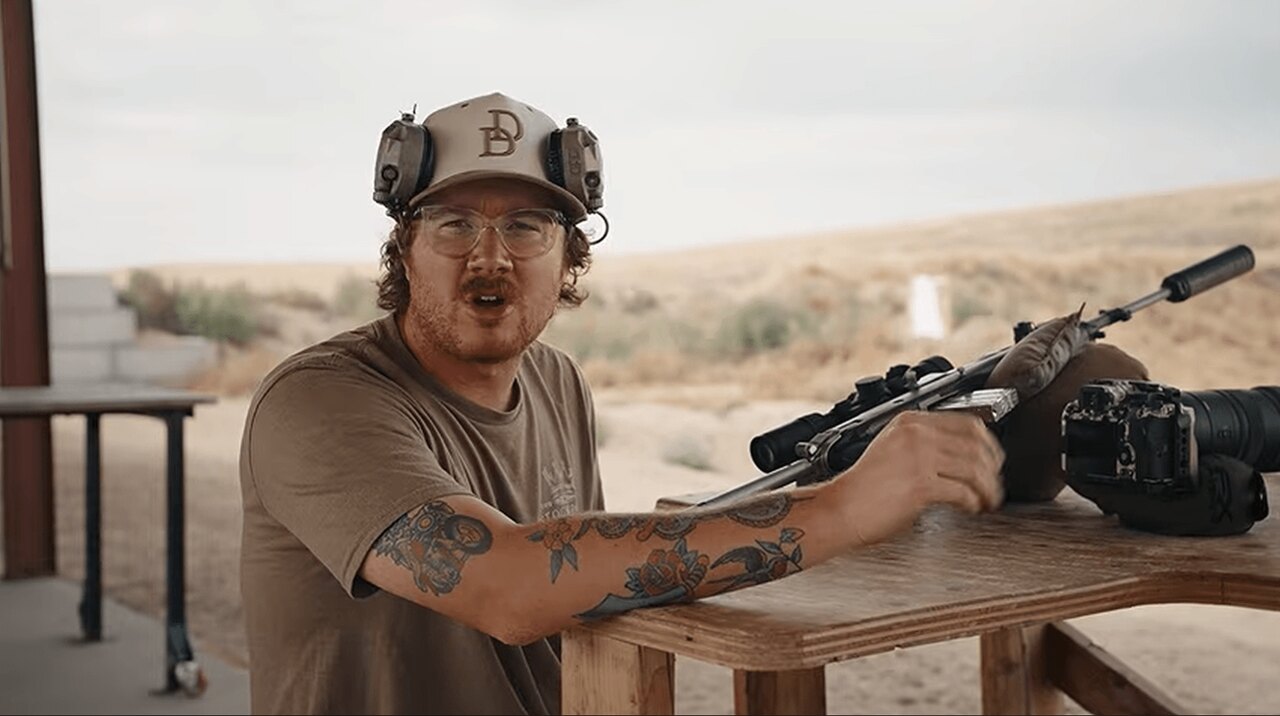
Accuracy testing was done at 100 yards from a bipod, with a suppressor and an optic the host prices above $2,000 on each rifle. Three loads were used: bulk surplus M80 ball, which he describes as not intended for precision; Hornady TAP in 168 grain; and a 168-grain Sierra GameKing load from Badlands Munitions. Groups were measured over five shots, with cooling time between shots and between strings — the host notes that the thin barrel profiles in this price range heat quickly, and that bull-barrel options generally cost more than the rifles themselves. Each rifle received roughly 500 rounds, for about 3,000 rounds of .308 across the test.
By three-load average at 100 yards, the video puts the Ruger American Gen II first at 1.17 MOA, the Weatherby Vanguard second at 1.228, the Mossberg Patriot third at 1.243, the Winchester XPR fourth at 1.362, the Savage Axis II fifth at 1.45 and the Howa 1500 sixth at 1.57. The mean across all six rifles and all three loads is given as 1.337 MOA.
The load that separated the field was the Badlands GameKing handload, which averaged 0.95 MOA across all six rifles. The tightest individual groups came from the Mossberg at 0.608 MOA and the Howa at 0.672 MOA, both with that ammunition — the Howa recording its best result in the same session that placed it last on average. The host says the Hornady TAP was less accurate than he expected across the board, and he adds that every bolt gun in the test outshot his large-frame gas rifles on M80 ball.
At 450 yards, the Savage led and the Winchester strung vertically
A second string was fired at 450 yards rather than the planned 500 because, the host says, standing corn had closed off the longer lane. That stage used the Badlands load only. The Savage placed first at 0.735 MOA, followed by the Howa at 0.801, the Ruger third, the Mossberg at 0.94, the Weatherby at 1.4 and the Winchester at 2.199. The six-rifle average at that distance is given as 1.166 MOA.
The Winchester result is the one the host flags. He says he shot the group twice because the first showed pronounced vertical stringing, and that the second did the same. Because the measured velocity standard deviations were under 8 feet per second, he attributes the dispersion to the rifle rather than the ammunition, and says he does not know the cause.
Zero malfunctions across the test, and one magazine-seating hitch
The reliability portion produced no failures. The host reports no malfunctions, no breakages and no stuck cases across all 3,000 rounds, and says on camera that the absence of failures made the rifles harder to rank rather than easier. He notes that 500 rounds per rifle is a limited sample and that ammunition cost set the ceiling.
“With accuracy clustered and reliability flat, the ranking came down to what each rifle ships with.”
Avery Lindqvist, The ReticleThe single issue documented is on the Savage, where the bolt occasionally met resistance feeding a round from the magazine. He traces it to magazine seating rather than the feed ramp or an out-of-spec magazine: if the magazine is snapped in without fully engaging, rounds present at the wrong angle. Backing the bolt off and pushing forward again cleared it.
On triggers, the video is uniformly critical. The Weatherby and the Howa are two-stage units the host estimates at around 3 to 3.5 pounds and calls the best of the group. The remaining four are single-stage, which he describes as gritty and in the four-to-six-pound range; he says the Ruger's is gritty enough to feel like a two-stage. He tells viewers the first thing he will do to all six rifles is replace the trigger.
Final ranking turned on features, finish and thread pitch
With accuracy clustered and reliability flat, the ranking came down to what each rifle ships with. The Ruger American Gen II takes first on a factory Picatinny base, a detachable box magazine, a muzzle brake, an adjustable comb and the best three-load average. The Weatherby Vanguard is second on its heavier barrel profile, which the host says ran cooler than the pencil contours, and its two-stage trigger, marked down for shipping without a scope base. The Savage Axis II is third on features and appearance with the magazine hitch against it. The Howa 1500 is fourth, credited with one of the two good triggers and penalized for the absent scope base and a rubberized stock finish.
The Mossberg Patriot is fifth despite the third-best average, on fit and finish: the host describes a plastic forend, a stock that contacts the barrel on one side with a visible gap on the other, and surface rust on the bolt that appeared on no other rifle in the group. He identifies it as the cheapest gun in the lineup at around $400.
Last is the Winchester XPR, and the deciding factor is a thread. The host says the muzzle measured 9/16 rather than the 5/8 or 1/2 pitch on the other five, which left it the only rifle in the test fired without a suppressor. It does ship with a muzzle brake. Winchester's published specification for the XPR SR in .308 lists 5/8x24; the video does not identify which XPR variant was purchased. The host says he would still hunt with the rifle.
For context
- One minute of angle subtends roughly 1.047 inches at 100 yards, so a 1.34 MOA average corresponds to group sizes near 1.4 inches at that distance.
- M80 is the 147-grain 7.62x51mm ball load and is a military general-purpose cartridge rather than a match load, which is why it serves as the low baseline in the test.
- Ruger lists the American Generation II in .308 with a 20-inch spiral-fluted barrel threaded 5/8x24, a factory radial-port muzzle brake, a one-piece Picatinny base and a Marksman trigger adjustable between 3 and 5 pounds, at a street price near $520.
- Winchester's spec sheet for the XPR SR in .308 Winchester lists a 5/8x24 muzzle thread; adapters from 9/16x24 to 5/8x24 are sold by several aftermarket makers.
Sourced from
What's BEST Under $600? - Accuracy & Reliability Testing The Cheapest Rifles
Watch the original