Why it matters: Where to put the support hand on a carbine is one of the oldest arguments in rifle instruction. Botkin, whose grip viewers have watched move rearward over twelve years of videos, lays out what he does now and gives viewers a range test to check it for themselves.
Lucas Botkin's new YouTube video, "250,000 Rounds Later: This Is How I Shoot Rifles," answers a question his viewers have been asking: why his support hand sits further back on the rifle than it did in his older content. Botkin says his practice used to be about 70% pistol and 30% rifle, and that over the last year and a half the ratio has flipped, partly because of the rifle classes he now teaches through ADAPTIV, the company he launched in 2025. He says he has been making shooting videos for about twelve and a half years. To viewers who expect his hand to end up on the magazine well in a few years, he says plainly, "I won't."
He opens with what he calls a hot take: "technique does not matter until it does."
Four carbine grips on a three-target USPSA drill
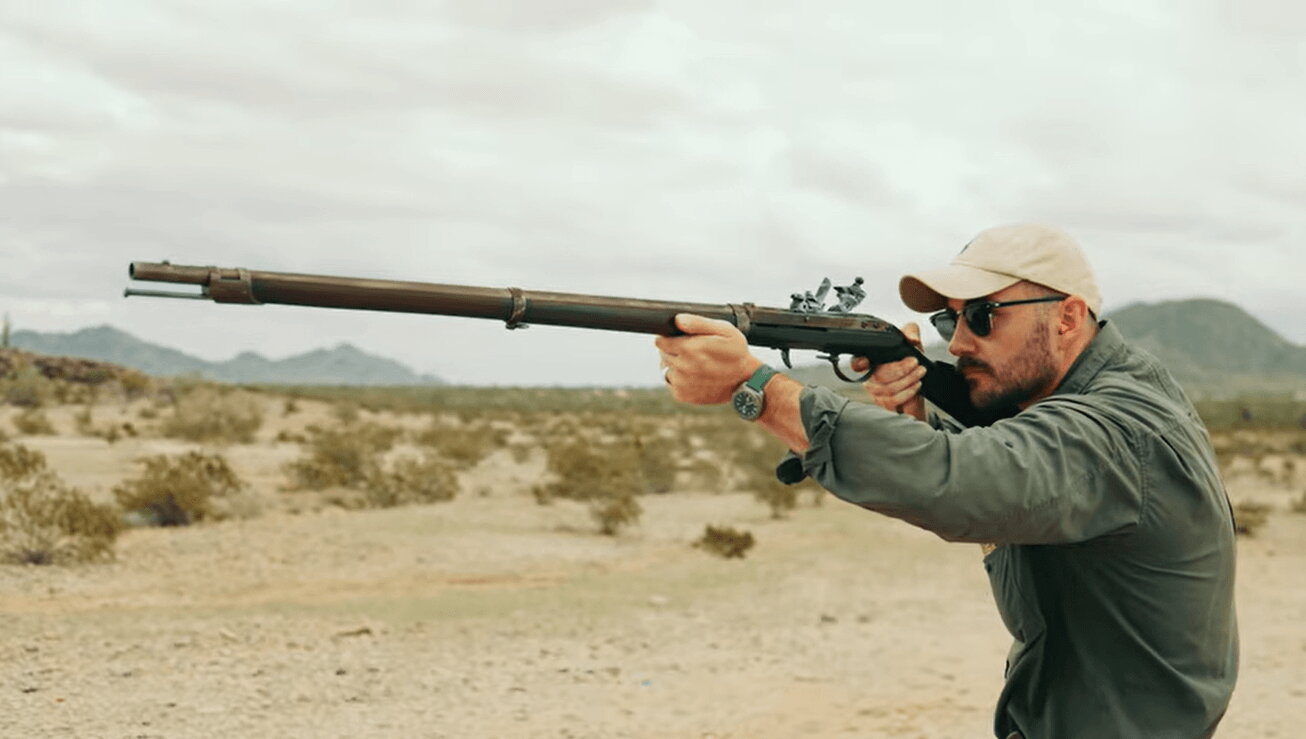
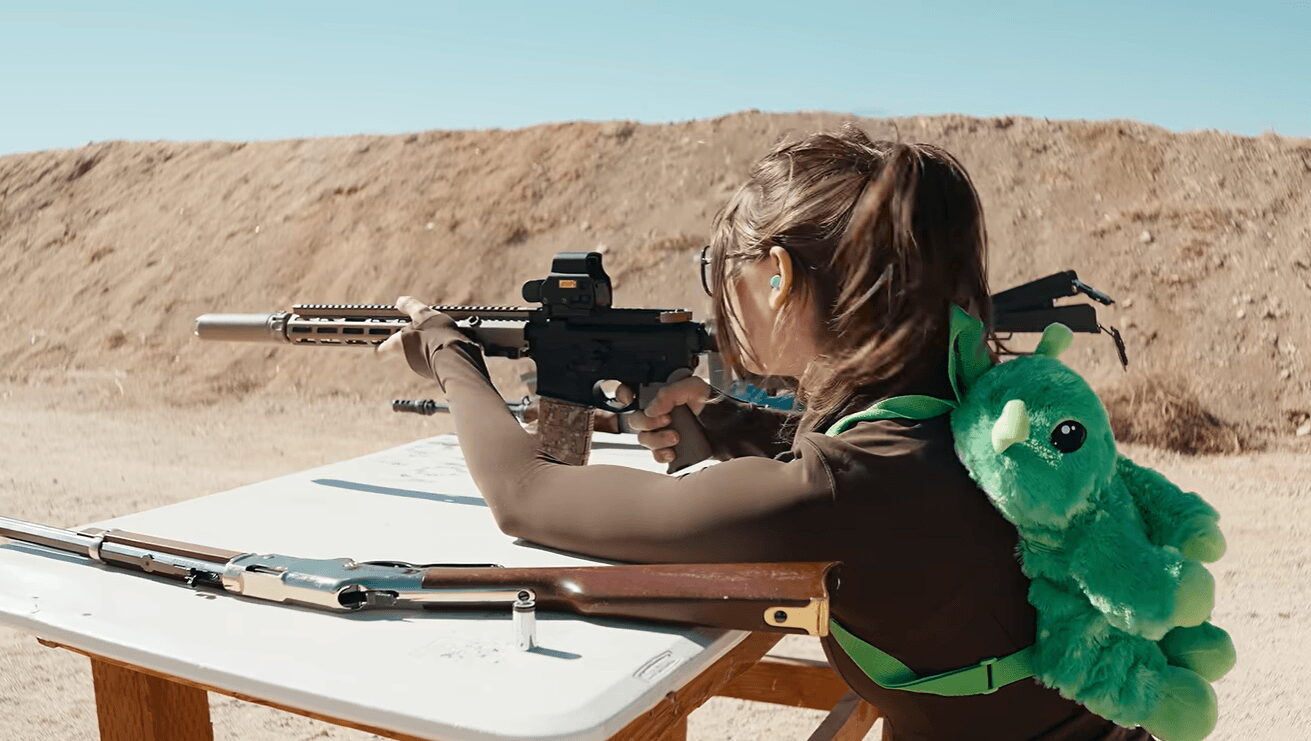
To test the claim, Botkin shoots the same drill on three USPSA targets at roughly seven yards using four different techniques. First, the stock collapsed short with the support elbow flared out, which he says some shooters still use for compactness but which puts tension on the firing hand: 2.81 seconds with one Charlie. Second, the stock at a normal length, set high on the shoulder, with the shooter leaning back and the elbow still flared: 3.10 with one Charlie. Third, a "stretch" grip, pushing forward with the support hand while pulling back with the firing hand and resting the stock lightly on the shoulder: 3.09 with one Charlie.
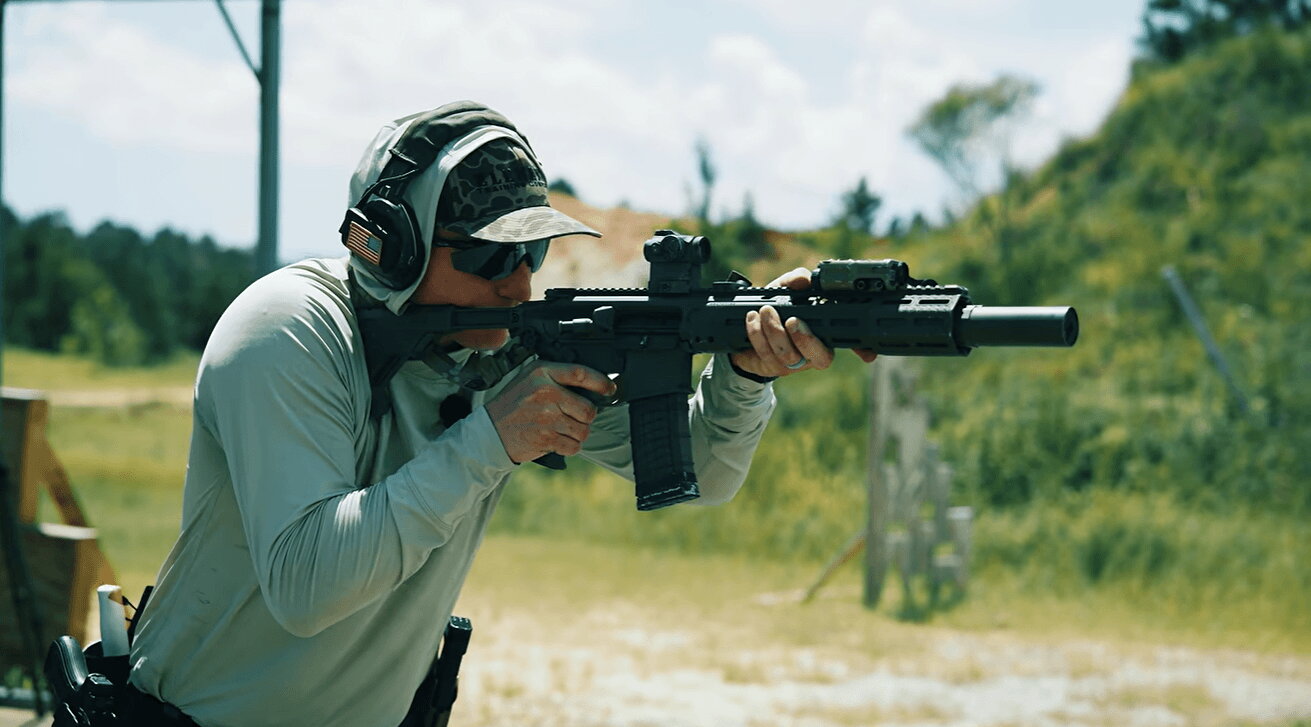
The fourth run used his current technique. The stock sits tight in the shoulder pocket, the support hand moves back to the rifle's balance point (which he says is much closer to the receiver than the end of the handguard), and the support elbow points toward the ground at about the same angle as the firing elbow. That run came in at 2.64 with all Alphas.
Botkin's reading of the results is that on big targets at seven, 10 or 15 yards, the four techniques "are all going to feel about the same and produce about the same results." The differences show up, he says, on more complex problems: distant targets, partial targets behind cover, and no-shoots, where poor technique leads to slow shooting or misses. He ties the push for efficient technique to cost, putting 5.56 at about 42 to 44 cents a round, and says the goal at ADAPTIV and Lethal Corporation is the most skill for the fewest rounds.
He then takes on viewers who argue that hits on target are all that matter. He grants that they are "technically correct," but calls the attitude "conscript behavior." He points to the amount of free instruction available in 2026, including GoPro footage of full matches from top competitors and recorded classes, and links rifle skill to the Second Amendment, arguing that people who defend owning AR-15s should be able to shoot them to a high standard.
The paster test for recoil and sight return
The method Botkin offers for judging any technique works like this. Put a paster on a target somewhere between seven and 20 yards (his is at about 18 meters), dim the red dot so both stay visible, fire with the dot on the paster, and watch where the dot goes and where it settles. He says he is not trying to hit the paster.
“On three big targets at seven yards, the four grips finished within half a second of each other, which is the point Botkin set out to make.”
Marcus Hale, The ReticleIn his demonstration, the leaning-back, flared-elbow position makes the dot dip just before the shot and then climb toward two o'clock, finishing what he estimates is 20 inches high. A squared-up stance gives straight vertical recoil, but the dot settles above the head box instead of returning to the original point of aim. His goal, he says, is a dot that lifts toward 12:30 or one o'clock and comes back to the same spot every time, never dropping below the point of aim, which he says is how shooters end up with low "belly shots."
Support hand at the balance point, elbows angled down
Botkin's position rests on a few points. The support hand at the balance point lets the elbow tuck under the rifle and carry its weight, and that structure under the gun is what stops the dot from falling. He describes both elbows as flared only about 15 to 20 degrees and matched to each other. He keeps both elbows bent so the arms work as "a suspension system" when shooting on the move, and says he started out with his arms locked straight.
The support hand also pulls the rifle back, so the stock never bounces. He compares the stock-to-torso connection to the grip on a pistol: a loose connection lets the gun move around. He adds that cheek pressure on the stock does more recoil management than many shooters realize, and says compact stocks with little cheek contact, such as some SIG MCX and HK416C stocks, let the gun move more.
Why Botkin dropped the vertical grip
Botkin lists some practical benefits. On a short 11.5-inch carbine, a rearward hand leaves rail space for a weapon light and laser. The hand ends up where it would sit during a transition to a pistol, and stays in the same place prone and on a barricade. He says that is also why vertical grips no longer appear on his team's rifles: a grip pushes the elbow out of the neutral angle, and it can cause rail deflection when jammed against a barricade.
He closes by conceding that viewers cannot see what he sees through the optic and that some will suspect he shot the other techniques badly on purpose. His answer is to ask them to run the same drill and paster test with a timer and decide for themselves.
For context
- Botkin founded T.Rex Arms in 2013 and left the company in 2025.
- In December 2025 he launched ADAPTIV Defense, a defense product-development company, and he also appears on the Lethal Corporation YouTube channel.
- Support-hand placement on AR-pattern carbines, from an extended C-clamp to a hand near the magazine well, has long been debated among instructors and in the gun press.
- In USPSA scoring, an Alpha is a hit in the highest-value center zone and a Charlie is a hit in the next zone out.