Why it matters: The M16's troubled start in Vietnam shaped the rifle that nearly every AR-15 descends from, and it still comes up whenever a new service rifle is adopted. A new Lujan video gives the story a short, general-audience retelling.
Lujan, a YouTube creator, posted an 11-minute history of the M16 on October 18 under the title "The Rifle That Changed War Forever (Thanks, Vietnam)." The video follows the rifle from Eugene Stoner's work at ArmaLite to its first combat use in Vietnam, the malfunction reports of 1967 and the changes that produced the M16A1. It is sponsored by the Sonoran Desert Institute, an accredited online college with firearms technology programs, which also sponsored the channel's HK416 history in September.
Why the M16 replaced the M14 in Vietnam
Lujan opens with the strategic setting. According to the video, the US Army spent the 1950s preparing for a large war against the Soviet Union in Europe, with open terrain and long engagement distances, and then found itself fighting in jungle, rice paddies and mountains. The video describes the M14, chambered in full-power 7.62 NATO, as powerful and accurate but long, heavy, hard to control in automatic fire and heavy to carry ammunition for. The opposing forces, it says, increasingly carried the Kalashnikov, which Lujan describes as light, compact and known for working under rough treatment.
The video credits Stoner, a Marine aviation ordnance technician in World War II, with bringing aircraft-industry thinking into rifle design at ArmaLite: aluminum, synthetic materials and weight reduction. That approach produced the AR-10 and then the smaller AR-15, which fired a smaller cartridge at very high velocity. Lujan says Army traditionalists of the late 1950s saw the rifle as strange next to the wood-and-steel designs they had relied on.
Testing in Vietnam began under Project Agile, which the video describes as a Pentagon counterinsurgency program that sent roughly 1,000 AR-15s for trials. Part of the reason, Lujan says, was that South Vietnamese soldiers were carrying American surplus rifles such as the M1 Garand, which were heavy for them. According to the video, the combat reports were very positive: troops could carry more ammunition, the rifle handled easily, and its small bullet caused severe wounds.
As the war grew, the video says, the Air Force adopted the AR-15 as the M16 and the Army received a modified version, the XM16E1. By the end of 1965 more than 180,000 American troops were in Vietnam. Lujan places the rifle with the 173rd Airborne and with the 1st Cavalry Division in the Ia Drang Valley, described in the video as one of the first major battles between US forces and North Vietnamese regulars. There, troops landed by helicopter in isolated landing zones, and much of the fighting was at close range. Lujan argues that this kind of fighting suited a light rifle that could be controlled in automatic fire.
M16 jams in Vietnam: ball powder, chrome and cleaning kits
The longest section of the video covers the malfunctions. Lujan says there was no single cause but several at once: a change to a ball powder that fouled more and raised the rifle's rate of fire, chambers without chrome lining, heat and humidity that brought corrosion, and too little cleaning equipment and maintenance support. Together, the video says, these produced the M16's best-known malfunction, the failure to extract, in which a fired case sticks in the chamber.
“In Lujan's account, the M16's failures in Vietnam came from a stack of decisions made between the design and the battlefield, not from one bad design.”
J.D. Whitfield, The ReticleOn the claim that the rifle was "self-cleaning," Lujan says the story is sometimes simplified. What is clear, according to the video, is that troops were not at first given the cleaning equipment, training and logistical support the rifle needed.
Congressional hearings on the M16 and the M16A1 changes
By 1967, the video says, soldiers and Marines were writing home that their rifles were failing in combat. Families contacted members of Congress, newspapers picked up the story, and Congress held hearings that looked at testing, procurement, ammunition, maintenance, manufacturing and chrome lining. Lujan summarizes the result: the investigation did not conclude that the M16 was a bad rifle. It found that the rifle had performed well early on, and that changes made during procurement and fielding had contributed heavily to its problems. In the video's words, "20 individually defensible decisions got stacked on top of each other until the rifle stopped working."
The fixes Lujan lists are a chrome-plated chamber and later a chrome-lined bore, proper cleaning kits, better training, and changes to ammunition specifications and to the weapon itself. With those changes the XM16E1 became the M16A1. The video traces the rifle's descendants through the M16A2, A3 and A4 to the M4 carbine.
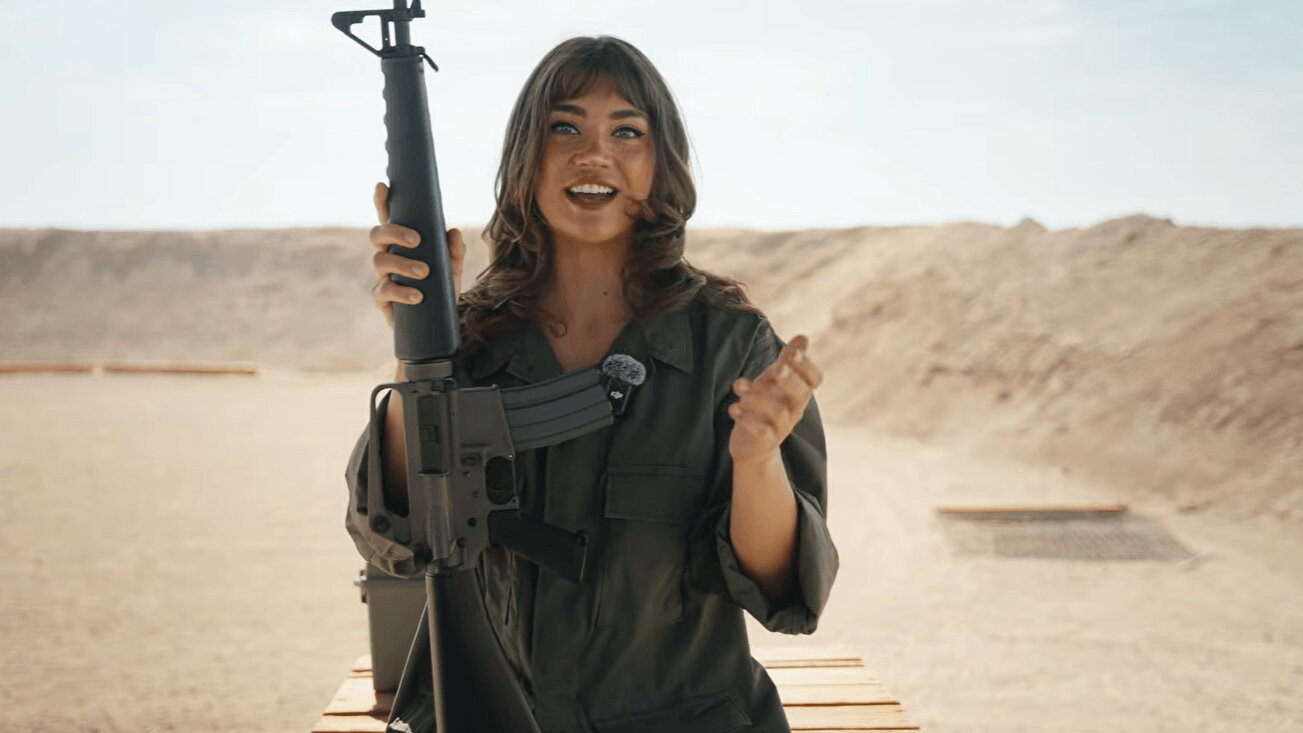
Lujan tells viewers that the rifle on camera is a semi-automatic M16 clone fitted with aftermarket trigger accessories, not a military M16. The video says the rifle remains semi-automatic.
For context
- Project AGILE was a counterinsurgency research program run by ARPA, the Pentagon's advanced research agency. Its 1962 field test of the AR-15 in South Vietnam produced a favorable report, which helped lead to the 1963 decision to buy the rifle in quantity.
- In May 1967 the House Armed Services Committee appointed a special subcommittee under Rep. Richard Ichord to investigate the M16 program. Its October 1967 report recommended withdrawing the WC 846 ball powder and putting chrome chambers on production rifles.
- Lt. Col. Hal Moore, whose battalion fought at Ia Drang in November 1965, praised the XM16E1 in his after-action report.
- The Reticle covered Lujan's HK416 history video in September.