Why it matters: Three separate special operations carbine programs are now running at the same time, and each one answers the M7 differently. The video is a compact map of where military 5.56 is going, and it lands two weeks before the first HICAR live-fire demonstrations.
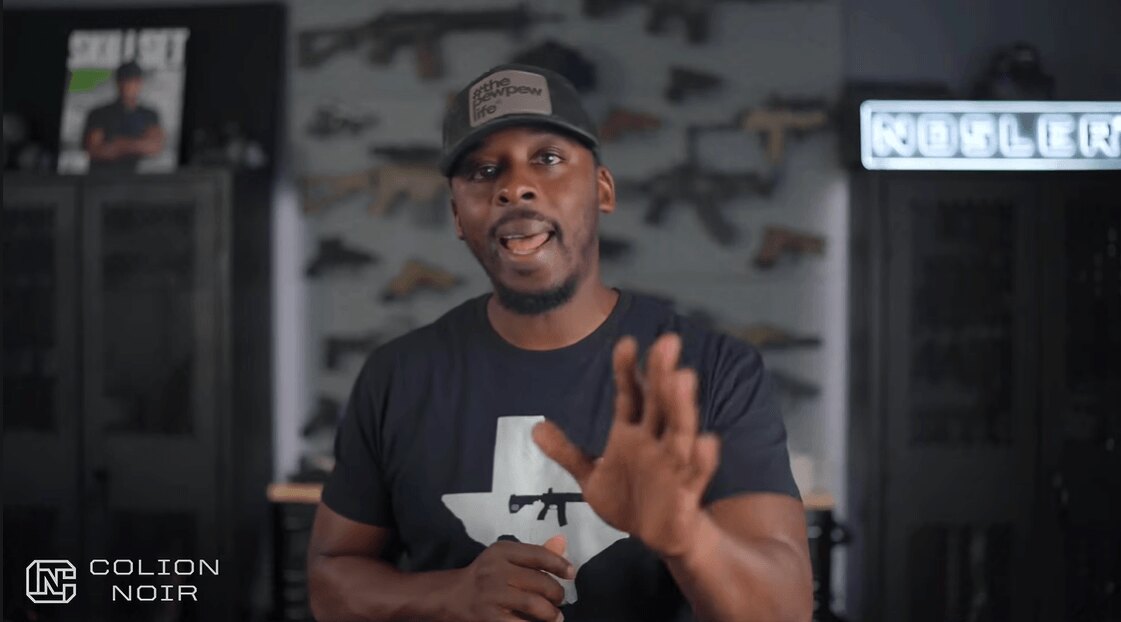
A new explainer from the YouTube channel Boondock Ballistician walks through three U.S. Special Operations Command carbine efforts that now overlap — the Combat Assault Rifle award that went to Sons of Liberty Gun Works, SureFire's 6mm ARC Intermediate Combat Assault Rifle, and the newer Hypervelocity Improved Capability Assault Rifle — and concludes that none of them retires the M4 or 5.56 NATO.
The video, "CAR, ICAR, HICAR: SOCOMs Assault Rifles," runs just under 15 minutes and was posted on August 30. The host says on camera that they have worked on early weapon and ammunition prototyping, design changes, soldier touch points and fielding for the Next Generation Squad Weapon program, and frames each SOCOM effort against the Army's M7.
Why the M7 changed the replacement argument
The video's starting point is that earlier attempts to replace the M4 failed on cost against benefit. The Individual Carbine competition "died pretty quick," the host says, because those programs chased reliability and ergonomics and the gains "were deemed and proven to be only marginal." NGSW was different in the video's telling because it chased performance instead: lethality, range and barrier penetration against a peer opponent.
On the cartridge itself the video is favorable. It puts 6.8 velocity at around 3,000 feet per second with muzzle energy between 2,500 and 3,000 foot-pounds, and says terminal testing "has proven itself to be great." The objections it raises are logistical and physical: a second ammunition type, a second magazine, added weight, reduced ammunition capacity. The host describes early soldier impressions as favorable — a heavier-recoiling rifle reads as more capable — and says "opinions quickly changed" once units fired the weapon past a few rounds. Reporting on the Army side has tracked the same complaints, including a 20-round standard magazine against the M4A1's 30 and a lower total round count carried into a fight.
Three SOCOM carbine programs, running in parallel
The first is already awarded. SOCOM selected the Sons of Liberty Gun Works MK1 under its Combat Assault Rifle program in November 2025, with the automatic 11.5-inch variant going to a subordinate unit. The video's read is that SOCOM held on to 5.56 on purpose: legacy M4A1 lowers still work, magazines and ammunition are unchanged, and neither training nor the supply chain has to move. The host notes the M7 would reach farther, but calls it bulkier than the mission set SOCOM units actually operate in.
The second keeps the platform and changes the round. SureFire's Intermediate Combat Assault Rifle is chambered in 6mm ARC, and the video describes its purpose as moving the effective engagement window from roughly 300 meters out to about 600 while keeping a compact rifle. Asked why 6mm ARC rather than 6mm Max or 6.5 Grendel, the host answers on program timing rather than ballistics: prototypes, testing and high-pressure experimentation were already in hand by the time the alternatives gained traction, and switching now would repeat the marginal-gain trap that killed the earlier programs. "You can like the round all you want," the host says, but "it doesn't make sense to change it yet."
“SOCOM is not choosing among the three programs. It is running them at once and letting the mission pick.”
J.D. Whitfield, The ReticleThe third keeps the platform and the caliber and changes the pressure. SOCOM's Hypervelocity Improved Capability Assault Rifle, made public in May, asks for an 11- to 12-inch barrel and upper that fits an unmodified M4A1 lower and functions with M855A1, Mk 262 and government-supplied M855A1+ hypervelocity ammunition loaded to roughly 82,000 psi, against about 62,000 psi for conventional M855A1. The stated goal is to take a 300-meter carbine to 600 meters and beyond. Live-fire demonstrations with government ammunition are scheduled for September 15 and 16 at the Army Marksmanship Unit's Parks Range at Fort Moore, Georgia.
Whether high-pressure 5.56 cancels 6mm ARC
Most of the video's second half is spent on that question, and the host's answer is no. High-pressure loadings exist on the 6mm ARC side as well, so the two scale together rather than converge. ICAR's purpose, in the video's framing, is packaging the ballistic performance of a 14.5-inch 5.56 rifle into an 11.5-inch platform, not extracting the largest possible energy figure. HICAR also remains in development while the MK1 is a system that can be issued now, and the host expects conventional uppers to stay cheaper and easier to manufacture for missions that do not need high-pressure ammunition.
The video brings in one more program for contrast: MRGG-A, the mid-range gas gun that LMT won for SOCOM in 6.5 Creedmoor. That rifle reaches farther than any of the carbines, but the host puts it in the category of weight and bulk that special operations units have spent two decades moving away from.
The closing argument is that SOCOM buys rifles per mission rather than one rifle for every mission, that several of these efforts may surface for a few years and disappear as earlier ones have, and that the constant across all of them is size and weight. "The military wants compact and lightweight," the host says, and "we're in for 50 more years of M4s and 5.56."
For context
- The M4 entered service in the 1990s as a shorter, lighter development of the M16 and has been revised continuously since, through heavier barrels, grenade launcher attachments and changes to fire control.
- The Next Generation Squad Weapon program produced the M7 rifle, the M250 automatic rifle and the XM157 optic in 6.8x51mm; the 25th Infantry Division began training on the M7 in January 2026.
- SOCOM procures separately from the Army's large programs, which is why several carbine efforts can run at the same time without one settling the others.
- HICAR white papers were due June 8, 2026, and SOCOM notified selected vendors on June 29 ahead of the September demonstrations.