Why it matters: The FBI's ammunition protocol is the de facto grading curve for the entire American defensive ammunition market, and its short-barrel guidance now travels through YouTube as settled fact. What that protocol declines to score shapes what manufacturers bother to build.
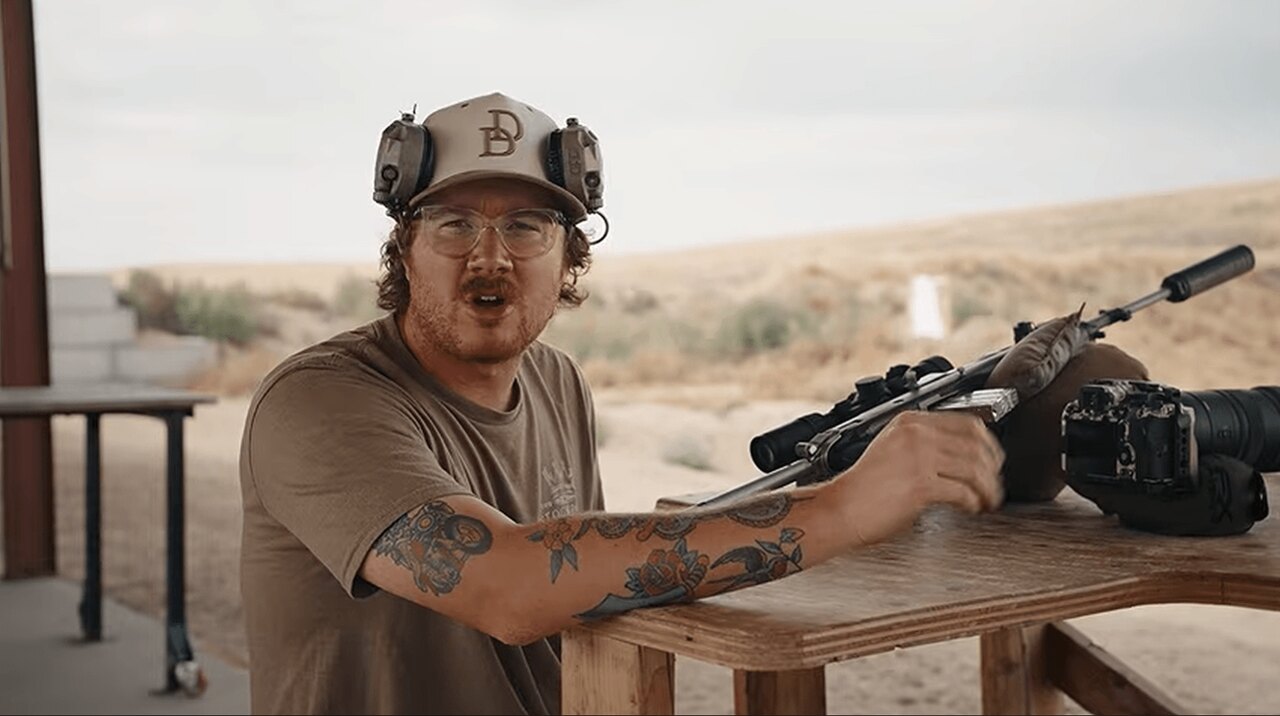
The Firearm Blog published an interview in early August with Robert Martin, a senior ballistician at the FBI's Ballistic Research Facility, on barrel length and ammunition selection for 5.56 short-barreled rifles. The recommendation that traveled out of it was compact: an 11.5-inch barrel, a 1:7 twist, a bonded projectile between 64 and 75 grains, expansion preferred over fragmentation. Boondock Ballistician, a channel run by someone who tests small arms and ammunition professionally, answered with a video titled "What The FBI Gets Wrong About SBR Ammo."
The charge is not that the Bureau is wrong about its own mission. It is that a grading system written for a different generation of projectiles is now filtering out ammunition that works. "These standards were built at a very different time of materials, engineering, design concepts," the video argues, "and while they are good, might need to be updated to reflect modern capabilities."
That charge is correct. The energy math brought in to support it is not, and correcting it strengthens the argument rather than weakening it.
What the FBI protocol actually rewards
The protocol dates to December 1988, when the FBI Academy's Firearms Training Unit built a test regime in the aftermath of the 1986 Miami shootout. It asks for 12 to 18 inches of penetration in 10 percent ordnance gelatin, measured bare and behind five barriers: heavy clothing, wallboard, steel, plywood, automotive glass. Published descriptions of the scoring put 70 percent of the total on penetration, 20 percent on expansion and 10 percent on retained weight.
That last number complicates the video's strongest claim. Boondock Ballistician argues that retained weight functions as a gate, that projectiles clearing penetration and expansion get crossed off over the difference between 97 and 95 percent recovery, and is candid that the supporting data belongs to the FBI and to an employer rather than to the channel. Measured against the published rubric, retention is the smallest slice of the score, and the gatekeeping claim is the part of the case a viewer has to take on trust.
The mechanism underneath it needs no internal data. Hornady's 75-grain InterLock HD SBR exists because the FBI asked industry for a short-barrel load: propellant formulated to burn completely in a 10.5- to 11.5-inch barrel, a jacket thinned and grooved to open at reduced velocity. Agencies write specifications and manufacturers build to them. The Bureau does not have to be scoring the wrong things for the complaint to land. It only has to be scoring a narrower set of things than the market now produces, and then have that narrow set repeated on camera as the answer for everyone.
The 62-grain energy figure that does not hold
Then comes the part of the video that should not have survived an edit. Working through muzzle energy, the channel puts a 50- to 55-grain projectile at 2,700 to 2,900 fps and 970 to 1,030 foot-pounds, drops a 62-grain bullet to roughly 2,650 fps, and calls the result "closer to 750, 760," which it describes as "a notable difference." Heavier 70- and 77-grain bullets then climb back into the 900s. The shape of the claim is a valley in the middle, and the valley is the reason offered for going light or going heavy.
The valley is an arithmetic error. Kinetic energy in foot-pounds is bullet weight in grains times velocity squared, divided by 450,437. At the video's own stated velocity, a 62-grain bullet at 2,650 fps carries about 965 foot-pounds, not 755. Run all three cases exactly as the video states them: 1,027 foot-pounds for 55 grains at 2,900 fps, 965 for 62 grains at 2,650, 1,026 for 77 grains at 2,450. That is not a valley. That is a flat line with noise on it.
Which is the better argument. If everything from 55 to 77 grains leaves a short barrel within a hundred foot-pounds of everything else, then muzzle energy does not sort these projectiles at all, and the decision collapses onto what the bullet does once it arrives: where its expansion window sits, how it behaves outside that window, how much of it stays in the wound track and where the pieces go. That is precisely the territory the video wants the FBI to re-examine. The energy detour argues against itself, because it implies these weights differ on an axis where the physics says they barely do.
The 2,500 fps fragmentation rule is the real relic
“A weight plus a construction plus an agency is an endorsement with the label filed off.”
Avery Lindqvist, The ReticleThe most durable claim in the video is the one about velocity thresholds. The 2,500 fps figure repeated everywhere as the point below which 5.56 stops fragmenting is a description of M193 and M855, legacy full-metal-jacket designs that depend on yaw and a cannelure, and it traces to Martin Fackler's work at the Letterman Army Institute, which put M855 nearer 2,700. It was never a property of the cartridge. It was a property of two bullets.
Modern designs moved that number a long way. The Army's M855A1 is credited with fragmenting well below 2,000 fps, which is a substantial part of why it went to short-barreled platforms. Gel work on Black Hills' 77-grain Tipped MatchKing shows it upsetting earlier and at lower velocity than Mk 262 from a longer barrel. The channel's claim that some projectiles now fragment reliably at 2,000 fps, and a few closer to 1,900, is consistent with what is already public.
It also exposes the scoring problem cleanly. Sierra's TMK is sold as an expanding bullet and behaves like one inside its window. Outside that window it fragments, and it remains terminally effective when it does. A test that adds up recovered mass reads that as a failure. A wound track does not.
Naming a weight is naming a product
On the media criticism, the video is right and slightly too polite about it. The interview declines to name brands, on the grounds that the FBI is not endorsing anything, and then names 64 grains and 75 grains as the only two weights worth running in a short barrel. Those are not abstractions. Trade coverage of the Bureau's rifle ammunition contract describes a move from a 62-grain bonded load to a 64-grain bonded one, and the 75-grain bonded class has a short, recognizable membership. A weight plus a construction plus an agency is an endorsement with the label filed off.
The video then performs a softer version of the same move, recommending "something in the 60s" as a one-size-fits-all, and would probably concede the parallel. The difference is that it says out loud what the interview leaves implied: the answer depends on the engagement distance, and the distance the Bureau designs for is a short one. A viewer asking about 100 or 200 yards is not being answered, and is not being told so.
The useful reform is small. Keep the penetration window, keep the barrier battery, keep the skepticism toward bullets that come apart before they get anywhere. Add a scoring path for projectiles whose terminal work is done by fragments that stay inside the block. And retire the 2,500 fps rule of thumb from the conversation, because it describes ammunition most people asking the question will never carry.
For context
- The FBI protocol was designed by the Bureau's Firearms Training Unit in December 1988, after the 1986 Miami shootout, and asks for 12 to 18 inches of penetration in 10 percent ordnance gelatin, bare and through five barriers.
- Published descriptions of the scoring assign 70 percent of the total to penetration, 20 percent to expansion and 10 percent to retained weight.
- Hornady's 75-grain InterLock HD SBR was developed against an FBI request for a short-barrel 5.56 load, with propellant formulated to burn completely in 10.5- to 11.5-inch barrels.
- The 2,500 fps fragmentation figure describes M193 and M855; the Army's M855A1 is credited with fragmenting far below it, which is why it was pushed toward short barrels.
Themes in the source
Room for disagreement
An agency does not get to optimize for the interesting case. The FBI's rubric is a procurement filter that has to hold up across tens of thousands of officers, hostile cross-examination and barriers nobody chooses: automotive glass at an angle, a steel door skin, wallboard. Retained weight is not superstition in that setting. It is a cheap, repeatable proxy for construction integrity, and a bullet that stays whole through laminated glass is telling you something real about how it behaves when it does not hit glass. Fragmentation is genuinely harder to grade, because fragment count, size and path vary shot to shot in ways a depth measurement does not, and a criterion that cannot be measured the same way twice is a criterion vendors will litigate. Standardizing on 64 to 75 grains, bonded, from an 11.5-inch barrel, for engagements inside 50 yards, is not a claim that physics stops elsewhere. It is a claim about what a large organization can buy, train, audit and defend, and on that ground it is close to unimprovable.
The bottom line
The FBI is not measuring the wrong things. It is measuring a narrower set than the market now builds, and the narrow answer keeps getting repeated on camera as the general one. Fix the arithmetic in the rebuttal and the case only gets stronger: muzzle energy does not separate these bullets, so the scoring sheet does.