Why it matters: History explainers are where a large share of shooters first meet the Type 56, and this one puts a rifle Americans still trade at the center of a CIA covert-action story. The genre moves fast, so what it establishes and what it compresses are both worth marking.
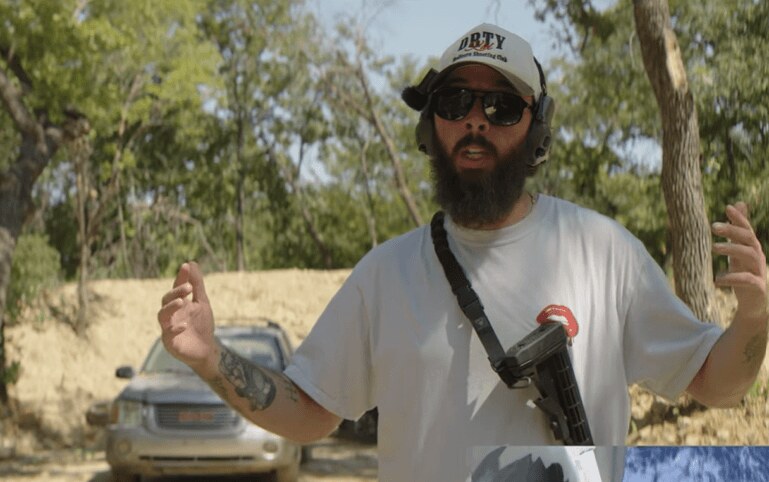
A new video from the YouTube channel Lujan uses a single semi-automatic rifle as the spine of a Cold War history lesson, tracing the Chinese Type 56 — Beijing's licensed copy of the Kalashnikov — from Soviet technical assistance in the 1950s to the CIA program that armed Afghan resistance groups three decades later.
The video is titled "How THIS Chinese Rifle Created The Taliban (Operation Cyclone & the Type-56)." It opens on the framing it returns to at the end: that the United States, in the video's telling, decided the way to fight communism was to buy communist-manufactured rifles and hand them to guerrillas.
What the video says separates a Type 56 from a Soviet AK
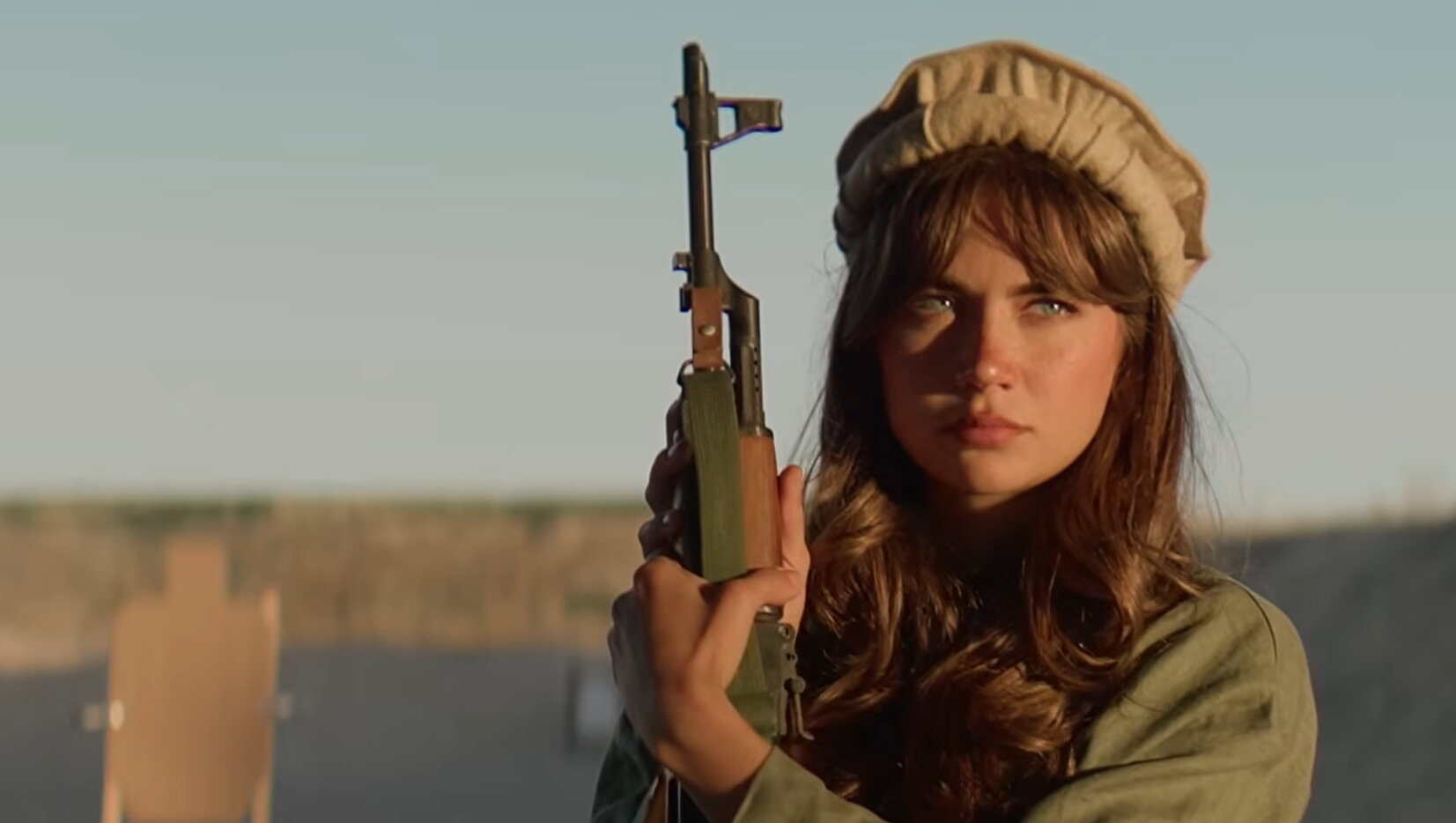
The identification segment is the most concrete part of the piece. Lujan points to a fully enclosed front sight hood, which the video says most AK-pattern rifles leave open at the top, and to a deep blue finish where Russian AKMs typically carry a matte black oxide or parkerized coat. Military-issue Type 56s, the video says, also carried a folding bayonet welded or pinned to the barrel rather than a detachable knife bayonet.
Partway through the segment the video corrects itself on camera. The rifle in frame is not a military Type 56 but an AK-47S, the semi-automatic civilian export version — no bayonet, no select-fire. Lujan brings a collector onto a FaceTime call, identified in the video only as an AK expert, who says on camera that the rifle is a state-factory Chinese export gun.
The remaining differences the video lists are a hard chrome bolt carrier, a rear sight graduated to 800 meters rather than the AKM's 1,000, a heavier barrel profile, and a 1.5mm stamped receiver against the AKM's 1mm. Published references on the pattern agree on those three measurable points. Functionally, the video notes, it is still an AK: same 7.62x39mm cartridge, same 30-round magazine, same long-stroke gas piston.
From Vietnam to Operation Cyclone
The history runs in sequence. The Soviet Union transferred AK tooling and drawings to China in the mid-1950s. Chinese production scaled to what the video puts at 10 to 15 million rifles — an estimate consistent with commonly published figures — spread across enough factories to require arsenal markings to tell them apart. The video describes that marking system as triangles for military production and ovals for civilian export.
In Vietnam, the video says, Type 56s outnumbered Soviet-made AKs on the battlefield, and early export rifles had factory markings stripped and were stamped M22 instead, which it attributes to deniability. It notes that American troops brought captured rifles home, and that the ones registered before the federal machine gun registry closed now sell for substantial sums.
“A rifle that ended up on both sides of more than one war is an efficient way to tell a Cold War story.”
Tess Marlowe, The ReticleChina and Vietnam went to war with each other in 1979, and the video points out that both sides carried the same rifle. That December, the Soviet Union invaded Afghanistan, and the CIA needed rifles that could not be traced to the United States but fired Soviet-standard ammunition. The video says Chinese AK-pattern rifles answered both requirements.
On Operation Cyclone itself, the video gives figures that match the widely reported record: a program starting near $20 million to $30 million a year and reaching roughly $630 million by 1987, with money moving through Pakistan's Inter-Services Intelligence, which bought weapons from China and third-party dealers for onward delivery. Soviet withdrawal was announced in 1987 and completed on February 15, 1989. When the Taliban took Kabul in 1996, the video says, its fighters were carrying Type 56s.
Where the US import record adds detail
The video's account of American import law is brief. It says that before 1982 it was technically illegal to import military equipment from communist countries, and that enforcement around Vietnam-era bring-backs was relaxed.
The documented timeline for Chinese AK-pattern rifles entering the US commercial market runs later and in stages. Norinco and Polytech rifles arrived in volume through the late 1980s; 1989 import restrictions on configurations deemed non-sporting produced the thumbhole-stocked MAK-90; and a 1994 order ended imports of firearms from both manufacturers. That sequence is why the semi-automatic Chinese AKs circulating in the US today are export models rather than the military rifles the history describes.
Format and sponsorship
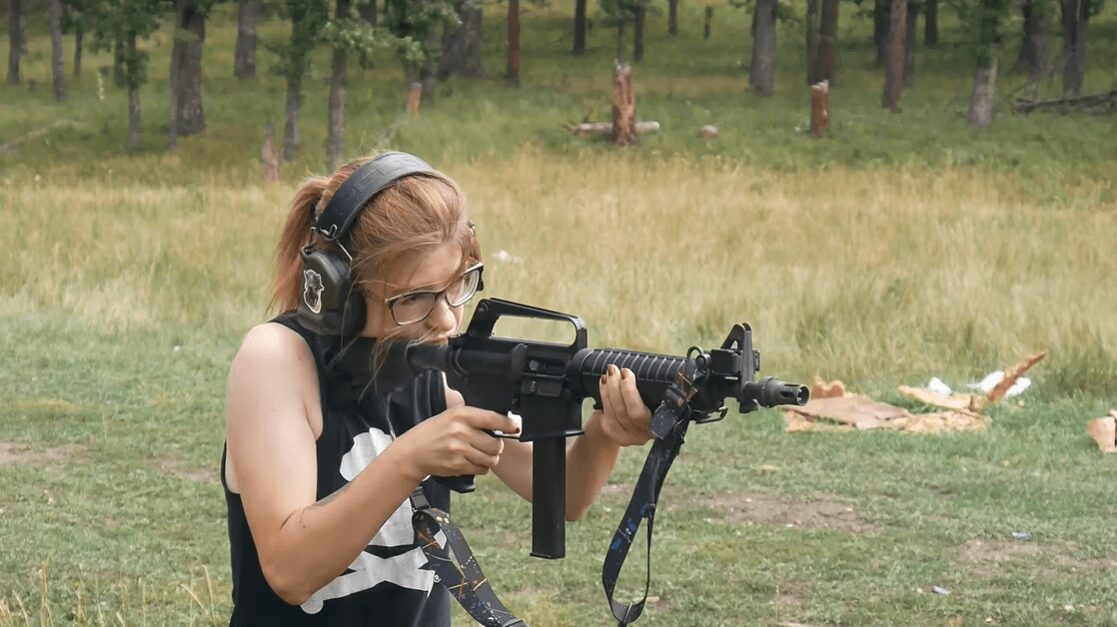
The piece is built as entertainment as much as history, cutting between the archival narration and live-fire segments, including suppressed shooting with a sponsor read for Silencer Shop. Several asides are crude enough that they are not reproduced here. The closing line returns to the thesis: that the CIA bought communist guns to defeat communism.
For context
- The Type 56 is China's licensed copy of the Soviet AK-47, in production from 1956, with total output commonly estimated at 10 to 15 million rifles.
- Operation Cyclone was the CIA program that funded and armed Afghan resistance groups after the December 1979 Soviet invasion, routed through Pakistan's Inter-Services Intelligence.
- Chinese AK-pattern rifles sold to American civilians were export models such as the AK-47S and the later MAK-90, not the select-fire military Type 56.
- Captured rifles registered before the federal machine gun registry closed in 1986 remain transferable, which is why Vietnam bring-backs carry the values the video mentions.
Sourced from
How THIS Chinese Rifle Created The Taliban (Operation Cyclone & the Type-56)
Watch the original