Why it matters: Every argument about whether a service rifle, a duty sidearm or a military round is any good eventually runs into how it was bought. This is a first-hand account of the stage where that gets decided.
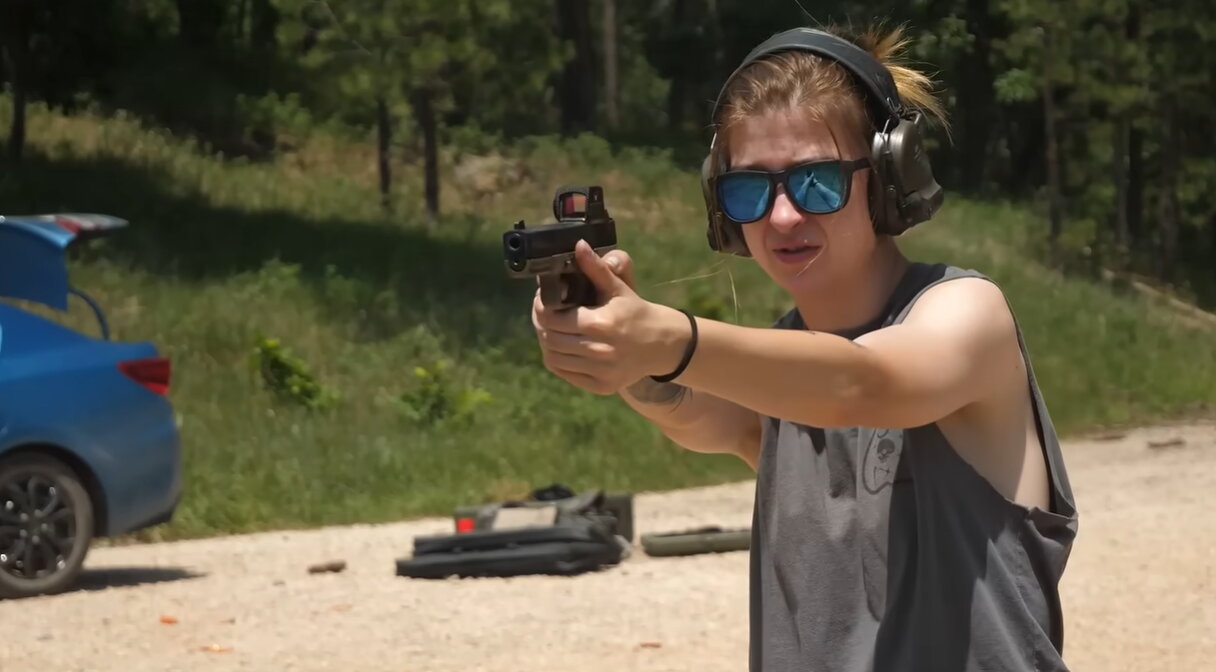
Boondock Ballistician, a YouTube channel run by an engineer who works in small arms and ammunition testing, published a video on August 2 arguing that the standing joke about military hardware coming from the lowest bidder describes the least damaging part of federal procurement. The 13-minute video, titled "Lowest Bidder" Is Just The Tip Of The Iceberg, is about source selection: the stage where a government team reads competing proposals and decides who wins the contract.
The host frames the video as personal experience rather than a survey. The account is hers, she says near the top; practice probably differs between the services; viewers should take it with a grain of salt. She names no agency, no program and no contractor as the subject of any specific episode she describes.
What lowest price technically acceptable actually buys
Her first argument is that lowest-bidder awards are not the villain of the story. Under what the government calls lowest price technically acceptable, or LPTA, the winner is the cheapest proposal that meets every stated requirement, so the awardee by definition checks every box on the spec sheet and the delivery schedule. It stunts development, she says, because it buys bare minimum performance, but bare minimum is what the solicitation asked for. In her telling, LPTA turns up mostly on bulk, well-understood buys, and it is not the approach she has most often worked under.
Congress has been narrowing that lane for a decade. Section 813 of the fiscal 2017 National Defense Authorization Act directed the Pentagon to use LPTA only where it can describe its minimum requirements clearly and would realize little or no value from a proposal that exceeds them, and to avoid it where practicable for knowledge-based services such as information technology and systems engineering.
Where best value breaks down
Most of the source selections she has sat on, she says, were written as best value, which lets the government trade price against other factors. Her examples: one contractor costs more but delivers four months sooner, or every bidder meets the accuracy requirement for a new sniper round and one far exceeds it. On paper the government can pay for the better outcome. In practice, the video argues, unless the bids land within a hair of each other on price, the award still goes to the cheapest one.
The reason she gives is protest exposure. She describes evaluations in which the technical team recommended one contractor and contracting and legal awarded another. If the solicitation never said the government would pay extra for exceeding a specification, crediting it at award gives a losing bidder an opening to argue it was never told what the government valued. Writing solicitations to that level of detail is hard, she says, and sometimes the government does not know what it wants until a vendor shows it, at which point the feature waits for the next contract.
The mechanism she describes tracks the rulebook. FAR 15.304 requires that all factors and significant subfactors affecting award, along with their relative importance, be stated in the solicitation. Protests are a live constraint on that: bidders filed 1,688 of them at the Government Accountability Office in fiscal 2025, and 52 percent produced either a decision sustaining the protest or voluntary corrective action by the agency. Unreasonable technical evaluations were the most common ground on which GAO sustained.
The knowledge evaluators are told to set aside
“In both cases the proposal said the schedule was achievable, so the schedule was treated as achievable.”
Coleman Reyes, The ReticleThe video's sharpest complaint is about what evaluators are allowed to know. Proposals are supposed to be judged on their own terms, without outside knowledge, in the name of fairness. She describes knowing that a bidder was months behind schedule on three active contracts while bidding a fourth, and knowing from a site visit that a vendor lacked a piece of equipment it would need, with an eight-month lead time on the order. In both cases the proposal said the schedule was achievable, so the schedule was treated as achievable. Past performance, where a solicitation asks for it, often amounts in her account to confirming that a vendor has finished government work before, late or not.
The regulation is somewhat broader than that description. FAR 15.305 requires past performance to be evaluated in negotiated competitive acquisitions expected to exceed the simplified acquisition threshold unless the contracting officer documents why it is not an appropriate factor, and it directs the government to consider information supplied by the offeror as well as information obtained from any other sources. The Contractor Performance Assessment Reporting System is the governmentwide repository those records come from. What the rules do not permit is an evaluator applying a factor the solicitation never announced.
Parent companies, sole-source parts and lead times
The last section describes a structural problem rather than a procedural one. Small arms is a small industry with overlapping ownership. If a solicitation requires a component that has one supplier, and that supplier's corporate family also fields a complete product, the family's own bid can quote a delivery schedule months ahead of the field while the letters of commitment offered to outside bidders carry long lead times on the same part. The video presents this as a shape it has seen rather than an allegation against anyone: it reaches for Federal, which makes brass and also sells loaded ammunition, and for a hypothetical solicitation that requires a Magpul stock, and it says plainly that it is not pointing fingers at Federal.
She lists the mitigations that exist. Some solicitations require letters of commitment as proof a bidder can meet lead times or has equipment on hand, and some require site visits before award. They are applied inconsistently from contract to contract, she says. Litigation is not the fix in her view, because everyone would end up suing everyone. Her prescription is a reset of the process, offered without specifics.
Ownership in the ammunition business has been consolidating around roughly that structure. Czechoslovak Group completed its purchase of The Kinetic Group, which holds Federal, Remington, CCI, Speer and Alliant powder, from Vista Outdoor in November 2024, a deal that drew objections in Congress in part over the concentration of primer production.
For context
- Source selection is the stage of a negotiated federal procurement in which a government team scores competing proposals against evaluation factors the solicitation announced in advance.
- Lowest price technically acceptable awards to the cheapest compliant offer, while a best value tradeoff lets the government pay more for a better schedule or higher performance.
- A bid protest challenges an award at the agency, the Government Accountability Office or the Court of Federal Claims; GAO must decide protests within 100 days of filing.
- CPARS is the governmentwide database of contractor performance evaluations agencies draw on when past performance is an evaluation factor.