Why it matters: The short-barreled 990 SPX is the first serious home-defense semi-auto to reach shelves after the NFA making and transfer tax fell to zero, and the registration paperwork is now the entire cost of entry. How reviewers weigh that trade will shape whether stamped shotguns stay a niche.
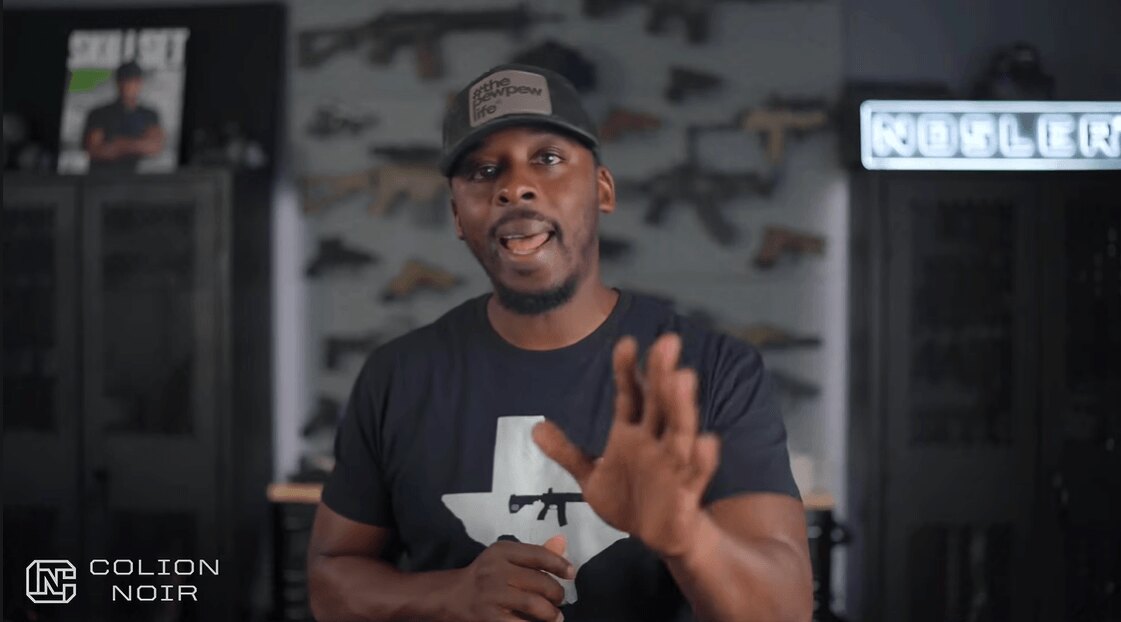
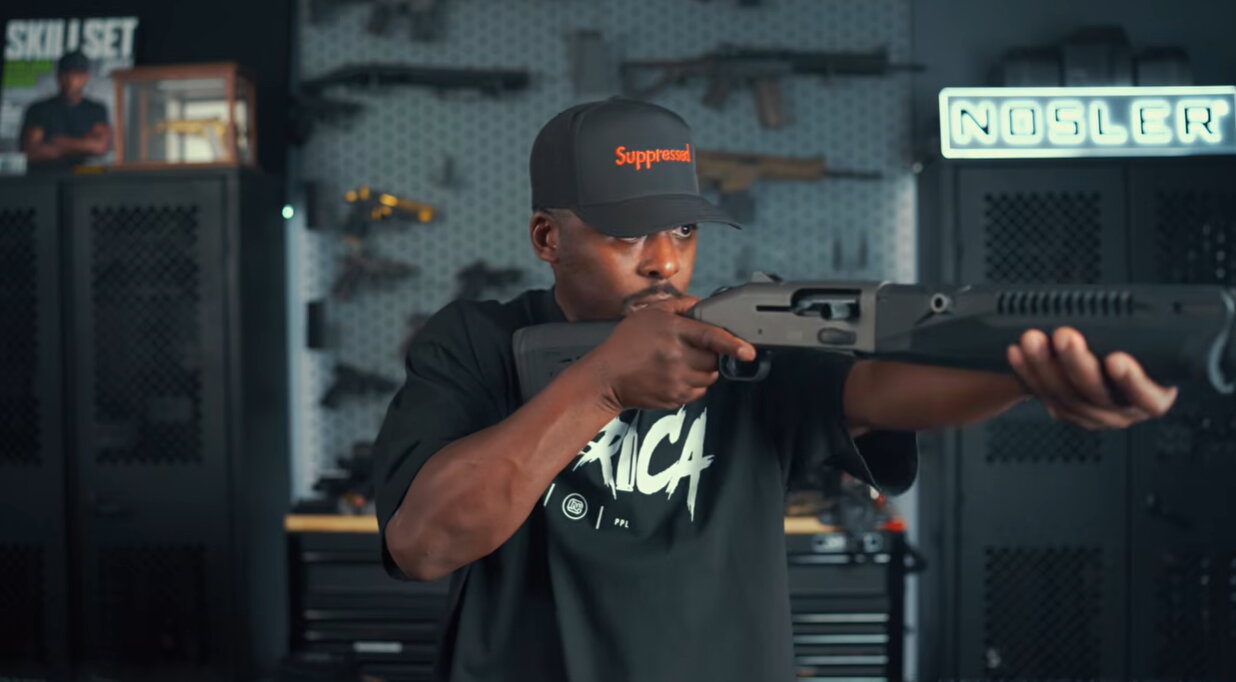
Colion Noir has posted a video-length evaluation of the short-barreled Mossberg 990 SPX Magpul, a 12-gauge semi-automatic with a 14.75-inch barrel, and calls it his favorite Mossberg shotgun to date. The video, titled "The Most Sensible Home Defense Shotgun In America?", opens with Noir describing how he arrived at that verdict: he says he decided he wanted the gun when he first saw it at SHOT Show, then went looking for reasons that would justify it.
"I didn't study this thing and arrive at a conclusion," he says in the video. "I fell in love with it first. And then I went looking for reasons to justify it."
What the Mossberg 990 SPX Magpul is
Mossberg introduced the 990 SPX Magpul at SHOT Show 2026 as an expansion of its 990 semi-auto line. Published specifications list two configurations: an 18.5-inch-barrel model with a 7+1 capacity, and a 14.75-inch model with 5+1, which is regulated as a short-barreled shotgun under the National Firearms Act. Both carry a Magpul SGA stock with length-of-pull spacers, steel ghost-ring sights, a receiver cut for an RMSc-footprint red dot, and a forend with an integrated heat shield, M-LOK slots and QD sling points. Athlon Outdoors lists a $1,449 MSRP for a Cerakote version; other SHOT Show coverage put the line at $1,300.
Noir describes the gun as "basically a 990 Aftershock with a Magpul stock hanging off the back of it," and says Mossberg retuned the gas system and the extractor so the gun runs correctly when fired from the shoulder rather than from the Aftershock's raptor grip. Mossberg's published materials for the line do not detail those internal changes; the company's spec sheets describe a gas system contained within the forend and nickel-boron coatings on the gas piston, magazine tube, hammer and sear.
Handling over capacity in the home defense trade
The core of Noir's argument is a trade he says he makes willingly. The 14.75-inch gun holds six rounds where an 18-inch shotgun holds eight, and he identifies that as the only real cost of the configuration. "I'd rather have six in a gun that fits my house and fits me like a glove than eight in a canoe," he says.
He attributes the appeal to handling rather than to any single feature, describing the gun as lighter and better balanced than other shotguns he has run, and saying it stops where he stops it on target transitions. He also argues that a gun someone enjoys shooting is a gun they will actually train with, and counts that in the column in favor.
The feature he singles out as decisive is weapon light access. On folding-stock and raptor-grip shotguns, he says, a light mounted to the forend is awkward to reach and activate; with the SGA stock and the M-LOK forend, he says he can drive his support hand forward and work the switch directly. He frames target identification in a dark house at two in the morning as the central problem in a home-defense encounter.
Recoil impressions, slugs, and where reviewers disagree
Noir sets recoil expectations against Mossberg's 940, saying the short-barreled gun is in the same neighborhood with a bit more of an impulse and more muzzle blast because of the barrel length. Buckshot, he says, is comfortable to run in volume. Slugs are not: he calls shooting them out of this gun "an exercise in masochism" and says he needs a minute between rounds.
“Registration still stands between a buyer and this shotgun. The $200 no longer does.”
J.D. Whitfield, The ReticleThat runs against another published hands-on account. Writing for Athlon Outdoors after roughly 500 rounds through a 14.75-inch gun at a Gunsite tactical shotgun class, the reviewer reported that buckshot and slugs felt noticeably softer than light target loads, recorded no stoppages, and put a four-inch slug group on paper at 50 yards from a braced position. Neither account is a measurement; both are felt-recoil impressions from different shooters, load selections and round counts.
Noir also lists the factory-zeroed ghost rings, the low optic mounting height in the receiver, the enlarged charging handle and bolt release, and the tang safety among the features he rates highly, and describes the Magpul stock as more ergonomic than a traditional shotgun stock. He closes the gear portion by raising suppressing the gun as an open question he has not answered.
The NFA tax stamp changed in January
Noir's closing point is regulatory. To own the 14.75-inch version, he notes, a buyer has to register it and pay for a tax stamp, while an 18-inch shotgun can be carried out of a big-box store the same afternoon. He tells viewers to do the paperwork anyway.
One half of that has changed since the rule he is describing. Under P.L. 119-21, the reconciliation law signed on July 4, 2025, the making and transfer tax on NFA firearms other than machine guns and destructive devices dropped to $0 effective January 1, 2026 — a category that includes short-barreled shotguns, short-barreled rifles, suppressors and any other weapons. The registration requirement is untouched: a buyer still files the application, still waits for approval, and still cannot take possession until the approved stamp comes back. What is gone is the $200 that used to travel with the form.
That leaves the wait, not the tax, as the practical gap between the two versions of the same shotgun — which is the comparison Noir builds the video around, and the one buyers weighing a 14.75-inch gun against an 18.5-inch one will be running for themselves.
For context
- The 990 SPX Magpul was announced at SHOT Show 2026 alongside the 990 SPX Aftershock, a raptor-grip firearm version that is not regulated as a short-barreled shotgun.
- A short-barreled shotgun is any shotgun with a barrel under 18 inches, which puts it under the National Firearms Act and requires ATF approval and registration before transfer.
- The $200 NFA making and transfer tax on suppressors, SBRs, SBSs and AOWs went to $0 on January 1, 2026 under P.L. 119-21; registration, background checks and approval waits remain in place.
- Mossberg's 990 line is the company's newer gas-operated semi-auto platform, positioned above the pump-action 590 family that has long dominated the defensive shotgun market.