Why it matters: The Supreme Court hears the semiautomatic rifle ban cases on December 2. If the bans fall and nothing else changes, the states that lose will reach for the tool Colorado already built, and most gun owners have never read a word about how it works.
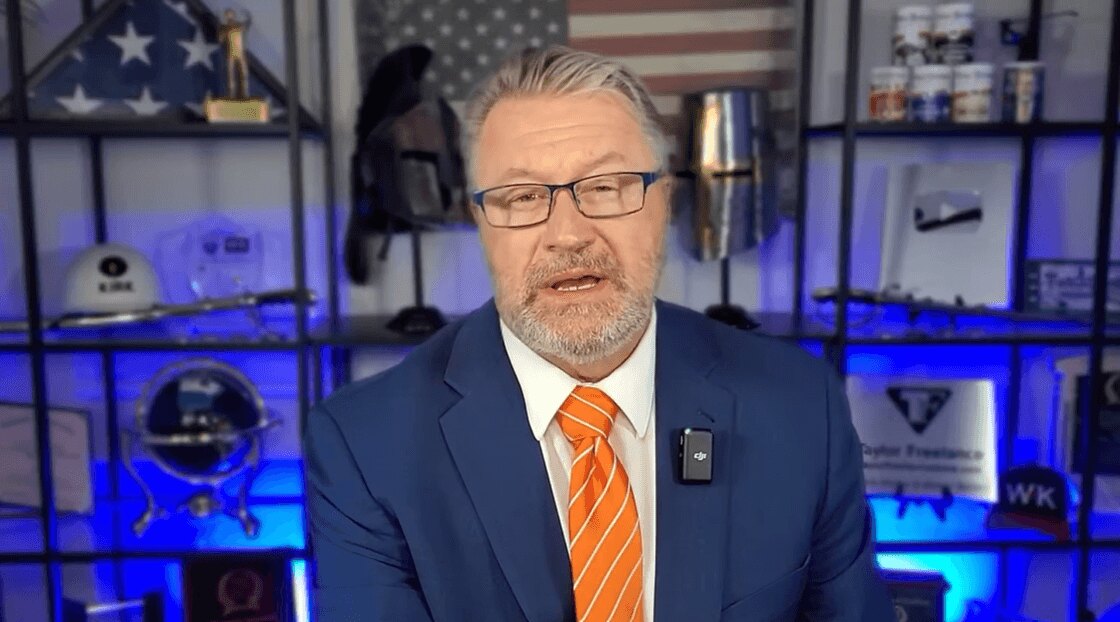
William Kirk has been working through the amicus briefs in Viramontes v. Cook County the way a trial lawyer reads a docket, and in his latest video he lands on one that barely argues about the ban at all. Rocky Mountain Gun Owners filed it. Its subject is what happens the day after the ban loses.
The framing is deliberate. This case, RMGO writes, "concerns more than a single county ordinance or state law," but "presents a recurring problem of constitutional administration." The problem is substitution: after the Court identifies conduct the Second Amendment protects, some states replace the invalidated restriction with a different mechanism engineered to produce substantially the same practical result. The principle RMGO asks the Court to state is old and unglamorous, which is why it works — governments may not accomplish indirectly what the Constitution forbids them to do directly. Kirk's judgment is that the brief is asking for a great deal, and that the odds of getting it sit "somewhere between slim and none." He is right on both counts, and the brief is still the most useful thing filed in this case.
What Colorado's permit-to-purchase law actually requires
Colorado is the exhibit, and the details matter more than the label. Senate Bill 25-003 started life as an outright prohibition on semiautomatic firearms, did not survive the legislature in that form, and emerged as a licensing regime instead. Governor Polis signed it April 10, 2025. It took effect August 1, 2026. Since that date, buying a specified semiautomatic firearm in Colorado runs through a sequence: apply to your county sheriff for a Firearms Safety Course Eligibility Card, pass a name-based background check, pay a $52 state fee plus whatever processing fee the sheriff sets, then complete an in-person safety course — twelve hours for most people, four for those who have finished hunter education — then take that card to a dealer and sit for the ordinary federal background check you would have sat for anyway. The card is good for five years.
The sheriff's fee is set county by county, and the spread is the part worth staring at. Morgan County charges nothing. El Paso County waives it for residents and charges $35 to everyone else. Park County charges $92. Arapahoe County charges $100, or $50 if you already hold a concealed handgun permit, and $125 if you are not a resident. Same statute, same right, and a $125 swing in what two neighbors pay to exercise it depending on which side of a county line they sleep on.
The scope is broader than the shorthand suggests. This is not an AR-15 rule. As written, it reaches semiautomatic rifles and shotguns that accept detachable magazines and gas-operated semiautomatic handguns that accept them — which is to say nearly every center-fire semiautomatic rifle with a detachable magazine, semiautomatic shotguns with detachable magazines, and a slice of the handgun market besides. And the statute's own caption tells you what it is for: "Enforcement of large-capacity magazine ban by regulating the manufacture, distribution, transfer, sale, and purchase of specified semiautomatic firearms." The legislature did not bury the substitution. It put it in the title.
Why the regulatory substitution argument holds up
Take each requirement alone and every one has an answer ready. The permit is administrative. The waiting period is temporary. The training is educational. The fee is incidental. The feature test is a product regulation. None of those answers is absurd on its own, and that is the entire mechanism. A right you must pay for twice, wait for twice, and qualify for twice is not the same right, and the arithmetic is the argument.
This is why RMGO's proposed test — look at the whole regulatory pathway and ask what the government has actually proved a tradition for — is less radical than it sounds. It is the ordinary question of what a law does rather than what a legislature calls it. Courts ask that question routinely in other constitutional contexts. The reason it feels novel here is that Second Amendment litigation has spent four years arguing about historical analogues to single provisions while the provisions multiply.
Why Viramontes is the wrong vehicle for the fix
“A right you must pay for twice, wait for twice, and qualify for twice is not the same right, and the arithmetic is the argument.”
Coleman Reyes, The ReticleHere is where the brief's ambition outruns the case. The question presented in Viramontes, consolidated with Grant v. Higgins out of the Second Circuit, is whether the Second and Fourteenth Amendments protect the right to possess AR-15 platform and similar semiautomatic rifles. It is a possession question about a categorical ban. Permit-to-purchase is a different mechanism aimed at a different transaction, and it sits on top of the one line of authority the gun-rights side has never dislodged: Heller's aside that "laws imposing conditions and qualifications on the commercial sale of arms" are presumptively lawful, reinforced by Bruen's footnote blessing the shall-issue licensing used by 43 states.
So the Court would be narrowing its own recent handiwork, in dicta, in a case where no party briefed a licensing record. Courts do not usually do that, and a bench that wanted to could do it badly — a sentence written to restrain Colorado could as easily be read by the Ninth Circuit as a fresh endorsement of everything short of Colorado. Kirk's candor about the odds is the right instinct, and it is worth noting how rare that candor is in this genre. A channel selling outrage would have told you the brief might win.
The case that will actually decide this
The fight over permit-to-purchase is already in a courtroom, and it is not this one. Del Toro v. Polis was filed in the District of Colorado on September 2, 2025, and a motion to preliminarily enjoin the eligibility-card scheme went in August 11, 2026, ten days after the law took effect. No injunction has issued. That case is where a cumulative-burden argument gets what an amicus brief structurally cannot give it: a record. Actual processing times by county. Actual fee schedules. Actual numbers on how many applicants started the sequence in August and how many reached a gun counter. The $0-to-$125 sheriff spread is not a talking point in that posture; it is evidence, and it is the kind of evidence that makes an as-applied challenge hard to wave away.
Which suggests the movement's priorities are slightly out of order. Viramontes is a bet on a possession ruling that may well come, and if it does it will be worth everything spent on it. But the ruling will not reach the machinery Colorado built, New York and California have been refining for years, and a dozen legislatures will copy the week the decision lands. That machinery gets beaten with discovery, docketed fee schedules and clocked wait times — slowly, expensively, and one county at a time. RMGO's brief is a good map of the territory. It is not a shortcut through it.
For context
- The Supreme Court granted review in Viramontes v. Cook County and Grant v. Higgins on June 30, 2026, consolidated them under Viramontes, No. 25-238, and set oral argument for December 2, 2026.
- Colorado's SB25-003 took effect August 1, 2026; it does not ban possession, so firearms owned before that date may be kept.
- Heller listed "conditions and qualifications on the commercial sale of arms" among presumptively lawful measures, and Bruen's footnote 9 approved shall-issue licensing while leaving room for challenges to exorbitant fees or lengthy delays.
- Three Colorado organizations filed briefs in the case: Rocky Mountain Gun Owners, the Independence Institute, and the Colorado State Shooting Association.
Themes in the source
Room for disagreement
The strongest case against our read is that dicta is cheap to ask for and expensive to fight, and the asking has worked before. Bruen's footnote 9 was a two-paragraph aside that nobody argued, and it has governed licensing litigation in every circuit since. A single sentence in Viramontes telling lower courts to evaluate the whole regulatory pathway would do more work in more courtrooms, faster, than five years of district-court discovery in Colorado — and amici exist precisely to plant framing the parties cannot raise without risking their own question presented. There is also a hard practical point in RMGO's favor: as-applied challenges take years, they can lose on a thin record, and in the meantime the burden runs. Colorado residents are paying the fees and sitting the twelve hours now. Telling them the real fight is a discovery schedule in 2028 is accurate and cold comfort, and a movement that only ever litigates the narrow question will find the narrow question redefined underneath it.
The bottom line
Rocky Mountain Gun Owners has correctly identified the mechanism that will define the next decade of Second Amendment litigation, and picked the one case that cannot rule on it. Permit-to-purchase will be beaten on a record, in Colorado, with receipts — not in a footnote about Cook County.