Why it matters: The P211 is Sig Sauer's entry in the fast-growing 2011 market, and its selling point is compatibility with the company's widely available P320 magazines. This video pairs a few thousand rounds of hands-on use with a recoil spring test that owners of the pistol may find useful, from a reviewer who is openly skeptical of the category.
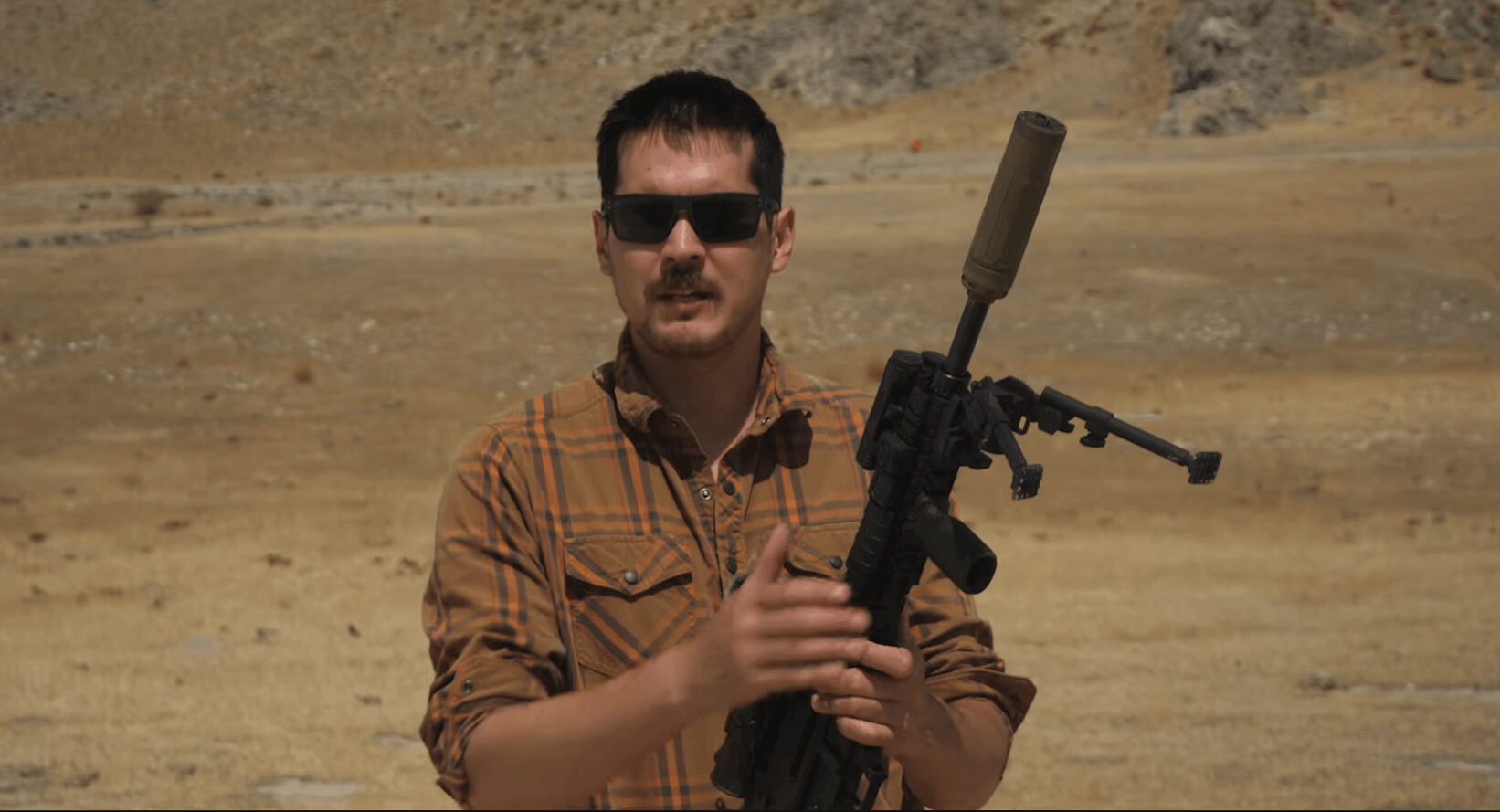
Hop, the YouTube creator behind the Hoplopfheil channel, has published a 13-minute look at the Sig Sauer P211-GTO, Sig's compensated double-stack 1911, under the title "I don't care about 2011s." The video, posted September 27, is less a conventional review than an explanation of why the host has little use for the category, delivered alongside several thousand rounds of shooting and an experiment with recoil springs. Hop introduces the pistol as an expensive handgun from "a very controversial company" and does not elaborate on that description.
Hop says Sig did not send the pistol for review and that Hop did not pay for it either: a friend bought it and let Hop contribute to the round count. The video is sponsored by Blue Alpha, a maker of gun belts.
Why Hop says 2011 pistols miss the practical case
Hop opens with a line from the Box of Truth website, "Only accurate rifles are interesting," and proposes a corollary: only concealable handguns are interesting. Two objections to 2011s follow. The first is cost. Hop notes that some shooters describe Staccato's pistols as entry-level 2011s even though they cost substantially more than the P211. The second is practicality. In Hop's framing, the practical use of a handgun comes down almost entirely to concealed carry. Hop also questions whether police agencies should issue 2011s as duty pistols, calling it a questionable use of taxpayer money and pointing to the pistols' reputation for lower reliability and for demanding more expertise from the user.
Hop does not dismiss the people who buy them. Even entry-level 2011s, Hop says, feel "way cooler and more bespoke" than polymer-framed striker-fired duty pistols, and a shooter whose main pursuit is competition has good reason to want a dedicated gun. The video compares that shooter to sporting clays competitors who carry fine over-under shotguns in light chamberings such as 20 gauge or .410. Those shooters have chosen a gun less suited to hunting because it is pleasant and challenging to shoot, and judging it by how it would do in a duck blind, Hop says, misses the point.
Sig P211 GTO features: P320 magazines, SIG-LOC optic cut, Series 80 trigger
Mechanically, the video explains, the P211 is a 1911, using the Browning swinging-link short recoil system. Its main differentiator is that it is built around P320-pattern double-stack 9mm magazines, which Hop describes as generally cheaper and more reliable than traditional 2011 magazines. Hop adds a caveat to a claim often made about the pistol: standard P320 magazines with their original baseplates will not clear the P211's magwell, so owners will need to swap baseplates or buy compatible magazines. Because the pistol is designed around a 9mm magazine rather than a frame sized for .45 ACP, Hop says, the grip can be somewhat thinner than on other 2011s.
The video walks through the remaining features: replaceable G10 lower grip panels, an ambidextrous safety and slide release, a reversible magazine release, and a slide cut for Sig's SIG-LOC optic interface. That interface accepts Delta Point Pro and RMR-footprint optics using drop-in pegs as recoil bosses, or Sig's own SIG-LOC optics screwed in from beneath the slide. Hop says the SIG-LOC optics have limited appeal to competition shooters because of their small windows and dark blue tint. The factory sights are a fiber optic front and a serrated black rear with generous space around the front post, which Hop calls good for speed but not for precision.
The trigger is a Series 80 design with a firing pin block. Hop rates it decent by 2011 standards but below the Staccato triggers Hop has tried, which Hop believes were Series 70-style designs without a firing pin block. Hop adds an understanding that Staccato is now adding a firing pin block across its pistols.
P211 GTO recoil spring weights, reliability and round count
“The video is less a verdict on one pistol than an explanation of why the host has little use for the category.”
J.D. Whitfield, The ReticleHop's central complaint is how the pistol feels in recoil. The host calls the P211 one of the "pappier" 2011s Hop has shot and attributes it to a light recoil spring: the heavy slide slaps rearward and returns slowly, a motion Hop describes as "rowboaty," and the gun takes a long time to settle. Hop says a stock Glock feels more controllable.
The GTO ships with an 8-pound recoil spring and, according to the video, should also include a 10-pound spring, which Hop says was lost. Following suggestions seen on 2011 forums, Hop bought 10- and 12-pound springs from Springer Precision in Oregon. With the 12-pound spring installed, Hop says on camera, "Feels like a real gun now," but the pistol became unreliable, which Hop sums up as "way too much spring for a short barrel compensated 2011." The 10-pound spring improved the feel over stock but made the gun selective about ammunition: some brands of the inexpensive 115-grain ball used for most of the shooting did not run with it. Hop suggests an owner would likely find a spring and ammunition pairing that works together, and notes that compensated pistols often perform better with higher-pressure loads.
Before the spring changes, Hop reports between 2,500 and 3,000 rounds through the P211-GTO without a failure, while noting that the pistol felt increasingly sluggish toward the end of that count and probably needed cleaning.
USPSA Open division and the P211-GT4 carry model
Hop flags a competition wrinkle. As Hop understands USPSA rules, any compensated pistol goes to Open division, while 2011s are more comfortable in Limited Optics, where they are not competing against highly tuned Open guns. Hop notes that other shooting sports may not treat the compensator as a problem.
Hop closes unconvinced. If Hop took up competition seriously, the video says, the likelier choice would be "a slightly bigger, fancier Glock" than a double-stack 1911, a category Hop calls "1911s with a lisp." Hop rules out ever carrying a 2011-style pistol, compact models with proprietary magazines included, and rejects Sig's positioning of the P211-GT4, a shorter model announced ahead of SHOT Show 2026, as the carry version of the line.
For context
- Sig Sauer introduced the P211-GTO in 2025 with a 4.4-inch bull barrel, a 3D-printed MACH3D compensator and a 45.9-ounce unloaded weight, at an MSRP of $2,399, or $2,799 with a factory optic.
- "2011" began as the name of STI's double-stack 1911 design, the company now known as Staccato, and is widely used as shorthand for double-stack 1911-pattern pistols.
- USPSA's Limited Optics division, added in 2023 and made permanent in 2025, allows slide-mounted optics but not compensators, which belong in Open division.
- Sig Sauer has faced lawsuits and agency restrictions over its striker-fired P320 in recent years; the company maintains the P320 cannot fire without a trigger pull.