Why it matters: The Supreme Court left ATF's frame or receiver rule standing last year, and most gun owners filed the question away as settled. A district court has now voided the same rule on grounds the justices never reached.
A federal judge in Texas has held that ATF's 2022 frame or receiver rule is unconstitutional, roughly seventeen months after the Supreme Court declined to strike the same rule down. Chief U.S. District Judge Reed O'Connor of the Northern District of Texas ruled on August 18 in Defense Distributed v. Blanche that the rule's provisions at 27 C.F.R. sections 478.11 and 478.12(c) are void for vagueness under the Fifth Amendment's Due Process Clause and unconstitutional under the Second Amendment, and entered a permanent injunction barring their enforcement against the plaintiffs.
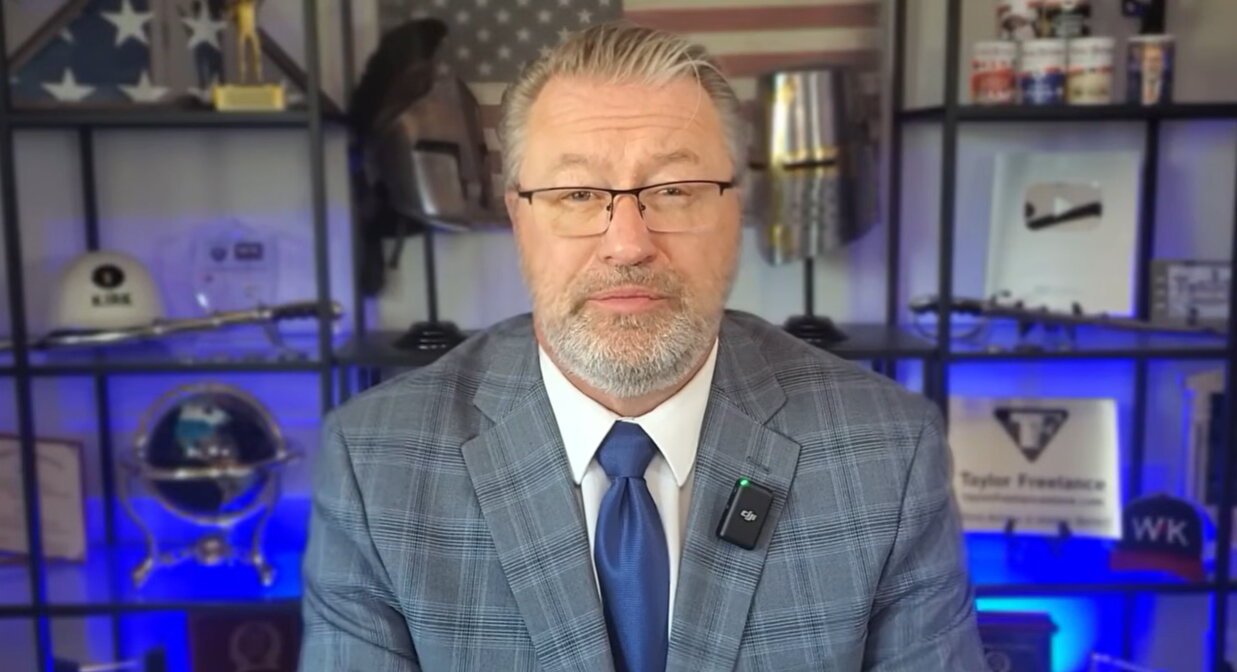
Washington Gun Law president William Kirk covered the decision the day it issued, in a video titled "Down Goes ATF's Frame and Receiver Rule." The video walks through both holdings and rests on a distinction Kirk returns to throughout: the Supreme Court case tested whether ATF had the statutory authority to write the rule, while this case tested whether the rule ATF wrote is constitutional. As the video notes, all parties agreed as a threshold matter that the Supreme Court had not addressed any constitutional issue, leaving both claims live.
The vagueness holding: where does raw material become a receiver?
The 2022 rule turns on whether a partially complete part may "readily be completed, assembled, restored, or otherwise converted" into a functioning frame or receiver, a judgment the rule structures through a list of non-exclusive factors. The court found that list did not add up to a workable test. "The decision of when a hunk of metal or plastic 'may readily be completed, assembled, restored, or otherwise converted to function as a frame or receiver' is left to the subjective determination of the ATF," the opinion states, and "does not provide fair notice to the reader about when a component becomes subject to enforcement."
Kirk frames the same problem as a line-drawing exercise, describing a continuum running from raw stock to a finished part with no marked point at which federal firearm status attaches. The opinion uses comparable language, describing the passage from an unformed block of metal or liquid polymer to a completed firearm as unmarked, and concluding that the absence of concrete examples produces more unpredictability than the Due Process Clause tolerates. Reporting on the decision notes the court also faulted the rule for classifying an object by reference to extrinsic material such as jigs, tooling, and marketing copy rather than the object itself.
The Second Amendment holding and the historical record
On the constitutional claim, the court applied the Bruen framework. The parties did not dispute that the conduct at issue, individuals making or repairing firearms, falls within the Second Amendment's plain text, which shifted the burden to the government to produce a historical tradition supporting the regulation. The government offered colonial-era barrel-proofing statutes from Massachusetts and Maine. The court held those laws addressed product safety rather than crime control, and that reconciling their purpose and method with the modern rule showed the two occupy different constitutional categories.
“The Supreme Court decided whether ATF could write the rule. It never decided whether the rule was clear enough to obey.”
Coleman Reyes, The ReticleKirk reads the court as going further than finding the government's analogues weak. In the video he quotes the opinion as saying the final rule "does not merely lack supporting analogues" but "contradicts the actual historical tradition of personal gunsmithing," and that self-manufacture of firearms in America was common and foundational to the country's establishment.
The government did not lose everything. The court granted summary judgment to the government on the Administrative Procedure Act claims, finding that ATF had adequately explained its change in policy. The video acknowledges this, noting that summary judgment was granted in part to each side.
Who the injunction actually covers
The relief is not a nationwide vacatur. The injunction bars enforcement of the challenged provisions against Defense Distributed, the Second Amendment Foundation, and SAF's current and future members, with respect to Defense Distributed's M1911 80% frames and its G80 build kit, unfinished receiver, and grip module. Kirk attributes the narrow scope to the Supreme Court's recent limits on universal injunctions and tells viewers the ruling reaches named and organizational plaintiffs rather than the general public. He also cautions that state law may restrict the same conduct regardless of what the federal rule does.
What happens next
Kirk predicts the Justice Department will appeal, which would send the case to the Fifth Circuit. No appeal decision had been announced as of publication. The department's posture toward the rule has been unusual: in April, ATF signaled it would leave the 2022 rule in force while it worked on a revised frames-and-receivers regulation, and the government sought a stay in related litigation on the theory that a new rule might moot some remaining claims. A revised rule would change what an appellate court is being asked to defend.
For context
- ATF's April 2022 rule expanded the Gun Control Act definition of "firearm" to reach partially complete frames and receivers and certain parts kits, pulling them under serialization and licensed-transfer requirements.
- In Bondi v. VanDerStok, decided March 26, 2025, the Supreme Court upheld the rule 7-2 in an opinion by Justice Gorsuch, but only against a facial challenge arguing the rule exceeded the statute; it did not reach constitutional questions.
- Recent Supreme Court limits on universal injunctions are why relief in this case runs to the named plaintiffs and SAF's membership rather than to every gun owner in the country.
- ATF said in April 2026 that it would keep the 2022 rule in place while developing a replacement regulation.